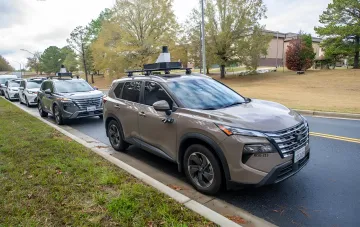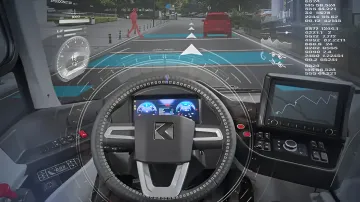
At a meeting on November 12, 2026, the Russian government approved the final version of the bill 'On Highly Automated Vehicles' (HAVs), according to Kommersant, which reviewed the document. Preparing the regulatory act took more than five years, with the Ministry of Transport developing the bill since 2021. The text outlines general requirements and operating rules for driverless cars, trucks, taxis, and trams—effectively covering the entire spectrum of autonomous transport already in use across the country.
What the Law Regulates: From Accidents to Software Protection
The document addresses key issues that have remained in a legal vacuum until now. In particular, the bill establishes procedures for determining liability in road traffic accidents involving autonomous vehicles. A separate block is devoted to requirements for protecting the vehicle's software: how the software must be secured, what safety systems an autonomous car must include, and which technical standards it must meet. This is essentially Russia's first comprehensive legal act aimed at closing all gaps in HAV regulation—from design to operation and liability.
Bill Status: State Duma Has Not Yet Received the Document
It is important to clarify: at the time of publication, the bill has not yet been submitted to the State Duma. According to Kommersant, this will happen 'in the near future.' Thus, the government's approval of the final version is the final stage of intra-governmental processing, after which the document will move to the legislative branch. Final adoption, committee discussions, and voting in the chambers of parliament could take anywhere from a few weeks to a few months.
Context: Autonomous Transport in Russia Since 2018
Various types of autonomous transport—including taxis, trucks, and trams—have been operating in Russia since 2018. However, in the vast majority of cases, an operator is present in the cabin to act as a safeguard, ready to take over control at any moment. In practice, this means there are still very few fully autonomous, completely unmanned vehicles in commercial operation in the country. The bill approved by the government is designed precisely to create a legal framework for transitioning from the 'operator in the cabin' model to fully autonomous operation.
Moscow Precedent: Russia's First Driverless Tram
The most prominent example of functioning autonomous transport in Russia remains Moscow. Since September 2025, route No. 10—from Kulakov Street to Shchukinskaya metro station—has been served by the country's first driverless tram. In November 2026, Mayor Sergey Sobyanin stated that the number of driverless trams in the capital will increase to 15 by the end of the current year, and reach 25 in 2027. These plans make legal regulation urgent: the more autonomous vehicles take to the routes, the greater the need for clear operating rules and liability definitions, which the government-approved bill establishes.
What's Next: Expectations and Timelines
After being introduced to the State Duma, the bill will go through the standard procedure: review by the relevant committee, first, second, and third readings, followed by the Federation Council and presidential signing. Given that the document was developed over five years and received final approval at the government level, experts expect it to be fast-tracked in parliament. For the industry, this means that as early as 2027, Russia could establish a full-fledged legal framework for the commercial operation of completely autonomous transport—without an operator in the cabin.