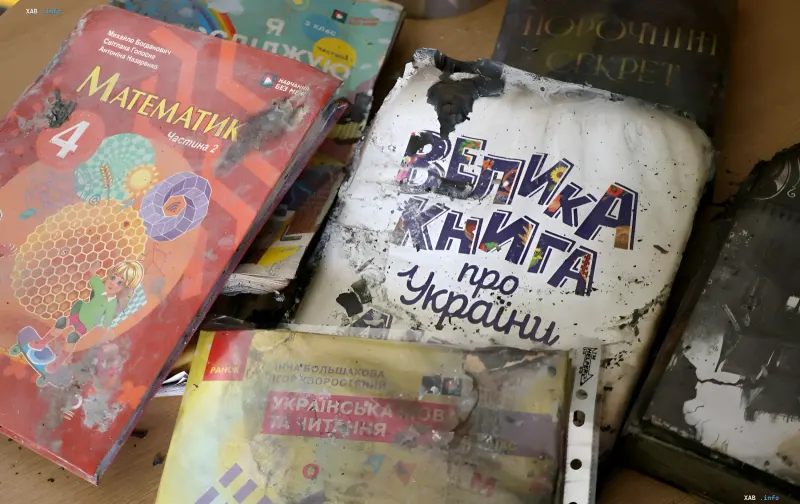
Russian missile and drone attacks in the summer of 2026 resulted in the destruction of approximately 13 million Ukrainian books, accounting for roughly a third of all publications printed in the country this year. This unprecedented blow has inflicted severe damage not only on the economy of domestic publishing but also on cultural infrastructure, as the destroyed literature is directly linked to the Ukrainian language and identity.
Large-scale Destruction and the Attack on the 'Ranok' Publishing House
One of the most tragic episodes was the attack on the warehouse of the Kharkiv-based publisher 'Ranok' in August 2026. At the time of the strike, the facility held 628,000 new school textbooks prepared for the academic year. Co-founder and CEO Viktor Kruglov, along with five employees, miraculously escaped death: the explosion occurred just 30 meters away from them. After the initial blast, staff tried to extinguish the fire, but a second wave of attack forced them to evacuate. The resulting fire, which burned for a whole week, destroyed about 8 million copies—over 85% of the publisher's stock, including children's books and young adult literature.
Damage to Other Publishers and Logistical Changes
Other players in Ukraine's book market were also severely affected. Kyiv-based Krapky lost its entire stock following a strike on a warehouse in the capital's suburb, meaning the publisher had no physical books to sell at the September BookForum in Lviv—visitors could only place pre-orders. Kharkiv's Vivat lost books worth 16 million hryvnias, 'A-BA-BA-GA-LA-MA-GA' lost about 40,000 books valued at around $500,000, and the warehouses of 'Knyholov' and logistics partner BookChef lost hundreds of thousands of books. In response to the ongoing threat, publishers are altering their storage systems by distributing large stocks across multiple small warehouses nationwide, though this may lead to longer delivery times.
Cultural Context and Authorities' Stance
Ukrainian authorities note that the deliberate destruction of book warehouses and logistics centers is part of a broader campaign targeting civilian infrastructure. Deputy Minister of Culture Bohdana Layuk emphasized that since the occupiers cannot capture key cities, they are trying to deprive citizens of everyday life elements, including books. Furthermore, in temporarily occupied territories, Russian military forces have been systematically confiscating and destroying Ukrainian-language books from libraries.
Prospects for Book Market Recovery
Despite massive financial losses and the threat of an autumn shortage of certain titles, Ukrainian publishers remain determined to rebuild. The market, which shifted heavily towards domestic authors and the Ukrainian language following the 2022 import ban, demonstrates high resilience. Large publishers are already forming their 2027 publishing plans and working on reprinting lost textbooks, although smaller companies like Who is That? have had to temporarily suspend operations.