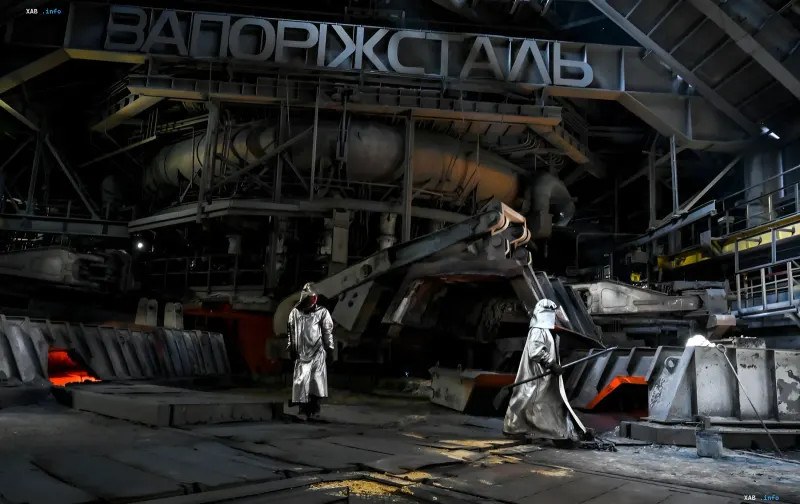
Massive Russian missile strikes on Ukraine's critical infrastructure and industrial facilities have led to catastrophic consequences for the country's metallurgy sector. A particularly severe situation has developed in frontline Zaporizhzhia, where the legendary Zaporizhstal steelworks came to a complete halt following a heavy attack. The enterprise, which has been producing pig iron since 1933, faces unprecedented destruction not seen since World War II, calling into question the very survival of the industrial giant.
Scale of Destruction and Casualties
On the night of August 11, 2026, the plant suffered a devastating rocket attack. According to official data and reports from the German publication Der Spiegel, eight plant employees were killed and another 26 were injured with varying degrees of severity. Plant CEO Taras Shevchenko described the destruction as the most extensive in recent decades. Following the night raid, none of the plant's four blast furnaces were able to continue operations, a fact confirmed by leading domestic and international media.
Socio-Economic Blow to the Region
The crisis surrounding Zaporizhstal extends far beyond a single manufacturing plant. Approximately 8,000 people are directly employed at the complex, but when taking into account related sectors—raw material suppliers, logistics and transport companies, the energy sector, and municipal services—the enterprise provides jobs for about 50,000 residents of Zaporizhzhia. A prolonged shutdown or complete liquidation of the plant threatens to cause a colossal drop in the municipal budget revenues, a sharp rise in unemployment, and the collapse of business activity in the region.
Systemic Crisis of Ukrainian Metallurgy
Experts note that the current problems facing Zaporizhzhia reflect a global trend of the systemic contraction of Ukraine's metallurgical base. Following the loss of giants such as Azovstal and the Ilyich Iron and Steel Works in Mariupol during the full-scale war, the importance of the remaining plants on government-controlled territory has grown exponentially. Now, the threat looms over them as well. The situation is exacerbated by geopolitical factors: the shutdown of the country's only coking coal mine, problems with the operation of Black Sea ports, and strict cuts to import quotas for Ukrainian steel by the European Union.
Contradictory Data
When analyzing the consequences of the attacks on Ukraine's industrial complex, analysts face certain discrepancies in assessments regarding the scale of recovery. While the plant's administration and regional authorities emphasize the unprecedented nature of the destruction and the impossibility of quickly restarting blast furnaces without major investments and equipment supplies, some foreign sources note the high adaptability of Ukrainian engineers, who previously brought the plant back online after similar incidents in 2022. Nevertheless, the current situation in 2026 is complicated by critical raw material shortages and the approaching frontline, making any timeline forecasts extremely contentious.