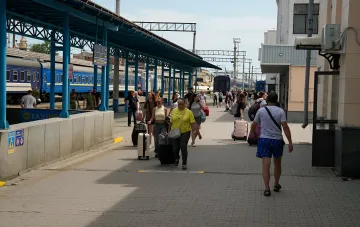


On September 13, 2026, Russia continued its systemic strikes on Ukraine's railway infrastructure, resulting in significant delays to a large number of services across the country. This was reported by RBC-Ukraine, citing a statement from the press service of 'Ukrzalyznytsia'. The company emphasizes that the attacks are not pinpoint in nature but distributed: 'The systemic attack on the railway continues across the entire country; our monitoring center and all staff are on heightened alert.' According to the carrier, this wording reflects the current operational picture — threats are being recorded in several regions simultaneously, rather than at a single node.
What is happening on key routes
The most noticeable consequences of the strikes are being recorded on the western and Dnipro directions. Following the attack on a locomotive in Yahodine, 'Ukrzalyznytsia' has already resumed train traffic toward Warsaw and back; however, as the company clarifies, services are being delayed by a significant amount of time. On the Dnipro direction, trains continue to operate on a detour route, which is why delays persist for all services to Zaporizhzhia, Kryvyi Rih, and Dnipro. Sumy Oblast is singled out separately, remaining one of the regions with the highest number of air threats: from Konotop, trains are moving with maximum caution, which further slows the schedule.
Strikes near the Polish border
The geography of the September 13 attacks deserves particular attention: Russia struck near the Ukrainian-Polish border in Yahodine. In addition, on the same day Russia attacked a passenger train two kilometers from the Polish border. The combination of these facts indicates that under fire are not only freight and locomotive consists but also passenger routes in the border zone, which raises risks for passengers and complicates the restoration of the schedule.
Carrier response and real-time monitoring
'Ukrzalyznytsia' reminds passengers that train delays related to evacuations and detours can be tracked in real time through the company's official channels. Staff and the monitoring center have been placed on heightened alert, which, according to the press service, allows trains to be rerouted promptly and the consequences of each individual strike to be minimized. At the same time, the carrier does not hide that even after traffic is resumed on damaged sections, delays persist due to the need for detours and infrastructure checks.
Context: the systemic nature of the delay problem
The situation on September 13 fits into a broader picture: in previous weeks, strikes on railway infrastructure had already led to multi-hour service delays, as reported by Ukrainian media. This means that train delays caused by Russian strikes have become a persistent factor in the network's operations, rather than a one-off incident. For passengers, this means the need to account for possible disruptions when planning trips and to monitor the current status of services in real time.