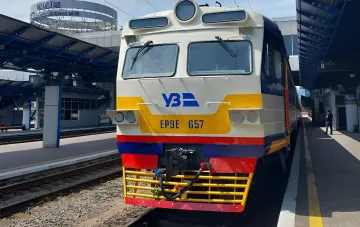

On the morning of September 30, 2026, passenger transportation in Ukraine faced unprecedented disruptions due to the aftermath of a large-scale night attack by the Armed Forces of the Russian Federation on Kyiv and other regions of the country. According to Ukrzaliznytsia monitoring systems, dozens of trains are running significantly behind schedule, with maximum delays on certain routes approaching ten hours. The most critical situation has been recorded on routes connecting the central and eastern oblasts with Ukraine's western border and international hubs.
Scale of delays and affected routes
According to the latest dispatch data, the anti-record for the lag time was set by train No. 31/32 Zaporizhzhia — Przemyśl, whose delay on the morning of September 30 reached 9 hours and 22 minutes. Close to this figure is flight No. 3/4 Dnipro — Uzhhorod, which departed from the initial station back on September 29. Passengers of the international train No. 9/10 Kyiv — Budapest experienced significant inconveniences, with delays exceeding 7.5 hours. Trains running along the Chernihiv — Yasinia, Kharkiv — Uzhhorod, and Dnipro — Kovel routes, as well as several other popular destinations, fell behind schedule by more than six hours.
Causes of the transport collapse and safety measures
Official Ukrzaliznytsia services traditionally do not detail the causes of failures in operational summaries, but specialized agencies and experts attribute them exclusively to security issues. On the night of September 30, a large-scale air raid alert covered almost the entire territory of Ukraine, and explosions rang out in many regions. In conditions of constant targeted enemy strikes against critical infrastructure and railway tracks, passenger train movements are promptly stopped or slowed down until the situation stabilizes to protect citizens' lives.
Contradictory data
Despite the direct temporal coincidence of large-scale train delays with the night missile and drone attack on the Kyiv region and the capital, certain nuances in covering the causes of the incident remain in the public space. The official carrier Ukrzaliznytsia refrains from explicit formulations regarding the connection of delays with hostilities in its monitoring services, indicating only the actual deviation time from the schedule. At the same time, specialized monitoring channels, rescue services, and independent media unambiguously interpret the transport collapse as a consequence of safety measures during a massive air raid alert and the elimination of the consequences of night ballistics and drone strikes on infrastructure.
Consequences of the night attack on Kyiv and the region
The transport crisis unfolded against the backdrop of severe consequences of the night strike on the Kyiv region. According to official information from the State Emergency Service, as a result of the attack by kamikaze drones and ballistic missiles in the capital, two people were killed, and at least four others sustained injuries of varying severity. Destructions and large-scale fires were recorded in four capital districts. Simultaneously, in Vyshhorod, Kyiv region, rescuers found the body of a dead child under the rubble of a residential building, while three residents were successfully rescued. The situation on the railway remains under the special control of specialized ministries.