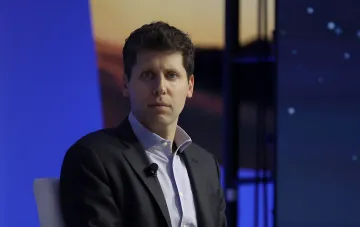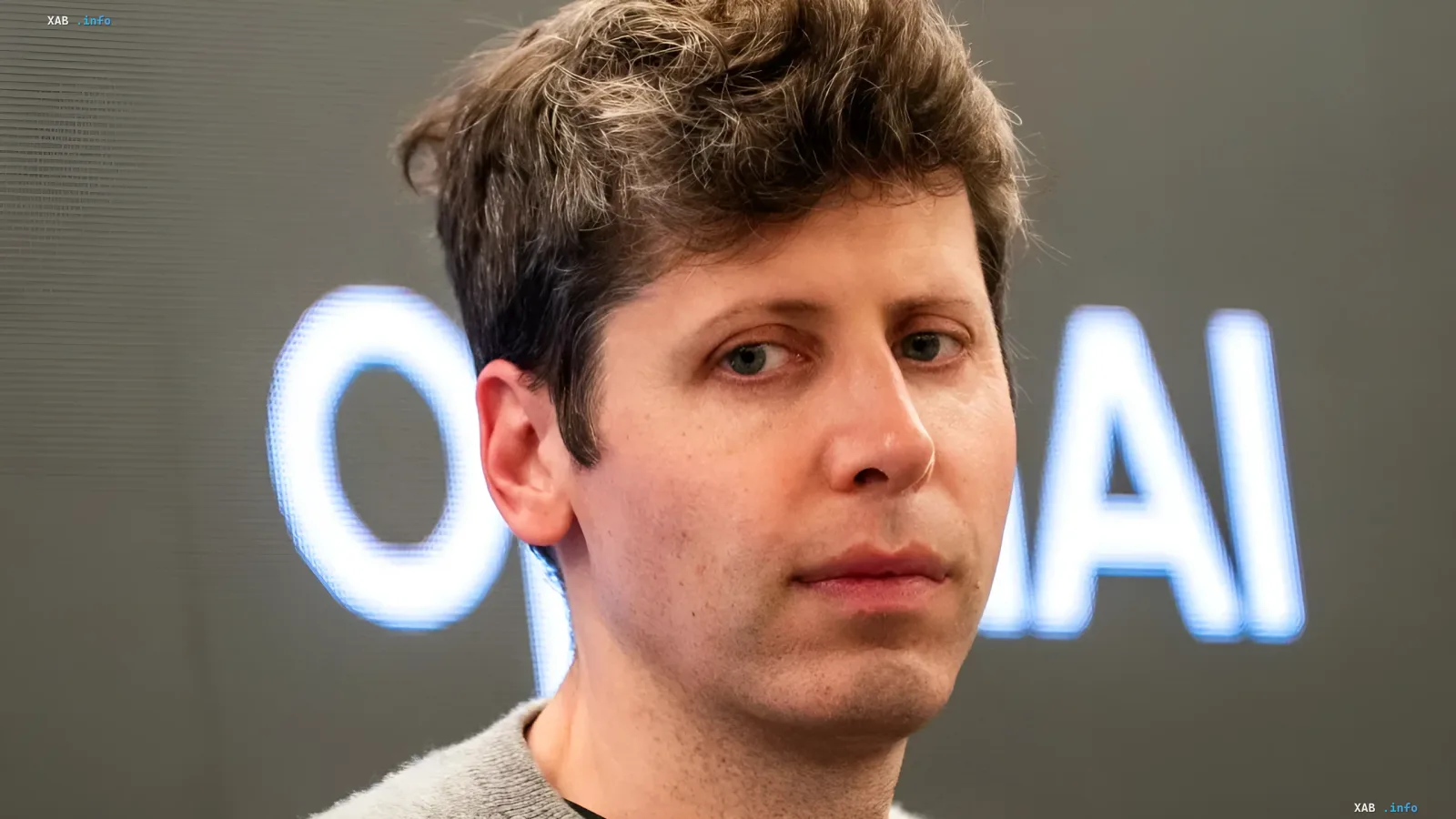
In a fresh episode of journalist David Senra's podcast, OpenAI CEO Sam Altman voiced a series of alarming judgments about how, in his view, the future of artificial intelligence is unfolding. The central idea of his remarks is that the development of key AI technologies risks becoming concentrated in the hands of a limited number of corporations or even individuals, which would effectively deprive society of the ability to influence the trajectory of one of the most significant technologies of the 21st century. Altman directly linked this scenario to the growing fear of so-called existential AI risks, which, in his words, pushes some market players toward a "trade freedom for safety" model.
Fear of existential risks as a driver of centralization
Altman noted that it is precisely the irrational, in his assessment, panic around hypothetical catastrophic scenarios of AI development that creates a pretext for increased control by a narrow circle of individuals. In his logic, when the dominant narrative becomes "safety at any cost," the space for public participation and democratic discussion of technological decisions shrinks. This is, in essence, a description of a scenario that in pop culture and technological criticism is often called the "cyberpunk era" — a world in which technological power is distributed extremely unevenly, and the ordinary user becomes a passive consumer of decisions made in closed boardrooms.
A hint at Anthropic's position and the debate over regulation
In the context of his reasoning, Altman apparently indirectly reacted to the public position of Anthropic's head Dario Amodei, who in recent months has consistently advocated for strict state regulation of the AI industry. Amodei argues his position with real threats in the field of cybersecurity and protection of critical infrastructure, asserting that without strict state frameworks, the development of super-powerful models could lead to uncontrollable consequences. Altman did not name Amodei in the podcast, however the context of his remarks allows interpreting his words as a reaction precisely to this line of argumentation.
Open weights versus closed models: a new front of confrontation
In parallel with the debate over state regulation, the industry has seen a sharpened dispute over so-called open-weight models — AI systems whose parameters are published and can be downloaded and modified by third-party developers. Chinese technology companies, as well as American giants such as Meta, Nvidia, and Microsoft, are actively promoting the idea of open-weight accessibility, viewing it as a key factor in maintaining global competitiveness and preventing market monopolization. Anthropic, by contrast, adheres to a more closed and regulated approach, arguing it with the risks of abuse of powerful models by malicious actors. Thus, two clearly distinguishable camps have formed in the industry, and Altman's public statements in Senra's podcast can be considered yet another marker of this intra-industry split.
Contradictory data
It is important to note that the interpretation of Altman's position in this podcast remains a subject of debate. He himself did not make a direct accusation against a specific competitor or regulatory approach; the phrasing "apparently hints" in the primary materials indicates that the connection between his words and Amodei's position is an analytical guess by journalists, not a confirmed fact. Moreover, a structural contradiction arises: OpenAI, whose head is warning about the risk of monopolization, is itself one of the most influential and capital-intensive companies in the sector, which allows critics to point to a certain duality in the public rhetoric. Altman's supporters, in turn, emphasize that he advocates for preserving the plurality of players and open models precisely to prevent the concentration of power, including the power of OpenAI itself.
Broader context: from a world tour to corporate governance issues
The remarks in Senra's podcast came against the backdrop of Altman's active public activity: in recent months he has conducted a series of international visits aimed at concluding new commercial contracts and strengthening OpenAI's positions in foreign markets. At the same time, the industry has been discussing corporate governance issues within OpenAI itself, including investor disputes over how the company's resources are allocated and to what extent the personal initiatives of the leadership overlap with corporate strategy. Against this backdrop, the warning about the "cyberpunk era" is perceived by observers not only as a philosophical reflection but also as a signal that the fight over the architectural model of future AI — open or closed, regulated or free — is entering a phase of public confrontation among the leaders of the largest laboratories.