In August 2026, the South Korean tech giant Samsung Electronics announced a massive transformation of its semiconductor business. The company began implementing artificial intelligence (AI) technologies at all stages of the production cycle — from microchip design to the release of finished products. According to Maeil Business, to implement this ambitious strategy, Samsung has recruited two highly qualified specialists whose task is to take production to a fundamentally new level of automation and efficiency.
Professor from Seoul National University: A Bridge Between Science and Production
A key figure in this project is Han Bo-hyeon, a well-known expert in deep learning and computer vision, as well as a professor at the Department of Electrical and Computer Engineering at Seoul National University. According to the official agreement approved by the university, the professor will work for Samsung's semiconductor division for half of his working time, while continuing his scientific activities at the university. His main mission is to develop advanced AI models capable of revolutionizing semiconductor research and development.
This move demonstrates Samsung's desire to integrate fundamental scientific developments directly into the industrial process. It is expected that the AI models created under the professor's leadership will play a decisive role in optimizing microchip architecture, analyzing production processes, and forecasting results, which will help reduce development time and minimize the number of defects.
Data as the New Oil: Infrastructure Preparation
Experts emphasize that the effectiveness of any artificial intelligence systems depends directly on the quality and volume of data on which they are trained. Samsung recognizes this critical importance and is already organizing processes to prepare extensive databases with the involvement of strong specialists in the relevant fields. Without carefully structured information, algorithms will not be able to correctly analyze complex production processes or predict failures.
The implementation of AI is aimed not only at automating routine tasks but also at solving problems that were previously inaccessible to traditional analysis methods. For example, systems will be able to detect microscopic defects at early stages of production or suggest alternative chip configurations to improve their performance.
Strategic Context: The Battle with TSMC and Chip Shortages
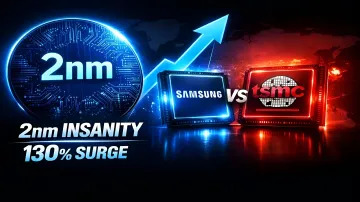
This initiative is part of Samsung's long-term strategy to strengthen its position in the global semiconductor market. In conditions of fierce competition with Taiwan's TSMC and growing demand for AI chips, the company is forced to find new ways to increase competitiveness. As noted in sources, Samsung is also working on plans for mass production of chips with a 1.4 nm process by 2029, which requires unprecedented accuracy and control.
Furthermore, the industry continues to face a shortage of AI chips, which, according to forecasts, could last until 2028. Under these conditions, Samsung's ability to accelerate development and optimize production using AI becomes a critically important factor for maintaining leadership and meeting demand from key customers, such as Broadcom.
Contradictory Data
Despite the optimism surrounding the implementation of AI, there are certain uncertainties. On the one hand, Samsung claims to be ready for large-scale automation and the recruitment of leading experts. On the other hand, some analysts point out that the real impact of new intelligent systems on development timelines, process stability, and the number of failures must be fully confirmed after the completion of current trials. So far, the results are experimental in nature, and final conclusions about the effectiveness of the strategy will only be made after the systems are implemented in the real production cycle.
It is also worth noting that although Samsung is actively investing in AI, competition with TSMC remains fierce. The Taiwanese manufacturer already has significant experience in using advanced technologies, and Samsung's success will depend not only on the availability of algorithms but also on the ability to integrate them into existing infrastructure without failures.