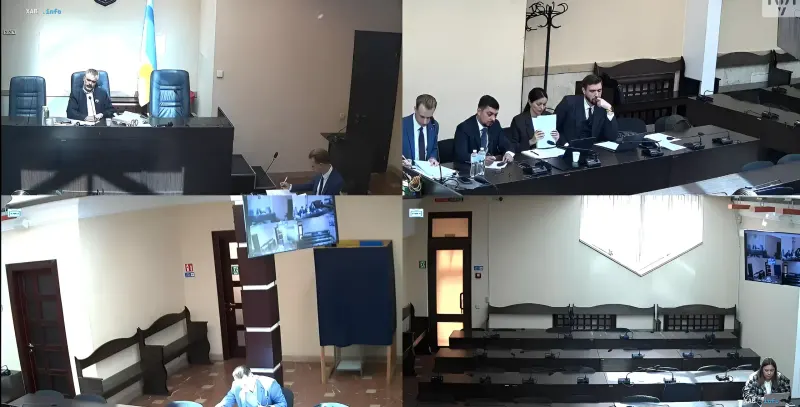
The Specialized Anti-Corruption Prosecutor's Office (SAO) has submitted a motion to the High Anti-Corruption Court (VAS) seeking the detention of Oleksiy Stupak, Chairman of the Board of the state-owned Sense Bank, with the possibility of posting bail in the amount of 150 million hryvnia. According to the investigation, the top executive is one of the key figures in the NABU and SAO case known as "Forrest Gump," and he is charged with the legalization of assets of criminal origin (Part 3, Article 209 of the Criminal Code of Ukraine). A hearing on the motion is scheduled for this week, while the Cabinet of Ministers and the National Bank of Ukraine have already initiated the procedure for dismissing Stupak from his position and reviewing his professional fitness.
The Essence of the Charges and the Investigation's Version
According to the prosecutor's version, the bank's management facilitated the temporary disabling of financial monitoring systems in order to introduce 150 million hryvnia in cash into legal circulation — the amount required to post bail for former Energy Minister Herman Hlushchenko. The case file references specific transactions: according to the investigation, 50 million hryvnia was transferred from the accounts of shell companies at Sense Bank to a VAS account (46 million from Giran Contract LLC and 4 million from Pellet Service LLC). The prosecutor's office notes that the bank's financial monitoring failed to flag anomalous million-level transactions by firms with "zero income," generating no corresponding alerts.
Political Context and Precedents in the Case
The investigation also involves individuals linked to the senior political leadership. Within the same case, suspicions were raised against former Deputy Head of the Office of the President, Iryna Mudra, who, according to media reports, was detained by the court, and former MP Vadym Stolar. The investigation believes that it was they who coordinated the acquisition of "de facto control" over the state bank to carry out questionable operations. A separate precedent has already emerged regarding former MP Maksym Nikytas: according to open sources, at his request the SAO sought bail in a significantly larger amount, but the VAS reduced it roughly sixfold — to 30 million hryvnia.
Institutional Crisis at Sense Bank
The court proceedings have effectively paralyzed the corporate governance system at the nationalized bank. NBU Governor Andriy Pyshny publicly stated that, in his assessment, the Sense Bank supervisory board has "lost quorum and is not competent." According to the review, a hidden management structure operated within the financial institution, linked, as media claim, to overseers from the Office of the President and certain business structures. The scandal affects the reputation of the Ministry of Finance as the owner and could complicate plans for the transparent sale of the bank to international investors. In parallel, journalists have noted that, while under investigation, Stupak officially went on leave, and his salary as head of the state bank in July 2026, according to available data, amounted to 871,300 hryvnia.
Contradictory Data
There are inconsistencies in open sources and the statements of the parties that are important to take into account. First, the prosecutor's office characterizes the total amount of alleged legalization as 150 million hryvnia, whereas the transactions documented in the file to the VAS account from shell companies total 50 million hryvnia — that is, the amount confirmed by the investigation is smaller than the one stated in the motion. Second, the 150 million hryvnia bail sought by the prosecutors is, in the assessment of observers, highly likely to be substantially reduced by the court, as happened in the Nikytas episode, when the amount fell to 30 million hryvnia. Both versions — the full 150 million and the actual size of the documented transfers — are not yet reconciled and will be clarified during the court hearings.
Significance for the Banking Sector
The "Forrest Gump" case is setting a precedent for the entire financial market of Ukraine. If previously compliance and financial monitoring were regarded as independent internal control mechanisms, the case materials show that, according to the investigation, external administrative pressure could have led to the temporary "blinding" of the automated control systems of a state bank. The VAS's final decision on Stupak's preventive measure will be an indicator of how consistently the anti-corruption vertical intends to pursue the cleansing of the banking sector, and will also show whether the top management of state banks will retain the ability to influence processes after being dismissed from their positions.