The State Service of Ukraine on Food Safety and Consumer Protection (Prodspozhivsluzhba) has issued a detailed explanation on how to organize meals in schools during martial law, when prolonged air raid alerts or power outages make it impossible to prepare and serve planned dishes. The key conclusion of the agency: in such cases, legislation allows a temporary deviation from the approved menu and established norms, but only under strict safety conditions. This was reported by RBC-Ukraine with reference to the explanation by Prodspozhivsluzhba.
When Hot Lunches Are Replaced with Ready-to-Eat Foods
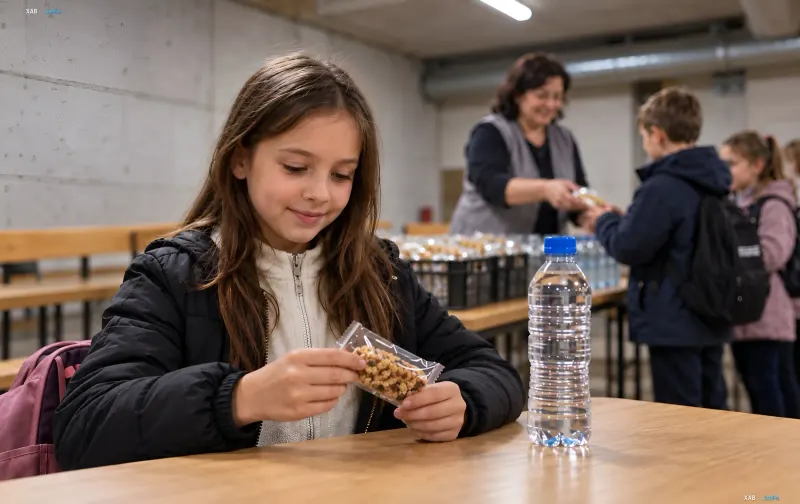
According to the agency's clarification, if more than four hours have passed since the previous meal and the tasting (triage) commission has established that the shelter is not equipped for consuming hot dishes, it is permitted to temporarily replace lunch with ready-to-eat food products. At the same time, four hours is not the maximum storage limit for prepared dishes without a refrigerator, but rather the exact condition under which hot meals may be replaced under certain circumstances. Ready-to-eat products must be safe, require no additional preparation, and be stored under proper conditions; their selection takes into account the children's age, food allergies, and special dietary needs.
What Can and Cannot Be Served in the Shelter
Crucially, if an alert began during the preparation or serving of lunch, the leftover dishes cannot be automatically served after the all-clear signal. First, it is necessary to determine how much time has passed since preparation, whether temperature conditions were maintained, and whether the dishes remain safe. The decision on the further use of the products is made by the tasting commission; if the dishes are subject to write-off, a corresponding act is drawn up. These requirements apply both to institutions where food is prepared independently and to those where catering is outsourced. Products requiring refrigeration can only be used if the required temperature regime is maintained, and the educational institution is obliged to ensure hygienic requirements, protection of products from contamination, and access to drinking water.
Water and Food Reserves: A 48-Hour Benchmark
During a prolonged stay in a protective structure, it is critically important to provide children and staff with drinking water. According to Prodspozhivsluzhba recommendations, daily water reserve volumes for schoolchildren depend on the child's age; water should be stored in hermetically sealed bottles or jugs, and when planning reserves, the number of children and staff, the duration of stay in the shelter, and storage conditions must be taken into account. The specified volumes serve as a guideline for creating a daily reserve, not as a norm that a child must drink during a single alert. Cabinet of Ministers Resolution No. 305 provides for the possibility of timely forming reserves of water and food products, and the founder of the educational institution can ensure food supply by creating a reserve of products and water for at least 48 hours of continuous stay in the shelter. The list of reserves may include long-storage products, drinks, as well as chilled dishes and culinary products provided storage conditions are met and expiration dates are regularly monitored.
Updated School Nutrition Standards
The clarification on meals in shelters complements the recently updated school nutrition requirements in Ukraine: lunch is recommended to start at 11:30, the daily vegetable norm for children aged 11–18 has been increased to 120 grams, and rules for special nutrition based on medical indications and food organization in shelters have been defined. Prodspozhivsluzhba emphasizes the importance of early preparation for prolonged air raids and power outages — it is what allows children to be provided with safe food and water, even if the usual routine of nutrition is disrupted.