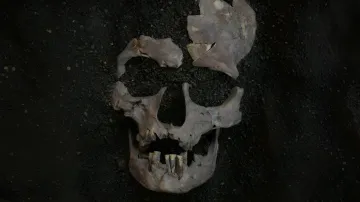
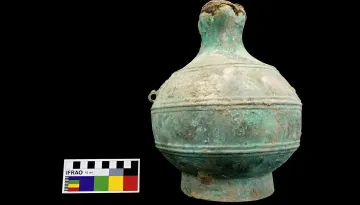
In the southern part of Eastern Siberia, in the Republic of Tuva, archaeologists have recovered hemp seeds and human hair containing traces of cannabinol from the ancient Tunnug-1 burial mound. According to an international research team, this is the oldest direct evidence that humans consumed cannabis for psychoactive purposes. The results were published in the prestigious American scientific journal Science under the title "Direct evidence of the use of psychoactive cannabis 2800 years ago."
Discovery in the Tunnug-1 mound
The Tunnug-1 mound is considered one of the largest and oldest tombs in the region. Using radiocarbon analysis and a complex of research methods, scientists determined that the burial took place at the beginning of the 8th century BC — that is, before the birth of the ancient Greek historian Herodotus. More than a thousand hemp seeds were extracted from the grave, most of which were preserved in ideal condition, as well as hair containing traces of cannabinol. The good preservation of the remains allowed researchers to determine that the hair was braided into long plaits and likely belonged to a woman buried in the mound.
Confirmation of Herodotus's accounts
Herodotus once wrote that the Scythians used hemp for intoxication. The find in Tuva has become archaeological confirmation of this ancient account. The study was conducted by an international team of scientists from Germany, Switzerland, Russia, and Sweden. The University of Bern (Switzerland) and the Max Planck Institute for Geoanthropology in Jena (Germany) played a key role in the analysis, while Russian co-authors included specialists from the Institute for the History of Material Culture of the Russian Academy of Sciences. Thanks to the unique preservation of organic matter, it was possible to conduct toxicological tests on the remains of a person who lived nearly three thousand years ago.
How the remains were analyzed
Lead researcher Gino Caspari of the University of Bern noted in an interview with CNN that finding such ancient plant remains is a huge stroke of luck, as they usually reach researchers in poor condition, and it is even rarer to find plants together with human soft tissues or hair. It was the combination of preserved seeds and hair that allowed for direct toxicological testing and obtaining clear data on cannabis consumption, rather than just indirect traces.
Ritual or medicine: how cannabis was used
Scientists cannot yet determine exactly how the hemp was used — whether it was eaten or if smoke from the burned plant was inhaled. Researchers lean toward the latter: similar findings from a later era indicate that plants were burned on hot stones in special incense burners. Hemp was likely part of a funeral cult. Around the central chamber of the mound where the find was made, the remains of dozens of horses and human bones were discovered; it is possible that mass ritual sacrifices were held there, and the victims may have been intoxicated with cannabis before death. Furthermore, the aroma of hemp may have been used to mask the smell of decay during long funeral rites.
Who were the Scythians
The Scythians were an ancient nomadic people who inhabited the steppe belt of Eurasia from the Danube to the Altai from approximately the 8th century BC to the 4th century AD; their related cultures spread as far as Southern Siberia and Xinjiang. The core of their later statehood, Great Scythia, became the Northern Black Sea region, the territory of modern Ukraine and southern Russia. The Scythians were fearsome warriors, with their army based primarily on cavalry. Archaeologists identify Scythian culture by three features: specific weaponry (composite bows, short akinakes swords), distinctive horse harness, and the famous "animal style" in art featuring images of panthers, deer, and griffins on gold and bronze items. Since the Scythians had no writing system, the main sources of information about them remain the works of ancient authors — primarily Herodotus — and large-scale excavations of their burial mounds.
Why the find survived
Organic materials decompose quickly, so determining exactly how hemp was used in ancient times is extremely difficult: it is known that in antiquity it was valued for its strong fibers for ropes and textiles and for its nutritious oil, not just for its medicinal or intoxicating properties. In the case of the Tunnug-1 mound, preservation was exceptional due to a unique microclimate: the mound is located in a marshy area in a river floodplain, and due to high humidity and cold, the organic matter inside was essentially sealed for centuries. This is what made it possible to obtain the oldest direct evidence of human cannabis consumption.