Many gardeners believe that if, by mid-summer, a petunia has become leggy, lost its shape, and stopped producing abundant blooms, it is time to throw it away. But this is a misconception. In reality, the plant may need just a few minutes of proper pruning to completely transform and produce a second wave of bright buds.
Why does a petunia need pruning?
Petunias are active plants, and the energy spent on flowering is a costly process. By mid-season, stems often stretch out, the bush becomes less decorative and loose, and the number of flowers decreases. This is precisely the moment for rejuvenation.
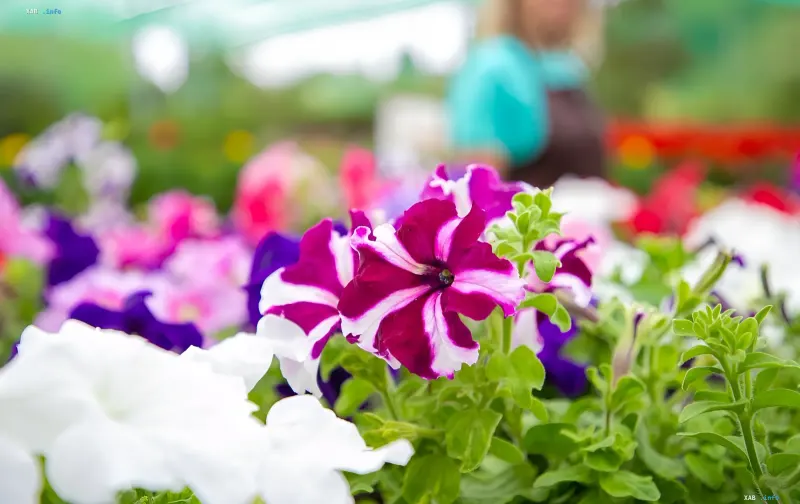
Pruning performs two main functions: it removes old, exhausted stems and stimulates the growth of new lateral branches. It is these young shoots that subsequently form that dense, lush bush we see in photos at the beginning of the season.
How to prune the plant correctly
The main rule of the procedure is not to be afraid to cut off excess. Even if it seems that very little of the plant will remain after pruning, under favorable conditions, the petunia will recover very quickly.
The process of renewing the bush consists of several stages:
- Inspection and preparation. First, you need to carefully inspect the bush and remove everything that has lost its decorative appeal: dried leaves, withered buds, and old flower stalks.
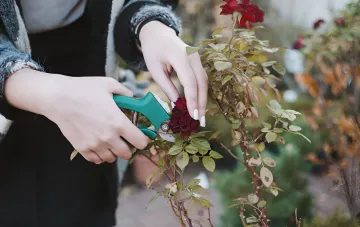
- Main pruning. It is recommended to shorten elongated stems by about half. If the plant is severely neglected, you can resort to more radical pruning—the petunia will withstand it.
- Tools. It is important to use a sharp tool (scissors or secateurs) to avoid damaging the stems and leaving jagged edges that could become entry points for infection.
After removing part of the stems, the plant will begin to actively form new branches from the leaf axils.
Care after pruning
Pruning is only the first step. After losing part of its green mass, the plant needs strength to recover. Therefore, immediately after the procedure, the petunia must be fertilized.
An ideal option would be a complex fertilizer containing the necessary nutrients for growing new foliage and laying future buds. For owners of pots, hanging baskets, and small flower beds, fertilizers in small dosages that dissolve easily in water are convenient. For example, a 5 g stick is calculated for 1.5 liters of water—this allows you to prepare the exact amount of solution without unnecessary leftovers.
With the right approach, the results will not be long in coming. Within a few days, new leaves and young shoots may appear, and soon the bush will become lush and blooming again. Do not be afraid to rejuvenate in mid-summer—it is timely help that helps petunias extend their season of beauty.