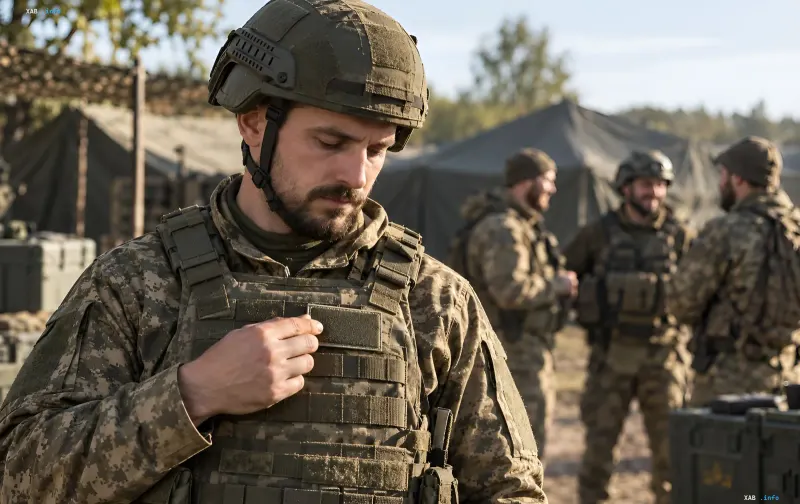
A military callsign is not just a convenient abbreviation for radio communication. For a fighter, it becomes a second name that carries the history of a specific person, their character, an action, or even an entire chapter from the unit's life. Kateryna Hurnevych, head of the "Vytoky" project by the Zagoriy Foundation, told Styler this exclusively, drawing on materials from the digital publication "Guide to Military Traditions" prepared by researchers and active-duty military personnel. According to her, a callsign can be chosen by the fighter themselves, suggested by brothers-in-arms during basic training, or assigned during service within the unit — and in each of these cases, a short word hides its own narrative.
From Surname Abbreviation to Character Trait
The most common way a callsign appears is through the abbreviation of a surname. For example, the chief sergeant of the 28th Brigade, Maksym Palamarchuk, is called Palamar in his unit. But names are not always taken from documents. Hurnevych notes that brothers-in-arms often "suggest" a callsign based on a displayed character trait or appearance: a cunning fighter is given the name Lis (Fox), while the oldest in the company is called Ded (Grandpa) or Batya. The basis for a new name can be a school nickname, the name of a hometown or village, a profession, a hobby, or even an incident remembered by fellow soldiers. As a result, the callsign becomes the label by which a person is recognized in the unit faster than by their real surname.
Personal Meaning and Symbolism
For the servicemember themselves, a callsign often acquires deep personal significance. Hurnevych cites the example of Oleksandr, callsign Kremen (Flint), the hero of the article "Amulets of Ukrainian Warriors" in the "Vytoky" guide. According to the fighter, in this name he hears resilience and inner strength — qualities that, in his opinion, are necessary on the frontline. Another telling case is connected with a specific action: signalman Mykhailo Oliinyk received the pseudonym Veter (Wind) because he delivered an encrypted note to the station within 15 minutes. The speed and accuracy of this action became a reason for his brothers-in-arms to consolidate an image around him that has accompanied him in the unit ever since.
Historical Roots: From Cossacks to OUN and UPA
The tradition of the "second name" in the Ukrainian military community goes far beyond modern times. Among the Zaporozhian Cossacks, nicknames were widespread and could eventually turn into family surnames. Changing a name was part of the ritual of entering the military community — upon receiving a new name, a person seemingly entered a new social status. Within the OUN and UPA, pseudonyms were primarily used for conspiracy: when investigators knew only the pseudonym, brothers-in-arms and relatives were less vulnerable to blows, Hurnevych emphasizes. Since 2014, the use of callsigns in volunteer battalions has been linked, in particular, to the need to hide identities on the radio, which turned a conspiratorial practice into an everyday norm.
Independent Choice and Cultural Influence
Not all callsigns appear "from above" or from brothers-in-arms. Some fighters choose their second name independently, often under the impression of something they read or saw. Anna Ivanytska, for example, became Motria after reading a book from the "Prosvita" reading room. Such examples show that in the military environment, a callsign can be both a collective decision of the unit and a deeply individual choice reflecting a person's personal cultural baggage. Hurnevych emphasizes: "Every tradition once had a beginning. Just like now, many customs are born before our eyes. These are practices that the military creates today, passes on, and fills with their own vision."
"Guide to Military Traditions": How the Publication Was Created
The materials on which Hurnevych relies are gathered in the free digital publication "Guide to Military Traditions," created by the "Halt" and "Vytoky" projects. Thirty experts worked on the guide — historians, ethnographers, anthropologists, and people with military experience. About 30 modern AFU units shared their traditions and explained their meaning. The publication's partners include "Lokalna Istoriya," the D3 TEAM militarist society, and the National Museum of the History of Ukraine in the Second World War. The authors plan to supplement the guide: at the end of the publication, there is a form through which military personnel can talk about traditions that did not make it into the first version. Separately, "Halt" and "Vytoky" have prepared a practical guide on introducing traditions in modern military units.