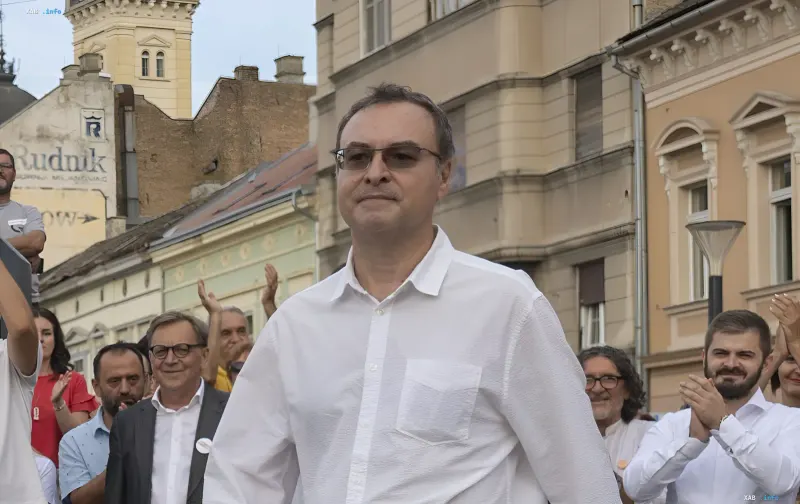
The future government of Serbia, which is to be formed by the winner of the early parliamentary elections on October 25, 2026 — the opposition 'Student List' (the 'Students Win' bloc) — does not intend to impose sanctions against Russia. This was stated in an interview with the Russian propaganda media RT Balkan by party representative Jovo Bakić, a future MP from the 'Student List', as reported by RBC-Ukraine. According to him, anti-Russian restrictions 'will change nothing' and will instead inflict damage on Belgrade itself.
'Sanctions Will Change Nothing'
'Sanctions from such a small country as Serbia will change nothing for Russia, but symbolically it will be very bad,' Bakić stated. He emphasized that Serbia respects Russia 'as a great state,' 'a historically important partner,' and 'in many cases a defender,' and therefore does not intend to change its foreign policy course regarding Moscow. The future MP also recalled that Serbs 'survived UN sanctions' in the 1990s and 'know very well what kind of ordeal that is,' which, according to his logic, should deter a repetition of such an experience.
Energy Dependence and EU Pressure
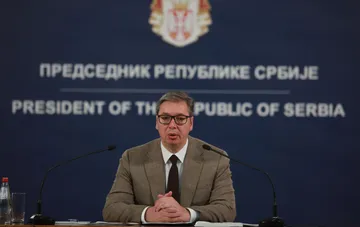
A key practical argument against sanctions remains Serbia's critical dependence on Russian energy supplies, which the European Union demands Belgrade abandon as part of its EU integration course. Against this backdrop, Bakić stated: 'We are not here to please foreigners, but to work in our national interests.' According to him, the 'Student List' has energy experts who will handle this issue. Earlier, Russian Foreign Minister Sergey Lavrov, speaking on September 26 at the UN General Assembly, accused the EU of 'literally forcing' Belgrade to impose sanctions against Russia in exchange for an 'illusory' prospect of membership, while President Aleksandar Vučić noted back in July that sanctions do not guarantee swift accession to the EU anyway.
Context: Victory After Nearly Two Years of Protests
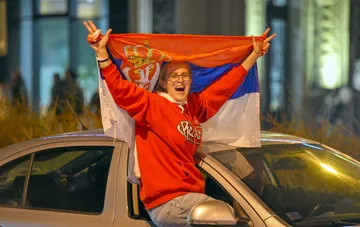
The early parliamentary elections took place against the backdrop of nearly two years of student protests, which were initially triggered by the deaths of 16 people as a result of a canopy collapse at the Novi Sad railway station in 2024. According to the election commission, the 'Student List' won in 22 cities, including Belgrade, and surpassed the political force of ex-President Aleksandar Vučić by more than 13%. According to preliminary data from research organizations Ipsos and CeSID, the 'Students Win' bloc received about 52% of the vote and can count on roughly 138 out of 250 parliamentary mandates, whereas the 'Aleksandar Vučić — United Serbia' bloc won 39.3% (about 104 mandates). Formulating a majority independently requires 126 mandates, and on the evening of October 25, Vučić conceded defeat of his bloc, estimating the student movement's result at 135–140 seats.
What This Means for Relations with Ukraine and the EU
As analyzed by the Serbian business publication Parametar, a fundamental shift in Belgrade's position on the Russian-Ukrainian conflict is unlikely to occur in the near future: the student movement stands for Ukraine's territorial integrity while simultaneously announcing its intention to maintain the refusal of sanctions against Russia. Thus, the new government, judging by statements from its representatives, will continue its course toward a balance between striving for EU integration and maintaining energy and political ties with Moscow, which remains one of the main challenges for relations between Belgrade and Brussels.