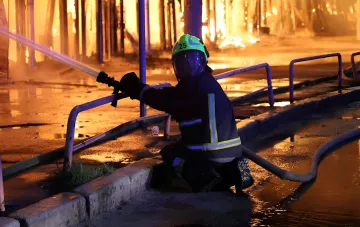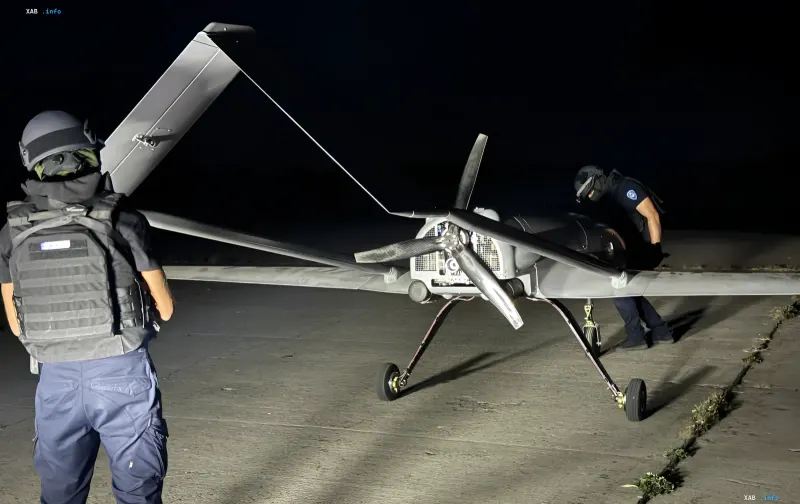
On the night of August 12, 2026, a large-scale sabotage operation was recorded in Crimea, specifically in Sevastopol, which is currently occupied by Russian forces. The city was completely cut off from the power supply as a result of an attack by Ukrainian unmanned aerial vehicles. An official representative of the occupation administration, the so-called "governor" Mikhail Razvozhayev, confirmed the blackout, stating that a special operating mode has been introduced at critical facilities and emergency crews have begun to assess the scale of the damage.
Total Blackout and Communication Collapse
The situation in the city is slipping out of the control of the occupation authorities. In addition to the power outage, the ATESH movement, operating on the territory of the peninsula, reports serious malfunctions in telecommunication networks. Sevastopol residents are complaining en masse about the lack of internet and mobile connectivity, which hinders the transmission of information and the coordination of rescue services. Local residents are publishing outage maps, which indicate that not only residential areas but also administrative buildings have been hit.
Expansion of the Strike Zone: Attacks on Novorossiysk
The attack on Sevastopol was part of a broader operation by the Armed Forces of Ukraine (AFU) to destroy enemy infrastructure. On the same night, August 12, a massive strike was launched against Novorossiysk. According to data, the operation utilized "Palianytsia" jet drones, "Neptune" cruise missiles, and unmanned maritime systems. As a result of the attack in Novorossiysk, probable hits on military ships, as well as grain and oil terminals, were recorded. The operation of the grain terminal in the port was suspended, which will deal a significant blow to the logistics of Russian resource exports.
Contradictory Data
There is a discrepancy in details between the official rhetoric of the occupation authorities and data from local sources. Mikhail Razvozhayev, in his statements, attempts to minimize the scale of the tragedy, focusing on "local damage" and the work of specialists. At the same time, data from the ATESH movement and reports from local residents point to a systemic collapse of the city's power grid. Razvozhayev claims that power will be restored in the shortest possible time, however, the lack of communication and darkness in the city at dawn on August 12 suggest that the damage to the energy infrastructure is critical, and restoration will take significantly longer.
AFU Strategy: Strikes on Rear and Front Lines
The events of the night of August 12 demonstrate the evolution of the tactics of the Armed Forces of Ukraine. The AFU continues to methodically destroy enemy infrastructure not only in the deep rear but also in territories directly adjacent to the front line, including the temporarily occupied territories of Crimea. The use of a combined arsenal — from heavy missiles to kamikaze drones — allows for precise strikes on power nodes and logistics centers, paralyzing the work of the occupation regime.