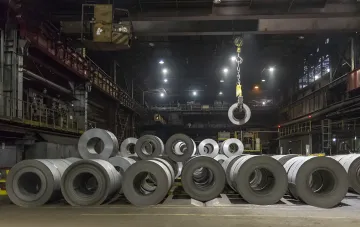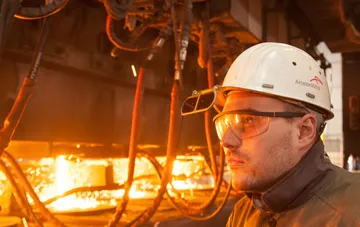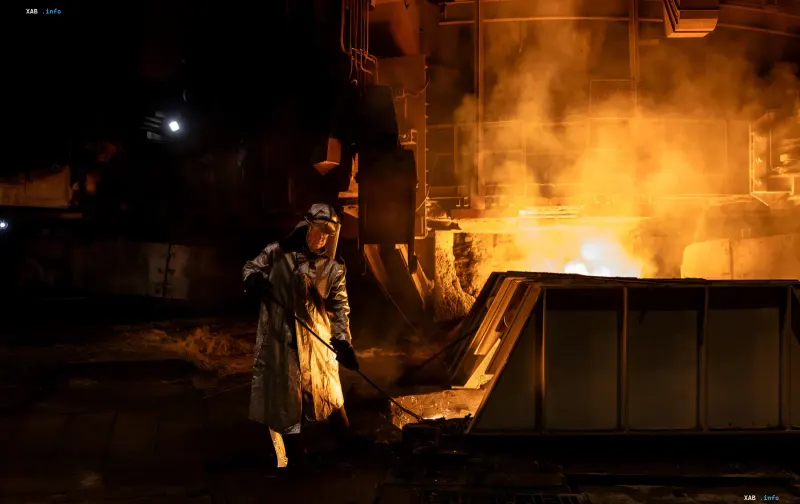
The blow to Ukraine's metallurgical industry following a series of destructive missile attacks by the Russian Federation threatens to cause catastrophic consequences for the country's entire economy. According to preliminary calculations by analysts at the specialized portal GMK Center, the total damage from the shutdown of key enterprises could reach a staggering $6.5 billion. This amount consists of direct losses in export revenue and the need for large-scale imports of steel products to cover the country's domestic needs.
Scale of the Crisis and the Threat of Stagnation
According to experts' pessimistic forecast, if the current critical security situation does not undergo cardinal improvements, a significant part of metallurgical plants risks permanently ceasing their production activities. Following the results of 2026, steel smelting volumes in Ukraine may be fixed at the level of the first eight months, reaching about 4.3 million tons, which demonstrates a devastating drop of 39% compared to previous periods. The situation in 2027 looks even more threatening: under the negative scenario, domestic industry may completely stop steel production, dropping to zero indicators.
Blow to Related Sectors and Foreign Trade
The crisis will inevitably affect the mining sector, which will face a sharp contraction of the domestic market and colossal logistical barriers due to the blocking of sea transport routes. It is projected that the production of iron ore raw materials in 2026 will decrease by 37%, and in 2027 the drop will deepen by another 55%. Export supplies to European countries from September 2026, provided minimum security is maintained, will only be able to stay at the level of about 1 million tons per month.
Financial Losses and Import Dependence
The country's foreign trade balance will suffer record losses: due to the loss of pig iron and steel production volumes, export revenue will decrease by $2.5 billion in 2026 and by another similar amount in 2027. In addition to this, there will be an acute need to replace scarce domestic products with expensive imports, the costs of which in 2027 will amount to about $1.5 billion. In total, the negative trade balance will reach $6.5 billion compared to the baseline indicators of 2025.
Contradictory Data
Despite the general consensus of GMK Center analysts regarding the large-scale crisis in the industry, there are certain discrepancies in assessments of the impact of external factors, in particular European quotas. While some specialized experts focus exclusively on the consequences of infrastructure destruction and the shutdown of plants inside the country, other researchers point to concomitant pressure from EU foreign trade restrictions, which are capable of additionally reducing Ukraine's steel exports by 1.5 million tons and bringing up to another $1.1 billion in losses annually. Nevertheless, all parties agree that the restoration of industrial giants will require unprecedented investment and time.
Long-term Risks for the Country's Recovery
The prolonged downtime of metallurgical enterprises creates a cumulative negative effect: the longer plants remain de-energized or destroyed, the more difficult and expensive their technical revival will be. The loss of its own metallurgical base directly strikes future large-scale post-war infrastructure restoration programs, making Ukraine critically dependent on imported raw material supplies. Recall that in peacetime, the metallurgical sector was one of the main generators of foreign exchange earnings and tax revenues to budgets of all levels, providing a significant share of the country's GDP.