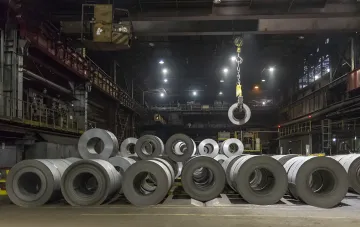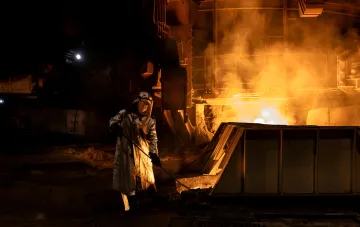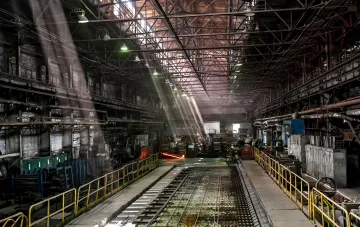
In August 2026, Ukrainian metallurgy came under dual pressure: missile strikes on key enterprises and a de facto blockade of exports through the Black Sea ports led to a sharp drop in output. According to the industry association Ukrmetallurgprom, steel production in August stood at 277,000 tonnes, and rolled metal at 270,000 tonnes, roughly half the figures for August 2025.
Strikes on enterprises and the maritime blockade
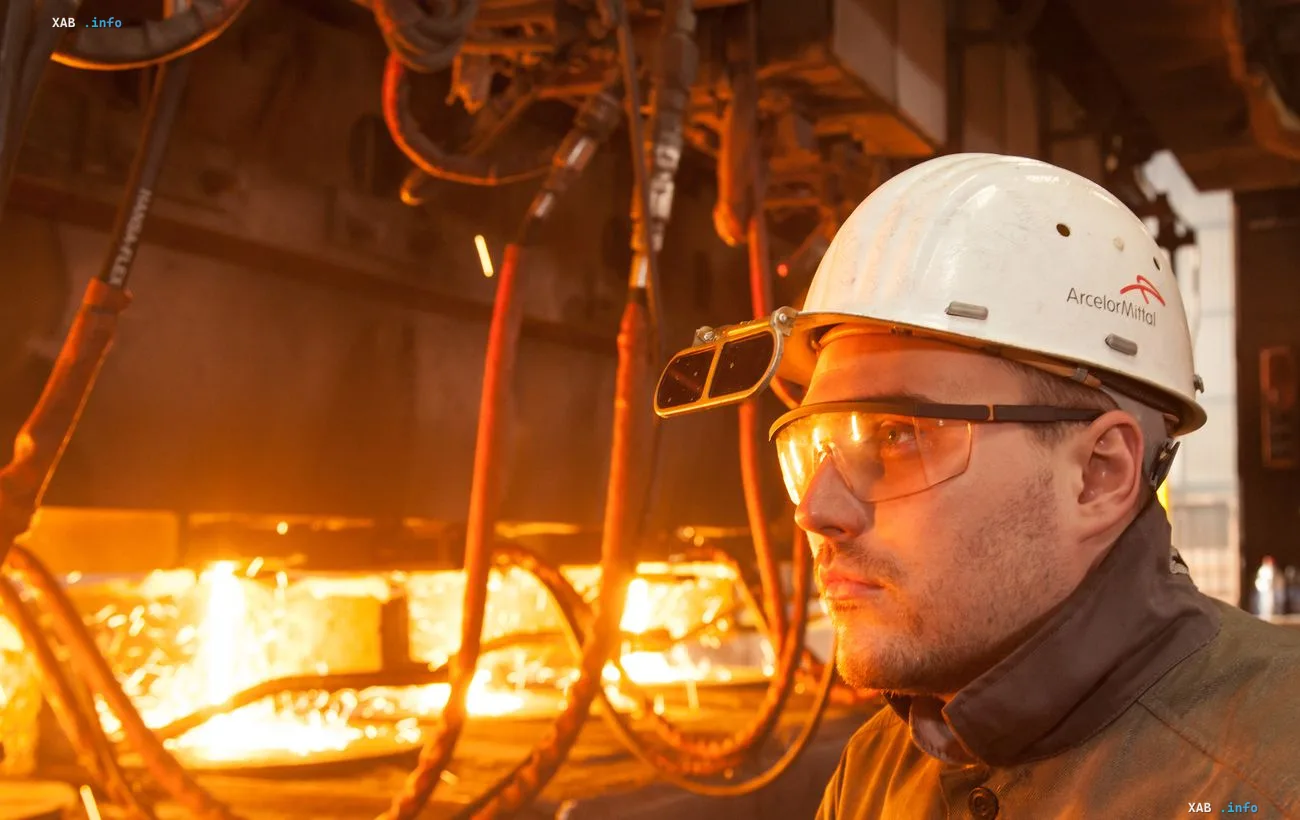
The decline in output is directly linked to a series of attacks. In August–September, Zaporizhstal and Kametstal (entities of the Metinvest group) were shut down, the largest plant ArcelorMittal Kryvyi Rih partially halted operations, and on September 5 the Dnipro Metallurgical Plant (DCH group) was struck. In mid-August, a missile strike on ArcelorMittal Kryvyi Rih killed two people and injured 13. Since late July, commercial shipping out of the Greater Odesa ports has effectively stopped due to shelling, depriving the industry of its main export channel.
What deputies and experts are proposing
To stabilize the situation, MP and head of the committee on financial, tax and customs policy Danylo Hetmanets recommends extending the affordable credit program "5-7-9" to large industry, ensuring metallurgists access to state guarantees, and expanding insurance of industrial projects against military risks. Deputy chair of the committee on economic development Dmytro Kyselytskyi insists on stabilizing Ukrzaliznytsia tariffs, resuming negotiations with the EU on a CBAM deferral (at least until the end of martial law plus one year), and restoring quotas to 2025 levels. The president of Ukrmetallurgprom, Oleksandr Kalenkov, proposes restoring the Solidarity Lanes and introducing anti-dumping duties on metal products from China and Turkey.
Contradictory data
There is a slight discrepancy in the sources regarding the scale of the decline. In the RBC-Ukraine publication and according to Ukrmetallurgprom data, production is said to have fallen "by 2 times" (roughly 50%) compared with August 2025. Meanwhile, a number of outlets, in particular UNIAN, characterize the downturn as a 57% drop. The difference between "by half" and "by 57%" is not fundamental to the overall picture, but it indicates that the exact magnitude of the decline depends on the calculation method and the comparison period; both estimates confirm a deep crisis in the industry.
Risks for the national economy
The most in-demand measure remains opening the maritime corridor, since alternative logistics cannot fully replace the deep-water Black Sea ports. The Ukrainian National Committee of the International Chamber of Commerce warned: if the maritime corridor does not resume operations, Ukraine could lose about 10% of GDP, $17 billion in export revenue, and a further $8.5 billion in tax receipts. Experts also call for refraining from further increases in Ukrenergo and local energy company tariffs and for accelerating the state's repayment of debts to metallurgical companies.