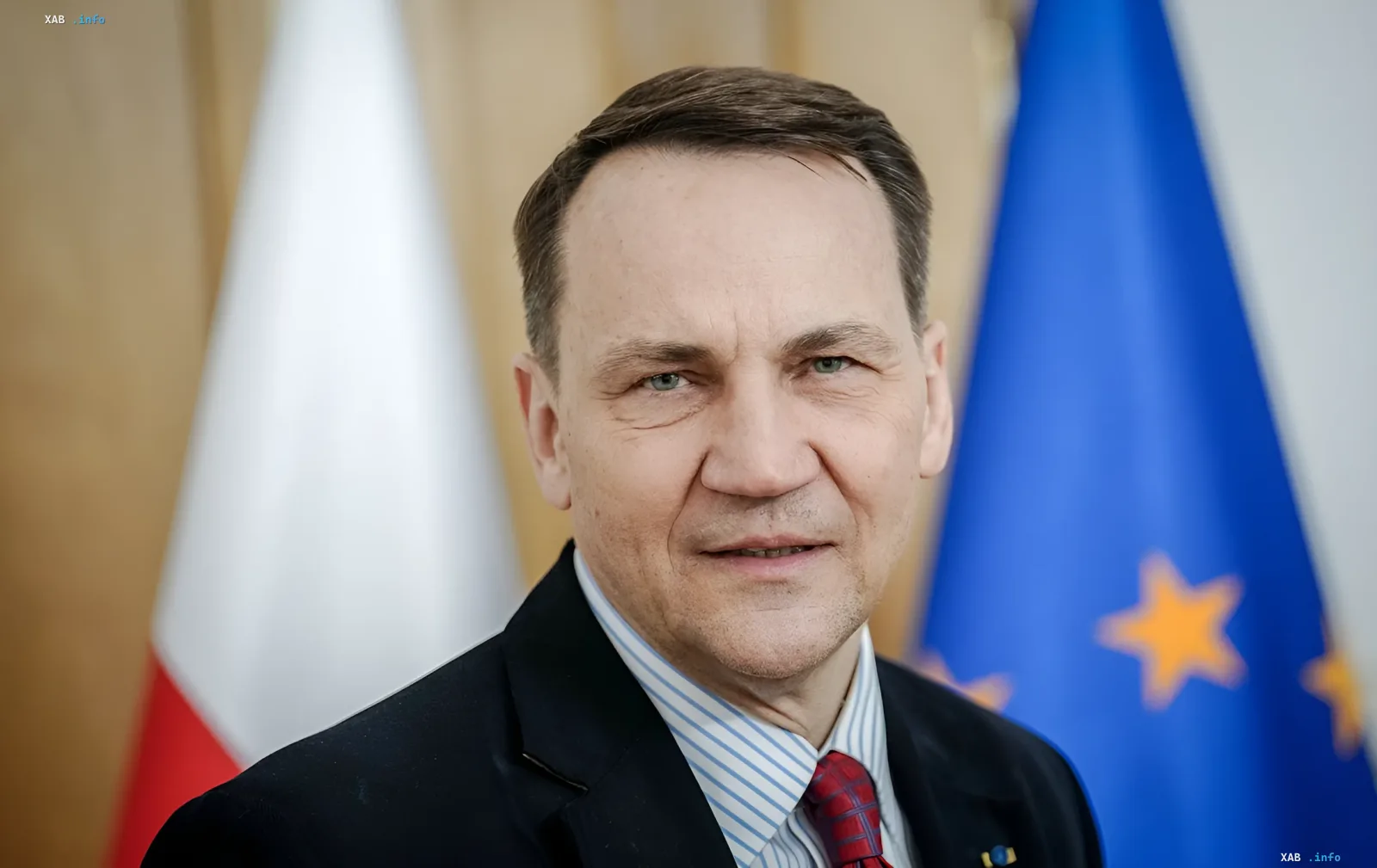
The Minister of Foreign Affairs of Poland, Radosław Sikorski, made a sharp statement on the nature of the confrontation with Russia, saying that, in his assessment, Moscow is already waging a hybrid war against European countries and that this challenge must be met with a response "before it is too late." The Polish diplomat's remarks came against the backdrop of a recent attack by Russian drones on a Ukrainian aircraft at Leipzig airport, which Germany publicly attributed to Russia. According to Sikorski, the prevailing situation is already difficult to classify as ordinary peacetime, and against this backdrop Warsaw expressed its support for both Ukraine and Berlin.
"We do not seek a conflict"
At the heart of Sikorski's statement is an attempt to draw a red line without escalation. "We do not seek a conflict with Russia, and it seems that Russia is waging a hybrid war against us — and we need to demonstrate to Putin that he will not be able to intimidate us," said the head of the Polish Foreign Ministry. Thus, Warsaw frames its position as defensive: in his words, the point is not to look for a pretext for war, but to demonstrate resilience in the face of pressure, which Sikorski regards as an already ongoing, albeit unconventional, conflict.
Sanctions: around 1,620 names await political will
As a practical tool of resistance, Sikorski pointed to strengthening sanctions pressure. According to him, a proposal is already ready to add around 1,620 individuals and legal entities to sanctions lists. At the same time, he directly identified the bottleneck: adopting such a package requires the political will of the leaders of European countries. "We must adopt this in response to Putin's attacks in Germany and other countries," the Polish minister urged, linking the sanctions steps to specific incidents on EU territory.
Tightening the regime for diplomats and intelligence officers
In addition to economic restrictions, Sikorski proposed narrowing the space for the operations of Russian diplomatic and intelligence structures in Europe. In his view, the current regime should be tightened, which in effect means stricter control over the activities of Russian officials on the continent and a reduction in their operational freedom. This proposal fits into the overall course that, according to Sikorski, should serve as a response to a series of incidents, including the events in Leipzig.
Warning about a "false flag" scenario
In additional comments, Sikorski acknowledged that Russia might resort to a "false flag" operation, including the use of Ukrainian drones, including against Poland. This statement is in the nature of a warning about possible provocations and underscores, in his words, the need to be prepared for scenarios in which responsibility for an incident could be artificially shifted. It is important that such formulations are an assessment and forecast by the Polish minister, not a statement of already completed facts.
Berlin's reaction and support for Ukraine
The context for Sikorski's statements was Germany's position: Berlin publicly accused Russia of the attack on a Ukrainian aircraft at Leipzig airport and immediately outlined the nature of its response. According to reports, in the FRG it was also promised that Ukraine would receive missiles and thousands of drones to deter Russia. The totality of these steps — from Warsaw's sanctions proposals to Berlin's military promises — forms, according to the Polish Foreign Ministry, a package of measures that should show Moscow that hybrid pressure will not go unanswered.