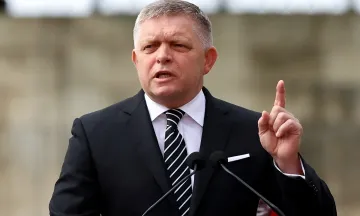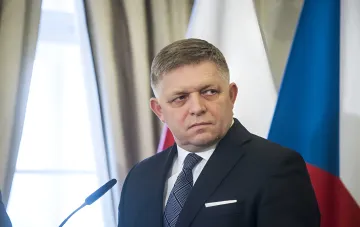
Slovak Prime Minister Robert Fico announced that Bratislava will not participate in the new 45 billion euro European Union loan program for Ukraine. The head of the Slovak government stated this in a video message published on his Facebook page, emphasizing that the country's position on this matter remains unchanged. At the same time, Fico assured that Slovakia would continue to provide humanitarian aid to Kyiv, while refusing to participate in military lending.
Bratislava's position and the background of the refusal
According to Fico, Slovakia did not join the previous 90 billion euro loan program for Ukraine and does not intend to change its position. Earlier, in October 2026, Bratislava and Budapest had already refused to join the financing of a new 70 billion euro EU loan for Ukraine, stating they would not take on financial obligations for that program. Thus, the refusal to participate in the new 45 billion euro mechanism is a continuation of the Slovak government's consistent line.
Pressure from Berlin and the PM's reaction
Fico's statement came against the backdrop of German Chancellor Friedrich Merz suggesting the possibility of blocking the EU's next seven-year budget. According to him, this could happen if all EU member states do not commit to financial support for Ukraine in 2027 and beyond. Fico responded to this, stressing that he does not intend to be pressured by Berlin, and pointed out that the loan discussion is accompanied by political pressure related to the approval of the EU budget for 2028–2034.
The 45 billion euro mechanism and repayment terms
In November 2026, the European Commission proposed a new 45 billion euro support mechanism for Ukraine. Of this sum, 20 billion euros are planned for budgetary needs, and another 25 billion euros for military aid. Ukraine is expected to repay the bulk of the loan after receiving reparations from Russia. It is this military component that Fico considers makes Slovakia's participation impractical: the Prime Minister believes such support only prolongs the war.
Visegrad meeting and Brussels' expectations
The issue of participation in the loan program is scheduled to be discussed on Monday in Bratislava during a meeting of the Visegrad Group prime ministers — Poland, Czech Republic, Slovakia, and Hungary — with the Chancellor of Austria. Meanwhile, Brussels is counting on a consensus: European Commission President Ursula von der Leyen, presenting the proposal for an additional 45 billion euros on November 18, declared she was "very confident" about the participation of all 27 member states, including Slovakia, Hungary, the Czech Republic, and Bulgaria, which had previously opposed it. The divergence between these expectations and Fico's statement makes the upcoming talks a key test for EU cohesion on the Ukraine issue.