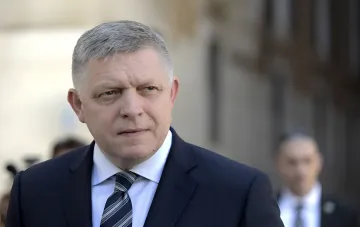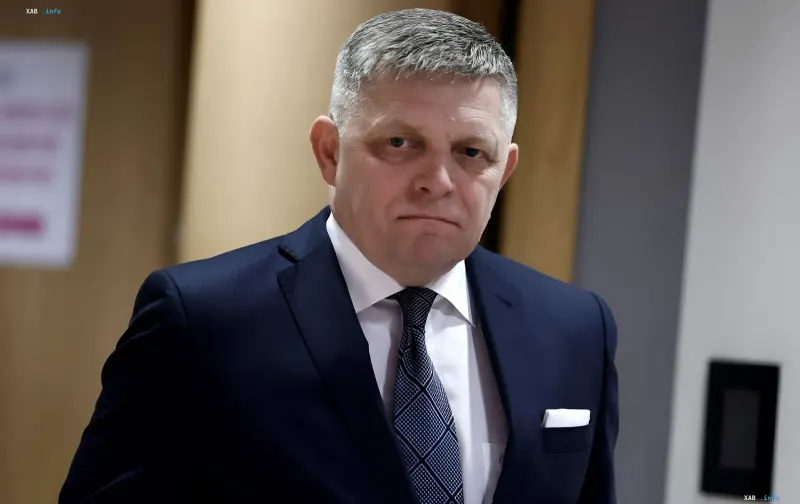
Slovakia will not participate in the European Union's new 45-billion-euro loan for Ukraine, but it also has no intention of blocking its provision. This was stated by Slovak Prime Minister Robert Fico, whose remarks were reported by RBC-Ukraine citing Radio Liberty. The head of the Slovak government voiced his position ahead of the EU summit, where the bloc's multiannual budget and mechanisms for financing Ukraine are being discussed.
Bratislava's Stance: Not Participating, But Not Interfering
According to Fico, Slovakia will not join the new loan, nor will it hinder its issuance. He emphasized that his country did not participate in the previous 90-billion-euro loan program for Ukraine either, and today Bratislava's position regarding new financial support for Kyiv remains unchanged. Thus, Slovakia adopts an intermediate position: formal participation in the loan is ruled out, but a veto on its adoption within the EU has not been declared.
«The European Commission's Trick»: The Dispute Over Loan Structure
Fico criticized the very structure of the proposed mechanism. He described the division of the loan into military and non-military parts as «a trick by the European Commission,» stating that formally it is a single loan. According to his calculations, participating in the loan would cost Slovakia approximately 11 million euros annually — which, by his estimate, would be the country's interest expense on the loan.
Alternative: Bilateral Aid Instead of Interest
Instead of participating in the joint loan, Fico proposed directing the funds that would have gone toward servicing it into bilateral aid for Ukraine. He named four specific areas: Slovak-made civilian equipment, diesel fuel, locomotives, and emergency electricity supplies. «In other words, no money, only what they really need. Crucially — of Slovak production, so that it supports our industry,» the prime minister explained. At the same time, he emphasized that Slovakia has no fundamental objections to Ukraine receiving about 140 billion euros directly from the EU's multiannual budget for 2028–2034.
Context: EU Summit and Pressure from Berlin
The statement came against the backdrop of tense negotiations over the multiannual budget. Fico reacted to a statement by German Chancellor Friedrich Merz, who had previously warned about a possible block on the next seven-year EU budget if countries do not commit to financing Ukraine in 2027 and beyond. The Slovak prime minister stressed that he does not intend to submit to pressure from Berlin, adding that, in his view, military lending only prolongs the war. Issues of financial support for Ukraine were scheduled to be discussed on November 23 in Bratislava at a meeting of the prime ministers of the Visegrad Group countries — Poland, the Czech Republic, Slovakia, and Hungary — with the Chancellor of Austria.
What's Next
Recall that the EU plans to provide Ukraine with a 45-billion-euro loan in 2027. According to Reuters, four countries oppose participating in financing the loan. Recently, the European Commission presented a new mechanism for supporting Ukraine for 2027, which provides for a loan of up to 45 billion euros; under this mechanism, Kyiv is to repay the principal debt after Russia pays reparations. The outcomes of the EU summit and the position of the remaining member states will determine whether the loan and the bloc's multiannual budget can be agreed upon without blocking votes.