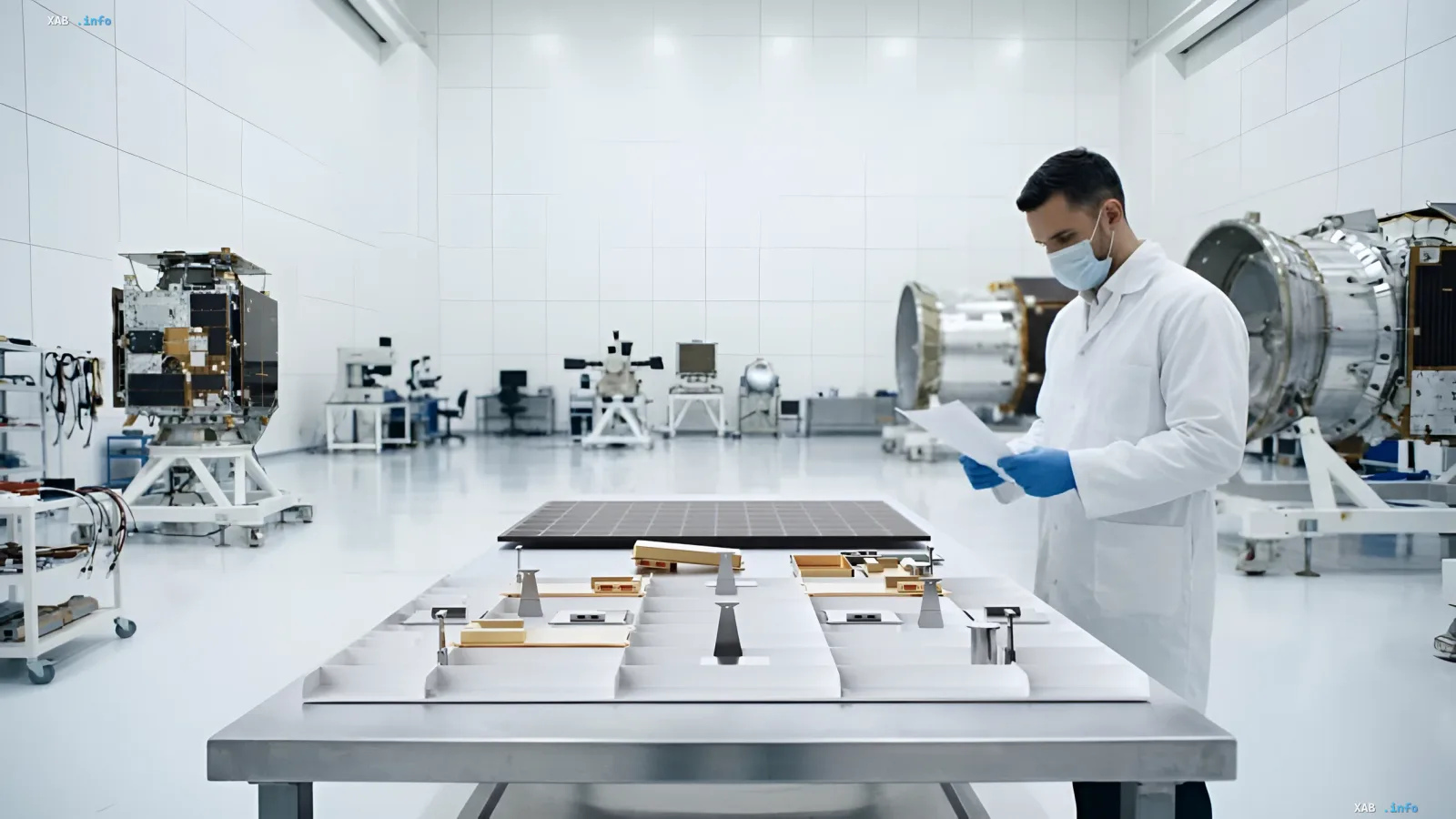
In a world where energy consumption by artificial intelligence systems is growing exponentially, engineers are looking for solutions beyond Earth. The company Sophia Space, in collaboration with the California Institute of Technology (Caltech), has received a patent for a revolutionary architecture of large modular data centers designed to operate in orbit. The key advantage of the development is the abandonment of traditional liquid cooling systems in favor of passive heat dissipation.
Revolution in thermal regulation: TILE modules
The patent, issued on July 14, describes a scalable design for computing and storage modules that operate exclusively on solar energy. Instead of creating a single complex cooling system for the entire satellite, the developers propose using independent blocks called TILE (Thermal Integrated LEO Edge — "thermal integrated module for low Earth orbit").
Each module is equipped with four processors and operates on the principle of thermodynamic separation: it receives power from solar cells on the illuminated side, while dissipating heat through the opposite surface by radiating it directly into the cold vacuum of space. This solution allows for the complete elimination of pumps, pipelines, and coolants.
Scalability and fiber optics
The system architecture is built on the principle of node independence. The modules are connected by fiber optic data transmission lines but do not share power or heat exchange lines. According to the developers, such isolation critically simplifies the scaling of orbital computing systems, allowing for increased capacity without complicating the engineering infrastructure.
The development grew out of the Space-based Solar Power Project, under which Caltech researched technologies for collecting solar energy in space. However, the shift in focus to computing became a response to new challenges. As Sophia Space founder Leon Alkalai noted, the sharp increase in demand for AI computing power has given the idea of orbital data centers new significance. Placing computing in space allows for the use of practically unlimited solar energy and avoids the limitations of terrestrial power grids, with the main engineering challenge being the effective cooling of equipment.
Launch plans and investments
The company, founded in 2023 by a former technical director of NASA's Jet Propulsion Laboratory (JPL), has already attracted $22 million in investment. Sophia Space plans to conduct the first orbital test of the TILE technology in 2027 on the Apex Nova satellite platform.
Commercialization of the project is scheduled for 2028, when module sales will begin. Full-scale testing of an orbital constellation consisting of 4–6 units is planned for 2029–2030. During this time, Caltech will continue joint research, focusing on creating lightweight deployable structures and improving thermal control systems for future orbital data centers.