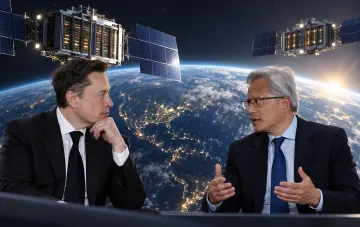
The U.S. Federal Communications Commission (FCC) has granted SpaceX conditional approval to deploy one million Starmind satellites, which the company plans to use as orbital data centers. According to the regulator's assessment, a full deployment would increase the number of active satellites in Earth's orbit by approximately 50 times. FCC Chairman Brendan Carr called the decision "the opening of a new frontier for computing infrastructure," which he believes will help the U.S. maintain its technological leadership.
Conditional Approval
It is important to emphasize that this approval does not mean that orbital data centers have proven their technical or economic viability. The authorization merely provides SpaceX with a broad timeframe for project preparation and implementation. The regulator has effectively secured the company's right to long-term deployment without requiring immediate confirmation of the concept's functionality.
Timeline and Orbital Architecture
Under the decision, the company has been granted 14 years to deploy the system. SpaceX proposed placing the satellites in six orbital shells at altitudes ranging from 550 to approximately 1000 km. This architecture envisions a multi-layered structure of orbital computing nodes distributed across several altitude bands.
Disposal of Satellites: Key Request Denied
The company also requested that the FCC allow decommissioned satellites located above 600 km to be moved to special graveyard orbits around Earth or into heliocentric orbits around the Sun, rather than deorbiting them to burn up in the atmosphere. The regulator denied this request due to a lack of data supporting compliance of such disposal methods with commission requirements. SpaceX will need to obtain separate authorization before deorbiting satellites without atmospheric re-entry.
Public Comments and Criticisms
During the review process, the agency received approximately 1,500 public comments. A number of organizations, including the Secure World Foundation and the American Astronomical Society, warned of potential risks associated with a massive increase in the number of objects in orbit. These concerns were considered during the process but did not prevent the final positive decision.
Why the FCC Rejected an Environmental Review
Despite these concerns, the FCC declined to conduct a comprehensive environmental review of the project. The commission stated that the issue of emissions from thousands or tens of thousands of rocket launches is "beyond its jurisdiction." The decision also cites a policy shift adopted in October: since space activities take place outside U.S. territory, they are not subject to the environmental impact assessment requirements mandated by the National Environmental Policy Act (NEPA). Thus, the regulator limited its analysis to its own jurisdiction, effectively pushing the assessment of environmental impacts beyond its authority.