The US Federal Communications Commission (FCC) has approved SpaceX's application to deploy a constellation of one million satellites equipped with computing hardware in Earth orbit. As envisioned by the developers, the spacecraft are to operate as space-based data processing centers — essentially orbital "data centers" powered by solar energy. The company Amazon, satellite communications operator Viasat, and the American Astronomical Society (AAS) actively opposed the approval, but the regulator ruled in SpaceX's favor.
What was approved and on what terms
Under the terms of the issued license, SpaceX is required to begin deploying the constellation no later than November 2033. By November 2035, 10% of the declared number of spacecraft — that is, 100,000 satellites — must be in orbit, and by November 2038 no fewer than 50% of the total, or 500,000 units. Thus, the regulator has laid out a multi-year schedule for bringing up orbital computing infrastructure, tied to specific milestone deadlines.
The regulator's position and Musk's reaction
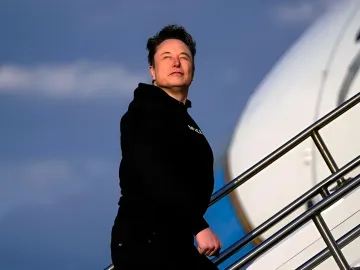
FCC Chairman Brendan Carr, announcing the decision on the social network X, called SpaceX's constellation, named Starmind, a project that — alongside similar initiatives by competitors — will use solar energy and help "strengthen America's leadership in the field of superintelligence." In the official document, the commission noted that the approval will allow SpaceX to "become a pioneer in developing cutting-edge technologies that will strengthen US leadership in the space industry and the field of artificial intelligence." SpaceX CEO Elon Musk reacted to the decision briefly: "Very grateful. This will be a valuable asset for both America and the entire world."
Who opposed it
The official FCC document records that the application "received a significant number of comments from the public, including petitions to deny the project," submitted by Kuiper Systems LLC (the Amazon Kuiper project) and Viasat, as well as the American Astronomical Society. As early as March, Amazon had appealed to the regulator to reject the application, characterizing Starmind as "more of an ambitious dream than a real plan" and noting that its implementation would require "centuries." The company also pointed out that SpaceX had provided extremely scant information on how it intended to fulfill "its grand promises." In response, the FCC chairman stated that Amazon "should pay attention to the fact" that it itself is behind the deadlines it set for deploying its own Amazon Leo (formerly Project Kuiper) constellation, which is positioned as a competitor to the Starlink satellite internet.
Criticism from the scientific community
The decision was criticized by astrophysicist and writer Adam Becker, who wrote to CNBC that any serious attempt to implement such a project would lead to even greater pollution of the night sky and create the risk of a chain reaction of space debris collisions, which, in his words, would be a catastrophe for all of humanity. In his assessment, Musk and Carr "are either incredibly stupid themselves, or hope that we are all so stupid that we won't notice what an absurdity this is." Meanwhile, the FCC itself stated in its decision that it had rejected "comments and concerns relating to matters outside the commission's jurisdiction, including environmental aspects," as well as concerns about the project's impact on "optical astronomy."
What happens next
Formally, the permit has already been issued, and further implementation of the project depends on whether SpaceX can meet the deadlines set by the regulator and demonstrate the technical feasibility of orbital computing clusters. For the industry, this is potentially a new class of space infrastructure that goes beyond the familiar satellite internet, while for critics it is a source of long-term disputes over the load on near-Earth space and over the boundaries of the regulator's jurisdiction in matters of ecology and astronomy.