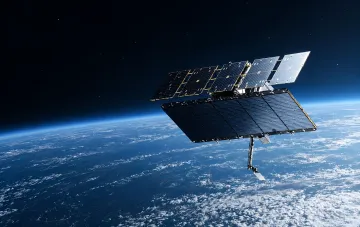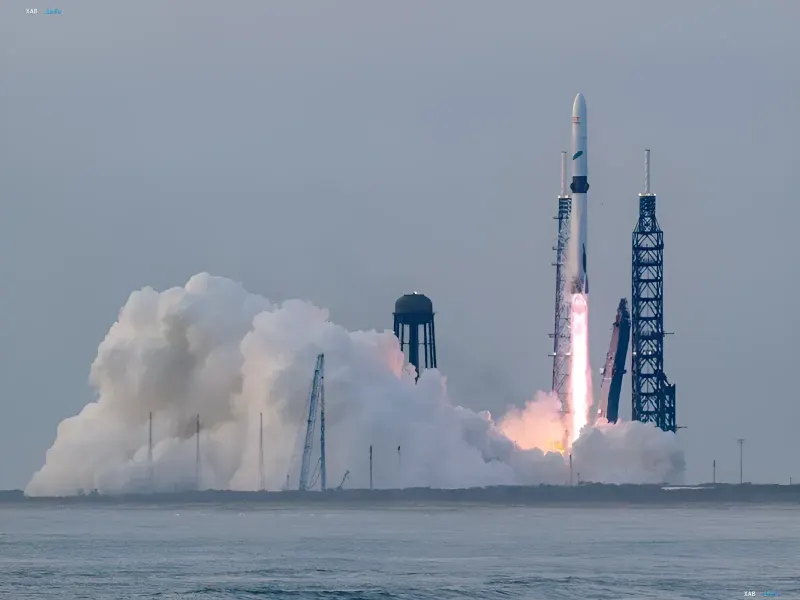
Google has signed an agreement with Jeff Bezos's aerospace company Blue Origin to launch satellites equipped with artificial intelligence accelerators into orbit. Under the terms of the deal, in the first quarter of 2029, the heavy-lift New Glenn rocket is scheduled to deliver Project Suncatcher spacecraft into a sun-synchronous orbit. As reported by The Verge, this will be the first dedicated heavy rocket launch for the program — previously, experimental vehicles were deployed as part of shared missions with other payloads.
Orbit-Based Computing Powered by TPUs
Project Suncatcher involves creating an orbital computing infrastructure based on Google Tensor Processing Unit (TPU) accelerators. The company expects to use the satellites to perform artificial intelligence tasks beyond Earth, and in the future, such devices could become the basis for full-fledged space data centers. According to estimates, the processing power of each satellite will roughly correspond to a single server rack in a ground-based data center. The exact number of devices and the financial terms of the agreement were not disclosed.
First Tests Already Conducted
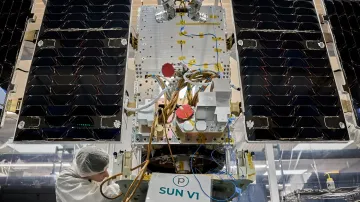
The experimental phase of the project began back in October 2026, when SpaceX's Falcon 9 rocket placed an experimental Google satellite with four TPU accelerators into orbit. The launch took place as part of a joint mission during which the launch vehicle delivered multiple payloads into space. At the end of that same month, Google executed its first AI query directly in orbit: the Gemma 4 model running on the satellite generated a three-line poem and transmitted the result back to Earth.
Roadmap: From Satellite Connectivity to Heavy Launch
The next stage, scheduled for 2027, will test the communication between two interconnected satellites. Engineers will also need to assess the accelerators' resistance to space radiation and thermal loads — key factors for the long-term operation of computing systems in orbit. The culmination of this preparation will be the dedicated heavy launch of New Glenn in the first quarter of 2029.
Contractor Shift: From SpaceX to Blue Origin
Notably, Google initially negotiated with SpaceX to launch the orbital data centers, and it was a Falcon 9 that delivered the experimental spacecraft in October 2026. However, in May it became known that the company was also considering cooperation with other space launch operators. Ultimately, the first dedicated heavy mission for Project Suncatcher was entrusted to Blue Origin, expanding the pool of launch vehicles for Google's orbital computing infrastructure.