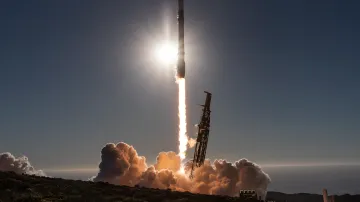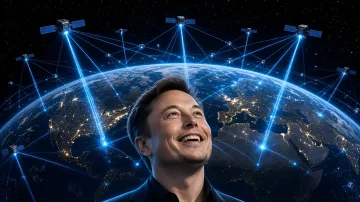
SpaceX views the multi-billion-dollar acquisition of US radio frequency spectrum as a key milestone in transforming Starlink into a full-fledged mobile operator. According to Reuters sources, the company has agreed to buy an 800 MHz nationwide communications service portfolio from investment firm Grain for approximately $8 billion. The company itself calls this deal a "critically important next step" for the nascent Starlink Mobile division, which intends to provide high-speed mobile communications. In parallel, SpaceX has received regulatory approval to launch up to 15,000 Starlink Mobile satellites and, according to a statement published last week, plans to deploy traditional ground infrastructure as well — antennas on towers and building rooftops. Thus, the company is opting for a hybrid architecture rather than exclusively satellite communication.
800 MHz Spectrum: The Foundation Without Which a Mobile Network Is Impossible
Acquiring licenses in the 800 MHz band is not just a formality, but a technical necessity: low frequencies penetrate buildings better and provide wider coverage per unit of power, which is critical for urban environments. This is precisely why access to this spectrum became available following a frequency swap between Grain and other market participants, after which SpaceX bought out this portfolio. While one ixbt.com report did not disclose the deal amount, Reuters sources cite a benchmark of $8 billion. In any case, this underscores the scale of financial commitments the company is undertaking as it enters a market already dominated by AT&T, Verizon, and T-Mobile.
Hybrid Architecture: 15,000 Satellites Plus Ground Antennas
The authorization to launch up to 15,000 Starlink Mobile satellites, combined with plans to install ground antennas on towers and rooftops, indicates that SpaceX is not relying solely on the orbital component. The hybrid approach is designed to compensate for the physical limitations of direct satellite-to-smartphone connectivity: in densely populated cities, providing stable coverage solely from space is extremely difficult, while ground repeaters and small base stations allow the signal to be "picked up" and delivered to the subscriber. This fundamentally distinguishes the future Starlink Mobile network from classical satellite internet, which was initially targeted at remote and underserved areas.
Why Mobile Communications Are More Complex Than Satellite Internet
Starlink's success in the consumer segment was driven by the demand for satellite internet in remote areas and affordable home tariffs. Mobile communication is a fundamentally more complex business. The interaction of satellites with ordinary smartphones is limited by small antennas and low transmitter power, while the signal has to travel hundreds of kilometers to orbit. In dense urban development, this leads to a degradation of coverage and throughput that is difficult to compensate for simply by increasing the number of devices in orbit. This is precisely why, according to Moor Insights & Strategy analyst Anshel Sag, satellite communication cannot yet become the sole source of mobile internet due to numerous technical limitations.
Figures That Frighten Analysts
According to TD Cowen's estimates, building a full-fledged mobile network will cost SpaceX more than $80 billion. For context: in the decade leading up to 2023, the three largest US operators spent about $650 billion on network construction, and that was with mature infrastructure, a customer base, and regulatory experience already in place. MoffettNathanson analyst Juli Nazzaro (Juli Chu) doubts that the project will be completed even within ten years. Meanwhile, SpaceX is simultaneously funding the Starship rocket program, artificial intelligence infrastructure, and Terafab chip manufacturing, which further stretches the company's financial resources across multiple strategic fronts simultaneously.
Competition With the "Big Three" and Risks of Overheated Ambitions
To compete with AT&T, Verizon, and T-Mobile, SpaceX will not only have to build large-scale ground infrastructure but also invest heavily in equipment, subscriber service, smartphone subsidies, and marketing. This is a low-margin-per-subscriber market with high competition and strict service quality requirements, where the price of a mistake is measured in millions of churned customers. Musk's strategy relies on the satellite layer providing unique coverage where terrestrial networks are traditionally weak, while the hybrid model will allow for gradually capturing urban segments. However, the combination of record capital expenditures, parallel megaprojects, and the skepticism of industry analysts makes Starlink Mobile one of the most ambitious and simultaneously riskiest ventures in the telecom sector in recent years.