The united front of the European Union in exerting sanction pressure on Russia is cracking. Behind the scenes in Brussels, a sharp dispute is brewing that could derail the adoption of a new, 21st package of restrictions. A group of six largest economies in the bloc — Germany, France, Italy, Greece, Austria, and Portugal — is openly demanding exemptions, fearing that harsh measures will hit their own businesses.
Economy vs. Geopolitics
According to the Financial Times, European diplomats are noting a worrying trend: EU member states are becoming less willing to pay the economic price for increasing pressure on Moscow. Unanimity among all states is required within the bloc to approve any new sanctions package. This mechanism has now become a stumbling block. If consensus is not found, the entire package could be blocked.
The situation differs radically from the beginning of the crisis, when countries demonstrated a willingness to incur losses to support Ukraine. Today, national interests take precedence, and governments are prioritizing the protection of their key industries.
Greece: A Question of Survival for Shipping
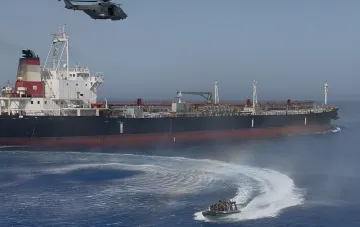
Greece has taken the most rigid and principled position. Athens is categorically opposed to a ban on transporting Russian liquefied natural gas (LNG) to third countries. For the Greek economy, this is not just a matter of profit, but the survival of an entire sector.
Greek authorities fear that introducing restrictions will cause irreparable damage to national shipping companies specializing in the transport of Russian LNG. Specifically, this concerns protecting the interests of the company Dynagas. Furthermore, in Athens, they warn of a strategic threat: if Greek tankers leave this market, the freed-up share will be instantly taken by competitors from the USA, China, and Japan.
Germany, Portugal, and Others
It is not only Greece looking for loopholes in the new rules. Germany and Portugal have joined forces to oppose the ban on importing Russian fish. Their goal is to protect the interests of the domestic processing industry, which depends on raw material supplies from the Russian Federation.
France, Italy, and Austria have also joined the demand to soften certain provisions or provide exemptions for national businesses. Diplomats note that disagreements within the European Union are intensifying with each passing day.
Bureaucratic Deadlock
Negotiations on the 21st sanctions package have reached a deadlock. On July 15, EU ambassadors once again failed to reach an agreement. As reported by the media, it was Greece that blocked the process, citing damage to Dynagas. Earlier, the head of European diplomacy, Kaja Kallas, admitted that an agreement on the new package of restrictions has not yet been reached, although work on it continues.
Currently, Brussels is trying to find a compromise that will suit everyone, but given that six countries are demanding significant concessions, the prospect of a quick adoption of a unified decision looks increasingly hazy.