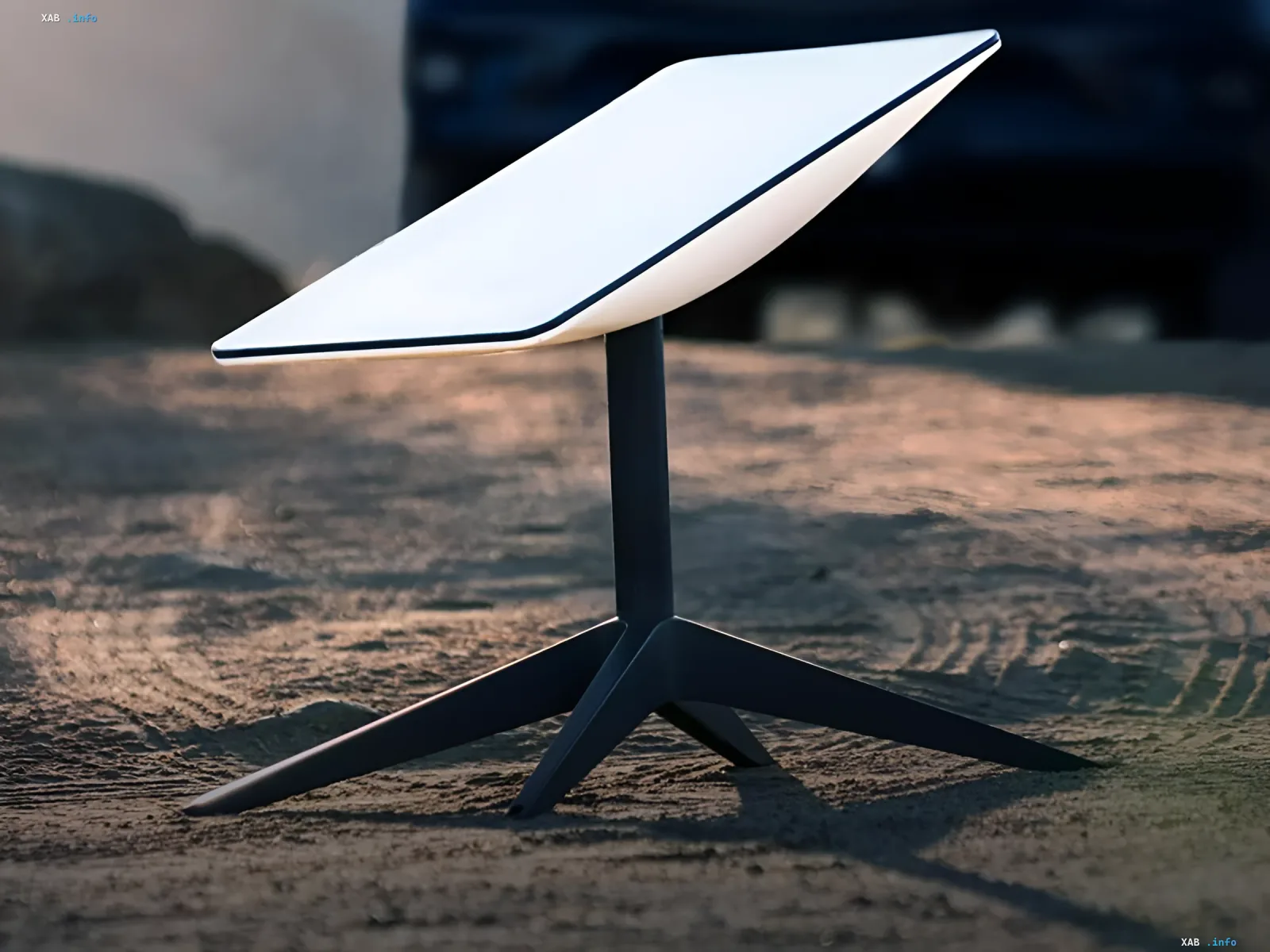
SpaceX is actively working on the second generation of the compact Starlink Mini satellite terminal. According to recent data, the upcoming model will feature a number of significant hardware changes aimed at increasing the device's autonomy and operational stability in challenging conditions.
Antenna Array Optimization
Company engineers have redesigned the external panel. The antenna dimensions will become more compact: the size will be reduced from 236 × 276 mm to 225 × 273 mm. Simultaneously, the internal structure of the phased array antenna (PAA) will change. The number of active elements will decrease from 571 to 549.
Experts believe that this reduction is dictated less by the desire to reduce dimensions and more by the optimization of the design to improve system efficiency.
Built-in Battery and Energy Independence
The main innovation of the Starlink Mini 2 will be the presence of a built-in power source. The terminal will receive a four-cell lithium battery, the management of which will be carried out through the BQ40Z system. This radically changes the scenarios for using the device, allowing it to operate independently of the external network.
Battery charging will be performed via the USB-C Power Delivery port. The device supports a wide range of input voltage — from 11 to 24 volts, making it compatible with various vehicle on-board networks.
Improved Heat Resistance
Significant changes will affect the cooling system and temperature regimes. SpaceX has increased the allowable operating temperatures for the new terminal:
- Processor performance reduction (throttling) will now begin when reaching 95–99 °C, whereas the current model starts dropping frequencies at 79–83 °C.
- The built-in battery will disconnect for protection at a temperature of 80 °C.
These changes will allow the device to operate more stably in hot climates or during prolonged exposure to the sun.
Preservation of Key Functions
Despite hardware changes, the basic platform will remain unchanged. Starlink Mini 2 will continue to run on the proprietary Catapult SoC chip. The device will also retain GPS support and the ability to work on the move. This guarantees that the terminal will remain a relevant solution for motorists, RV owners, and vessels needing stable internet on the go.