Expansion of Insurance Geography and Objects
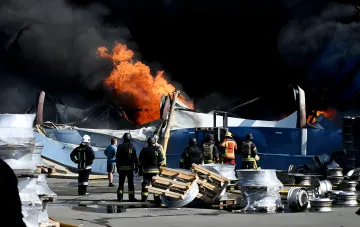
The Ministry of Economy of Ukraine has prepared a package of fundamental changes to the state program for insuring military risks for businesses. The document, which has already been sent for coordination to central executive authorities, proposes a significant expansion of the scope of the Cabinet of Ministers' Resolution No. 1541. A key innovation will be the inclusion of Kyiv and the Kyiv region in the program. Previously, these territories were often excluded from the list of high-risk zones; however, given the escalation of the situation with missile attacks, the government has recognized the need to protect them on par with frontline regions.
In addition to geographical expansion, legislators propose changing the list of insurable property. In particular, leased property will be included in the program. This is a critically important change for businesses operating on leased warehouses, terminals, and production facilities, which previously could not count on compensation for damages. Agricultural machinery and heavy freight transport are also included in the list, which will allow farmers and logistics companies to restore assets faster after strikes.
Increase of Limits and Support for the Fuel Sector
One of the most anticipated changes is the increase in financial support. The state plans to raise the maximum compensation amount for the insurance premium for businesses to 5 million UAH. This will allow companies to insure more expensive assets without bearing an insurmountable financial burden. At the same time, the maximum limit of the insurance coverage itself under the program remains at the level of 30 million UAH, which, according to experts, is still insufficient for large industrial enterprises.
Special attention is paid to the fuel sector. The list of property subject to insurance is expanding: now not only premises and equipment of gas stations are protected, but also tanks, fuel reserves, fuel in transit, and vehicles for its transportation. Given the strategic importance of energy infrastructure and frequent attacks on energy facilities, this innovation is designed to ensure the continuity of the country's fuel supply.
Contradictory Data: Coverage Limits and Business Requests
Despite the expansion of the program, there are disagreements between the government's position and the expectations of large businesses. Deputy Olga Vasilevskaya-Smaglyuk, commenting on the initiative, notes that representatives of affected enterprises insist on increasing the maximum limit of insurance coverage. While the government proposes to leave it at the level of 30 million UAH, businesses demand to raise this figure to 50 million or even 100 million UAH. According to the deputy, the current limit is one of the main drawbacks of the existing mechanism, as it does not allow for the full restoration of large logistics and production capacities.
In addition, the issue of accessibility of preferential financing for large companies is being discussed. Major market players, such as Rozetka, Epitsentr, and Nova Poshta, report losses measured in billions of dollars. However, they cannot use the "5-7-9%" preferential lending program, which is designed primarily for small and medium-sized businesses. In response to this, the Ministry of Economy is developing a separate lending program for large businesses at 10%, but the details and timing of its implementation remain a subject of discussion.
State Warehouses and Alternative Logistics
To solve the problem of the shortage of warehouse space, the government is considering the possibility of using state resources. The State Property Fund has already begun an audit of warehouse facilities of state-owned enterprises to determine which areas can be transferred to affected businesses. Preliminary estimates suggest several hundred thousand square meters. This proposal is aimed at helping large retailers and logistics companies that have faced refusal from private owners to rent them premises due to fear of Russian attacks.
Thus, the state takes on the role of a guarantor not only of financial but also of physical security for businesses, offering alternative sites for placing goods and equipment. This will allow affected companies to resume work faster and minimize losses from military actions.