On August 9, 2026, the U.S. State Department officially notified Congress of a planned military aid package for Ukraine, including 70 ATACMS ballistic missiles and 12 M270 MLRS launchers. The total cost of the package exceeds $280 million. This decision became possible thanks to a complex logistical scheme involving private companies from Turkey, Bulgaria, and the United States.
Details of the new aid package
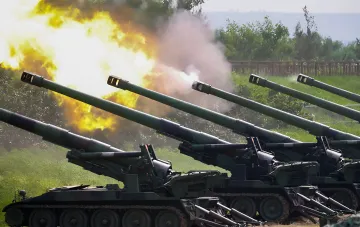
According to published documents, this involves a permanent transfer to Ukraine of 12 M270 MLRS launchers, as well as 2,524 dual-purpose unguided DPICM rockets and 47,000 203mm M509AI DPICM howitzer shells. This part of the package is estimated at approximately $255.9 million. A separate item in the documents lists 70 M39 ATACMS missiles costing around $28 million.
Supply is planned to be organized through a number of private companies – Turkish MKE, ASFAT, and ARCA Savunma, Bulgarian VTIC International, as well as American Pansophico and Patriot Defense Group. The State Department noted that the transfer aligns with U.S. security assistance goals, and the government is prepared to sanction the operation taking into account political, military, economic, and human rights considerations.
ATACMS missile specifications
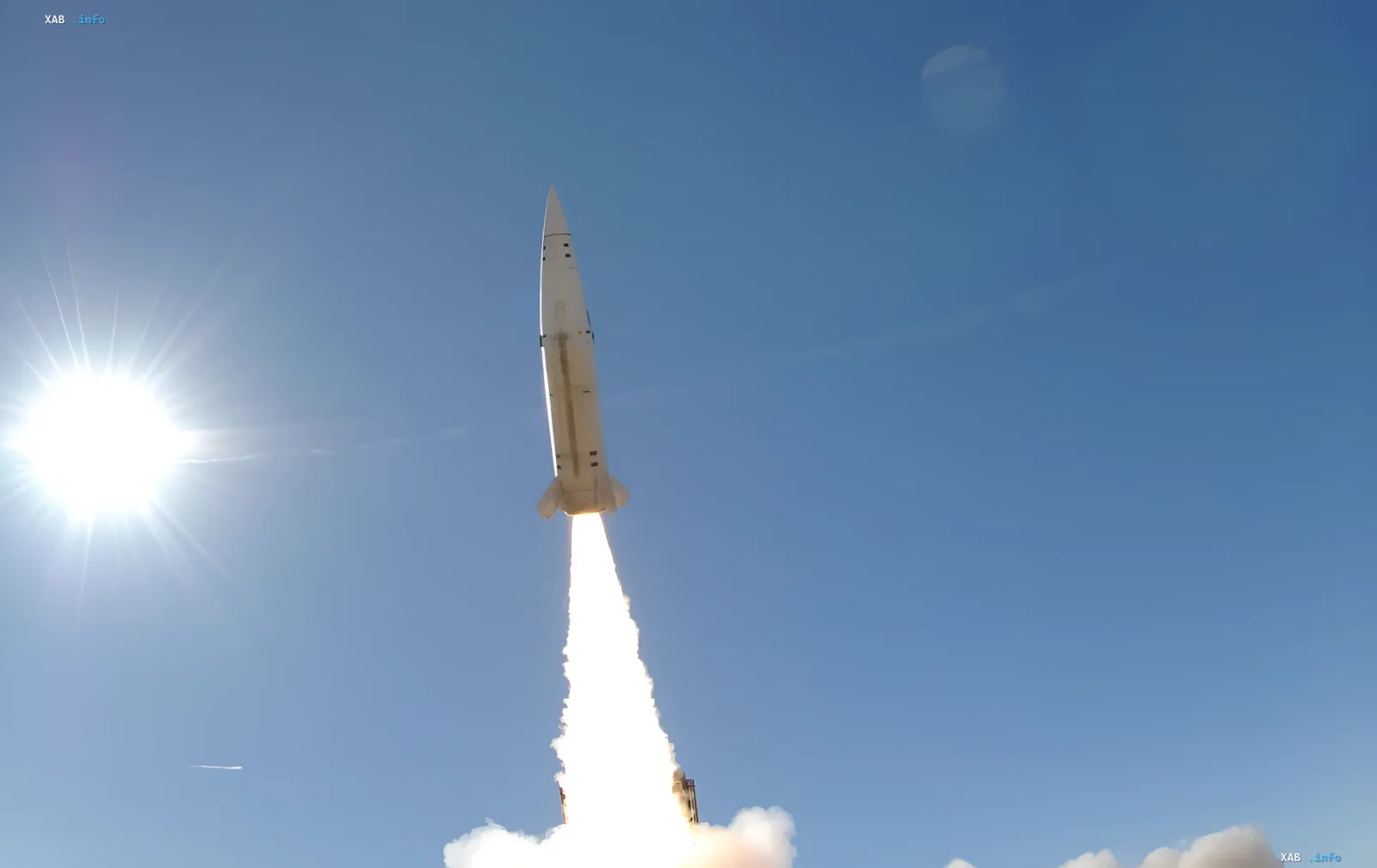
ATACMS (Army Tactical Missile System) is an American "ground-to-ground" ballistic missile developed and manufactured by Lockheed Martin. The company describes the system as a long-range precision strike weapon capable of engaging targets beyond the reach of conventional artillery and MLRS under any weather conditions.
The M39 modification (Block I), mentioned in the new package, has a range of up to 165 kilometers and a cluster warhead with nearly a thousand submunitions. The missile is guided by an inertial system with GPS support. ATACMS can be launched from M270 MLRS and M142 HIMARS launchers – both types are already in service with the Armed Forces of Ukraine.
History of ATACMS use in Ukraine
The first batch of ATACMS missiles was used by the Armed Forces on the night of October 17, 2023. At that time, the Ukrainian Armed Forces struck airfields with Russian aviation near the occupied Berdyansk and Luhansk. These missiles had a limited range of up to 165 km and a cluster warhead. The following year, the U.S. transferred a modification with a range of up to 300 kilometers to Ukraine; however, for more than a year, the Armed Forces could only use ATACMS against targets on temporarily occupied territories.
The situation changed in the autumn of 2024: after Russia decided to involve North Korean units in combat operations, the Joe Biden administration first allowed Ukraine to strike deep into Russian territory with ATACMS. The permission initially applied only to the Kursk region – until then, the U.S. had restricted the use of transferred weapons, citing escalation risks. Just a few days after the restrictions were lifted, the Armed Forces struck a military object in the Bryansk region with missiles – this became the first confirmed use of ATACMS against Russian territory.
Contradictory data
There are discrepancies in estimates of ATACMS missile stocks in Ukraine. According to NYT data from late December 2024, Ukraine significantly slowed the pace of ATACMS attacks deep into Russia due to limited missile stocks and uncertainty regarding the policy of the newly elected U.S. President Donald Trump. According to the publication, at the time permission to strike Russia was granted in November 2024, Ukraine had approximately 50 ATACMS missiles left, and partners did not promise replenishment.
Stocks were completely exhausted by the end of January 2025 – approximately during Trump's inauguration. This was reported in March 2025 by the Associated Press, citing a source in the Ukrainian parliamentary defense committee and a U.S. official. Since then, the Armed Forces have effectively had no American ATACMS for strikes against targets in Russia – the new package, documents for which were published by the State Department, will be the first replenishment of this arsenal in a year.
Significance of the new package
The package will also expand the fleet of M270 launchers – equipment that serves as a carrier not only for ATACMS but also for other types of rocket munitions in the arsenal of the Ukrainian Armed Forces. This will allow Ukraine not only to resume strikes against targets deep into Russian territory but also to increase the intensity of using other types of munitions, including unguided DPICM rockets and M509AI DPICM howitzer shells.
The new aid package may also serve as a signal to other countries considering providing military assistance to Ukraine. The participation of private companies from Turkey, Bulgaria, and the U.S. in implementing the agreement demonstrates the international community's readiness to support Ukraine in its fight against Russian aggression.