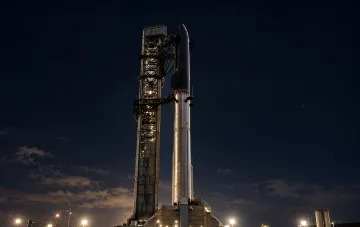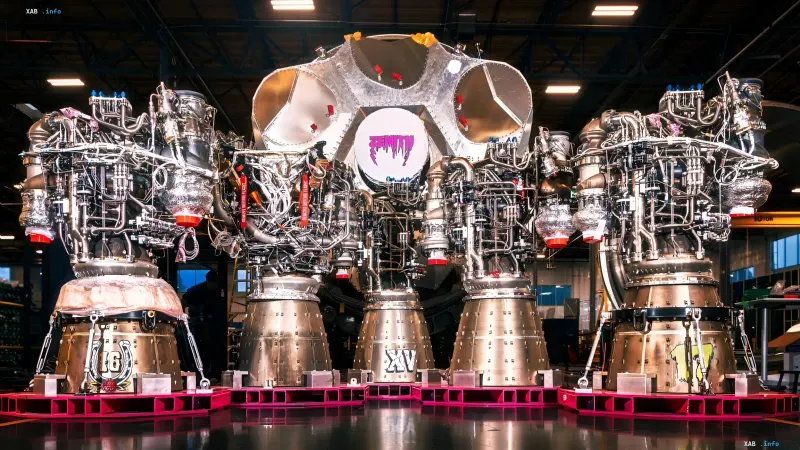
American aerospace company Stoke Space has announced the completion of development for its methane-powered Zenith engine, which will serve as the first-stage powerplant for its new Nova rocket. According to the company, seven such engines will be installed on the reusable first stage, delivering a total thrust of approximately 700,000 pounds at full power. The first flight units are already undergoing acceptance testing: Stoke Space reports that engines are being shipped weekly to Cape Canaveral for integration with the vehicle's first stage.
Zenith Engine and First-Stage Architecture
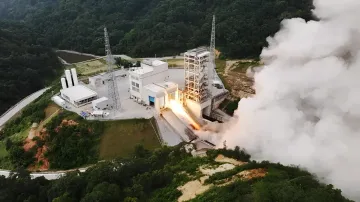
The Zenith engine utilizes a full-flow staged combustion cycle and runs on liquid oxygen and liquefied natural gas (methane). According to the developers, employing this design reduces the volume of maintenance required between flights, which is critical for a reusable launch vehicle concept. Seven full-flow engines form the first stage's thrust cluster, designed for multiple uses. Earlier this year, the company announced that the first stage had passed its preliminary qualification phase, and in June 2026, Stoke Space reported the completion of a series of first-stage tests at its test facility in Moses Lake, Washington.
Unique Second-Stage Return Scheme
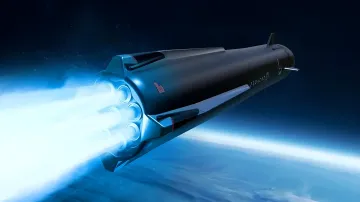
The main feature of Nova is the attempt to make not only the first stage but also the second stage fully reusable. The upper stage's design represents the most unusual part of the project. To protect against atmospheric reentry, Stoke Space is developing a regeneratively cooled heat shield surrounded by 24 low-thrust attitude control engines. According to available data, instead of traditional ceramic tiles, the dome-shaped thermal protection is made of metal cooled by liquid hydrogen, which feeds the Andromeda propulsion system. This system is designed to ensure the controlled return of the second stage after mission completion—something most modern orbital vehicles cannot do, as their upper stages continue flying without recovery options after separation.
Testing and Funding
The second stage is still undergoing testing: specialists are verifying its structure under cryogenic conditions and conducting hot-fire tests of the propulsion system at Stoke Space's rural testing complex in Washington state. Concurrently, the company has strengthened its financial foundation: reports indicate Stoke Space has closed a Series E funding round, raising $1 billion, bringing total investments in the company to $2.3 billion. Two vehicle modifications are being developed—Nova Pathfinder and Nova Block 2; the company states that Nova Pathfinder is the largest rocket ever launched by an American company.
Outlook: 2027 Launch
The inaugural launch of Nova is currently expected in 2027. If the developers succeed in implementing their intended architecture, the rocket will be able to recover both stages for reuse, including the upper stage, which on most modern orbital vehicles does not return after separation. Successfully implementing this architecture could significantly lower the cost of placing payloads into orbit and set a new standard for commercial launch systems.