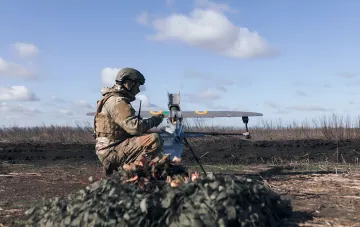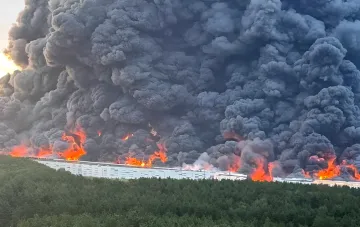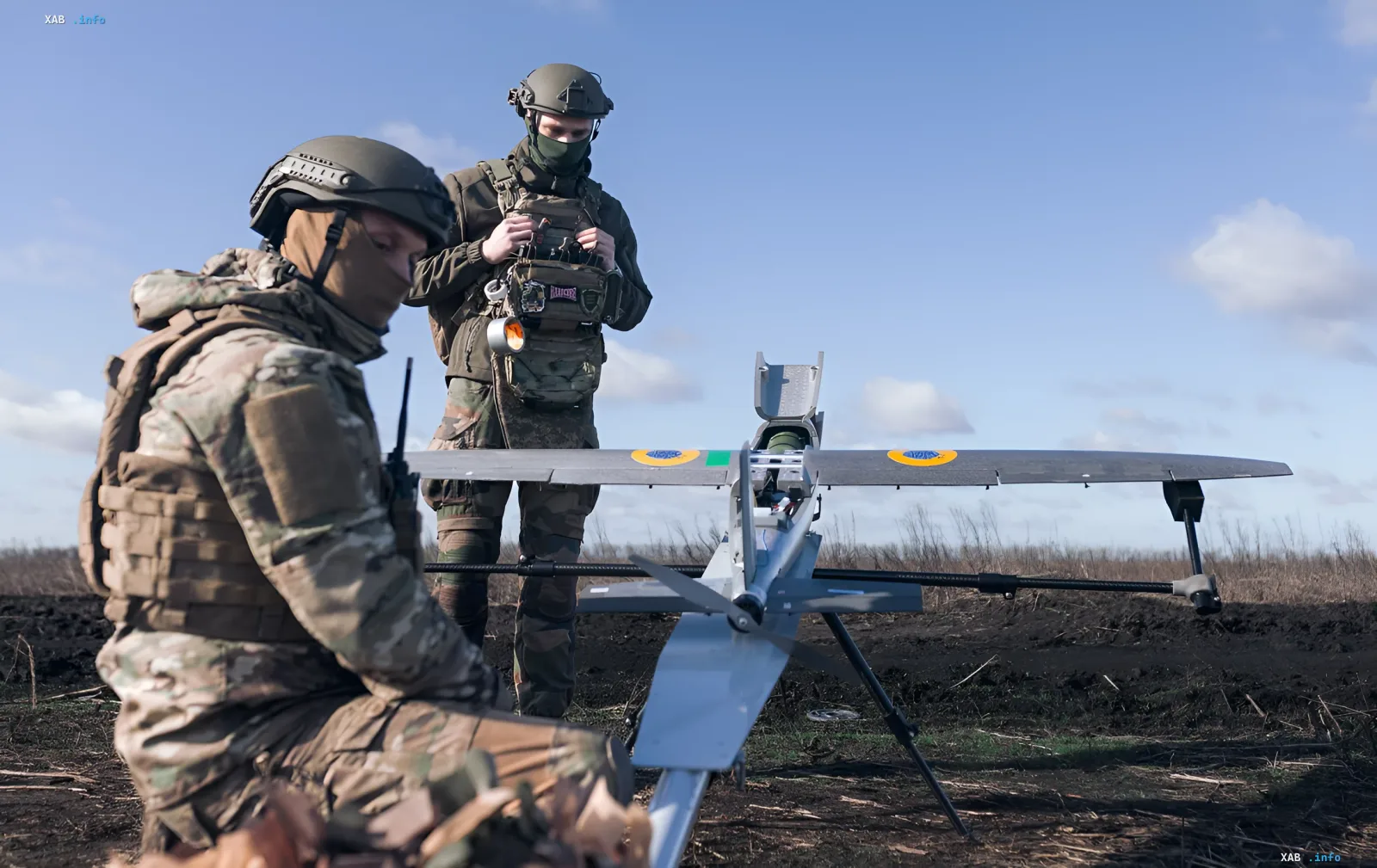
On August 13, 2026, the Armed Forces of Ukraine (AFU) carried out a large-scale operation to neutralize key elements of the enemy's military infrastructure in the temporarily occupied territory of Crimea. According to the General Staff of the AFU, precise strikes were delivered on the night of August 13 and during the day of August 12 against strategically important objects responsible for managing unmanned systems and controlling the airspace of the peninsula.
Neutralization of the Air Traffic Control Center in Saki
The central event of the operation was the strike on the control tower at the 'Saki' airfield in the Novofedorivka area. This object performed critically important functions for the Russian grouping in Crimea: the tower housed the center for collecting and processing information from reconnaissance unmanned aerial vehicles (UAVs) of the 'Orion' and 'Outpost' types.
According to operational data, control over the movement of both manned and unmanned aircraft was carried out from here. The destruction or disabling of this control node significantly disorganizes the work of the airfield, making takeoffs, landings, and the coordination of Russian Air Force actions in the border sector difficult.
Disruption of Strike Drone Control Channels
Parallel to the strike on 'Saki', Ukrainian forces hit a strike drone control repeater in the area of the city of Chernomorske. This object provided communication and control for 'Geran' type drones (also known as 'Gerbera'). Repeaters are a critical link in the chain of controlling kamikaze drones, allowing communication to be maintained over long distances and flight routes to be corrected.
Striking this object weakens the enemy's ability to conduct sabotage and strike operations using UAVs, creating temporary 'blind spots' in the control of strike groups.
Comprehensive Nature of Strikes: From Crimea to Novorossiysk
The attacks on Crimea were not an isolated event. On the night of August 12, the Armed Forces of Ukraine also struck the Russian naval base in Novorossiysk, which remains the last major stronghold of the Russian fleet in the Black Sea. The operation used 'Palianytsia' jet drones, 'Neptune' missiles, and unmanned maritime systems.
Hits on air defense positions, piers, and port infrastructure were confirmed. The NASA satellite system recorded thermal anomalies in several points of Novorossiysk, indicating fires. Furthermore, on the night of August 13, the 'Gazprom Neftekhim Salavat' oil refining complex in Bashkortostan was struck, demonstrating the ability of Ukrainian forces to strike deep into enemy territory.
Contradictory Data
While the General Staff of the AFU and a number of Ukrainian media outlets (RBC-Ukraine, Ukrinform) confirm the fact of the strike on the control tower and repeater, Russian sources have not yet provided official comments on the scale of the damage. At the same time, individual Russian Telegram channels and sources in law enforcement agencies often downplay the significance of such strikes, calling them 'attempts' or 'hits on the perimeter', without acknowledging the disabling of key control nodes. The lack of official confirmation from the Russian side creates an information vacuum, which is filled with indirect data, such as satellite images of fires and reports of aviation malfunctions.