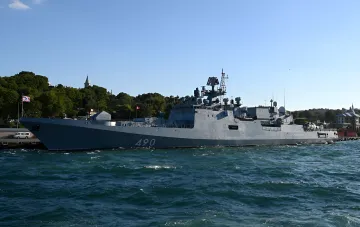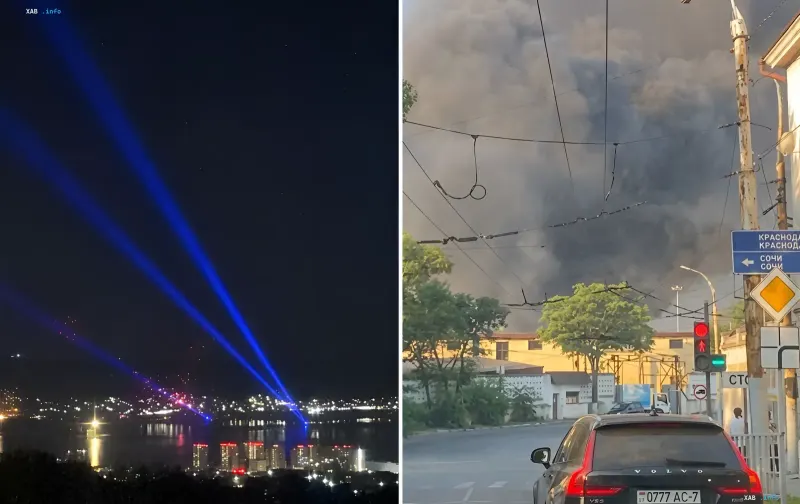
August 12, 2026, marked a significant day for Ukrainian naval strategy. The Ukrainian Defense Forces carried out a large-scale operation, striking key facilities of the naval base in Novorossiysk. As Ukrainian President Volodymyr Zelenskyy stated, this attack was unique in its range and coordination, demonstrating the Ukrainian Armed Forces' ability to strike critical nodes of the Russian fleet located more than 300 kilometers from the front line.
Operation Details: "Neptune" and "Palianytsia" Drones
According to official statements from the Kyiv leadership, various types of precision weapons were used in the operation. Specifically, jet drones "Palianytsia", coastal defense system "Neptune" missiles, and unmanned maritime systems were employed to hit targets. The President of Ukraine noted that strikes were delivered against air defense positions, piers, and the general infrastructure of the seaport. Zelenskyy thanked the Armed Forces of Ukraine, the SBU, and the intelligence community for the precision of the task execution, emphasizing that "the occupation fleet will not be safe".
Satellite Data and Scale of Fires
The fact of a large-scale fire in the port of Novorossiysk has been confirmed by independent satellite data. The NASA system, which tracks thermal anomalies, recorded several powerful fire sources during the night hours. Thermal signatures were detected in the area of the grain terminal and directly in the zone of the naval base. These objects are in close proximity to the "Shesharis" oil terminal, owned by the company "Transneft". Although satellites did not record direct fire on the oil terminal, experts note that this may be due to geolocation inaccuracies or the specifics of fire spread.
Contradictory Data
While the Ukrainian side characterizes the event as a successful strategic operation to hit a military object, Russian sources and state media (in particular, "Moskovsky Komsomolets") assess the event differently. Russian reports emphasize that Zelenskyy "boasted about terror", and strikes on port infrastructure are classified as attacks on civilian objects. Furthermore, local authorities of the Krasnodar Krai report a massive attack by hundreds of drones on the entire region, creating a difference in the perception of scale: Ukraine speaks of a pinpoint strike on the base, while the Russian side speaks of a large-scale shelling of the region.
Context: "Quiet War" for Oil and Diplomacy
This incident occurs against the backdrop of a complex diplomatic situation surrounding the export of Kazakh oil. In early August 2026, Ukraine, with US mediation, agreed to a moratorium on strikes against non-Russian tankers and objects of the Caspian Pipeline Consortium (CPC) in the Novorossiysk area. This decision was made after a series of attacks that threatened the region's energy security. However, the attack on the naval base and port infrastructure, despite agreements, shows that Russia continues to use this port as a key military logistics hub, making it vulnerable to retaliatory actions.
Strategic Significance and Consequences
Novorossiysk remains the last major stronghold of the Russian fleet in the Black Sea. In the summer of 2026, night movement of ships was unofficially banned in the port in an attempt to minimize risks, but as the events of August 12 show, precautionary measures do not guarantee safety. Repeating a scenario similar to the April fire at the "Transneft" facility could deal a serious blow to Russia's logistical capabilities in the region. Ukraine emphasizes that the war must be stopped, and all adequate proposals for diplomacy remain on the table, but military pressure on the enemy's maritime communications continues.