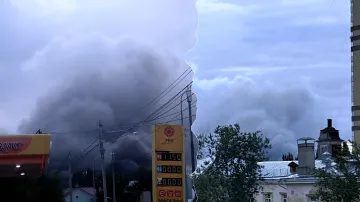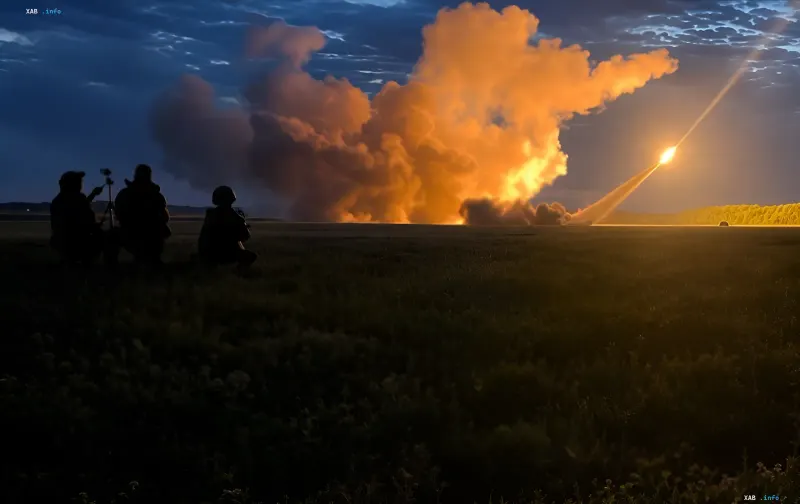
On the night of August 15, 2026, the Defense Forces of Ukraine delivered a devastating strike on one of the most strategically important objects of the Russian defense-industrial base — the 'Progress' Rocket and Space Center in Samara. The attack, confirmed by President Volodymyr Zelenskyy, became one of the most significant incidents in the history of Ukraine's counterattack against the enemy's deep rear infrastructure. As a result of the strike, which intelligence data suggests was carried out by 'Flamingo' missiles with a range of about 900 km, the production complex responsible for assembling the 'Soyuz-2' family of launch vehicles was seriously damaged.
Strike at the 'heart' of rocketry: critical damage to building 106A
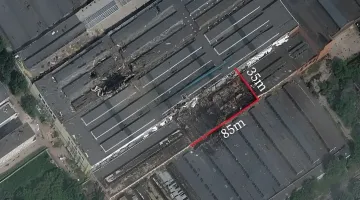
According to data published in the Telegram channel 'KiberBoroshno' and confirmed by RBK-Ukraine, the strike hit building 106A. This facility is not just a workshop, but a high-tech clean zone where the final assembly of the rockets' 'nervous system' takes place. It is here that onboard electronics, control systems, instruments, and the most complex cabling networks are installed. Experts emphasize that without the assembly stage in this building, it is impossible to create a combat-ready carrier, even if ready hulls and fuel tanks are available in the warehouses. Nearby is building 106B, which is responsible for final assembly, making the strike zone critically important for the entire production chain.
Technological collapse: why restoration will take months
The destruction inflicted on the facility goes far beyond an ordinary fire. The specifics of high-class clean rooms dictate special conditions for restoration. The consequences of the explosion, soot, and water flooding during extinguishing mean that the factory cannot simply 'fix the walls and start the machines.' Full requalification of clean zones, recertification of the entire technical process, and repeated strict dust control are required. According to analysts' estimates, restoring the operability of building 106A will take not weeks, but months, which effectively puts the schedule of Russian space missions for the second half of 2026 at risk.
Sanction deadlock: the electronics problem
The situation for Russian designers is exacerbated by the factor of sanction pressure. The onboard electronics of 'Soyuz' rockets still depend heavily on imported components, access to which is restricted for the Russian Federation. In conditions where critical equipment is destroyed or damaged, and the ability to purchase analogues on the world market is blocked, Russia faces the risk of a complete halt in the production of launch vehicles. The factory in Samara is the only enterprise in the country engaged in the serial assembly of this line, and there are no duplicate production facilities in the Russian Federation.
Contradictory data
Although the main sources, including President Zelenskyy's statement and Ukrainian intelligence channels, unequivocally point to a strike on the 'Progress' plant in Samara, there are attempts to disorient in the information space. In particular, some foreign media (for example, source ID 1: svoboda.org) mention a strike on the 'VNIIR-Progress' defense plant in Cheboksary in their headlines. This creates confusion, as the enterprises have similar names but are located in different cities and perform different functions. VNIIR in Cheboksary specializes in radar and control systems, while the 'Progress' Design Bureau in Samara is the center for assembling launch vehicles. At the moment, fact-checking confirms the strike on the Samara object, and the mention of Cheboksary may be the result of a journalistic error or an attempt to hide the true scale of damage in the space industry.
Strategic consequences for the Russian space program
The strike on the 'Progress' Design Bureau has far-reaching consequences not only for the military but also for Russia's civilian space program. 'Soyuz-2' rockets are the main tool for launching satellites into orbit. Stopping their production means the cancellation of contracts for launching weather satellites, telecommunications equipment, and scientific missions. The exact scale of destruction is being clarified using satellite imagery, but it is already obvious that Russia has lost its monopoly on reliable launches of space cargo, which could lead to the loss of key clients in the international space services market.