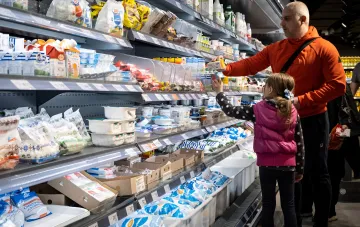
Massive Russian attacks on the logistics hubs and distribution centers of major retail chains in Kyiv, Dnipro, Kharkiv and Odesa have triggered a wave of anxious discussion about a possible food shortage in stores. To separate real risks from panic, leading analysts — Maksym Hopska, head of the analytical department of UKAB; Denas Marchuk, deputy chair of the All-Ukrainian Agrarian Council; Arsen Didur, executive director of the "Union of Dairy Enterprises of Ukraine" association; and Alexander Taranenko, first vice-president of the All-Ukrainian Association of Bakers — assessed the current situation: from the scale of the destruction to the outlook for price tags on basic goods.
Scale of the destruction: nearly a third of Kyiv's warehouse space
According to expert estimates, the strikes have taken significant areas of distribution centers out of service. The most affected region was Kyiv and the Kyiv Oblast, where around 400,000 sq. m of warehouse space was damaged — almost 30% of such capacity in the region. Similar damage has been recorded in Dnipro, Kharkiv and Odesa. These hubs were responsible for the rapid processing and dispatch of goods to store networks, so their partial shutdown immediately affected the speed at which shelves are restocked.
Logistics, not shortage: why the shelves will not empty
The key conclusion of the experts is that there is no physical food shortage in Ukraine and none is expected. Domestic production substantially exceeds consumption, and the structure of agricultural production is such that basic needs are met in every region independently of the central hubs. The main difficulties are not about the absence of goods, but about logistics and the restoration of supply chains: delivery that previously took 24–72 hours could stretch to a week due to the destruction of the major centers. In response, retail chains and producers are switching to direct deliveries, bypassing the disabled distribution nodes.
Vulnerable categories: what will disappear first
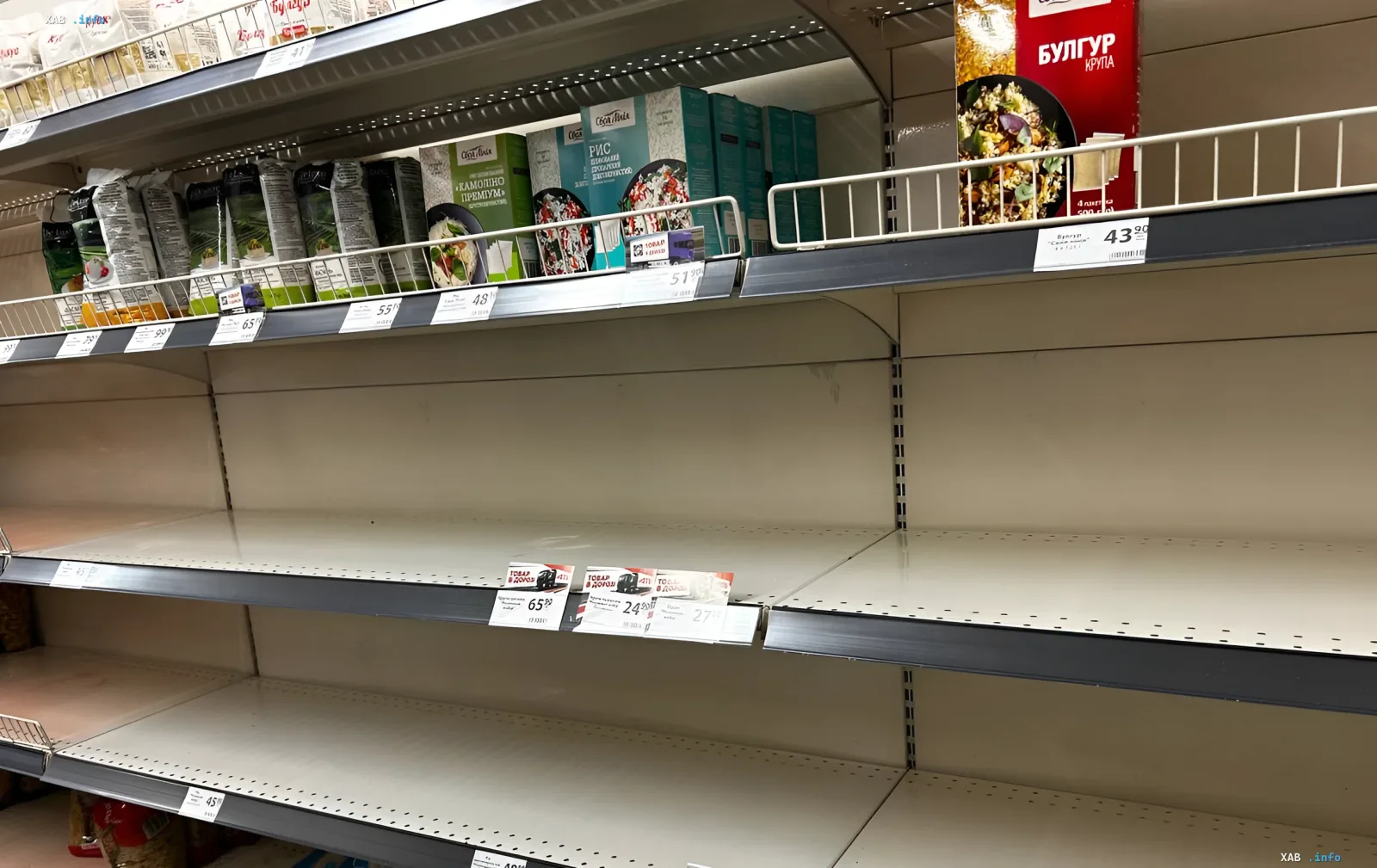
Temporary disruptions and the pinpoint disappearance of individual brands mainly affect goods with a short shelf life that depend on a continuous cold chain: dairy products, chilled meat and fish, and fresh vegetables. These are the most sensitive to delays in transportation. Mass-market bread varieties, by contrast, are less affected, as they are predominantly delivered by factories directly to stores, without relying on large distribution centers. Photographs from stores already show partially empty rows in the grains and groceries segment, clearly illustrating the transitional nature of the disruptions.
Price forecast: increases driven by logistics, not by scarcity
Experts forecast a moderate rise in prices, driven primarily by additional costs for logistics, fuel and electricity — including running generators to maintain cold chains — rather than by a lack of goods. In other words, the price increase is cost-driven: it is delivery and storage that become more expensive, not the product itself. This means that the spikes typical of a genuine shortage should not be expected, and the increase will be gradual and tied to the restoration of logistics capacity.
Advice for consumers: a two-week stockpile without panic
Specialists unanimously urge people not to give in to panic and not to buy food in large bulk quantities, since it is precisely this behavior that creates an artificial shortage and further strains already overloaded supply chains. Where necessary, experts advise limiting purchases to a stockpile of at most two weeks. This approach helps keep goods available for all shoppers and speeds up the normalization of the situation as warehouse infrastructure is restored.