Ukrainian strikes on the logistics infrastructure of one of Russia's largest marketplaces, Wildberries, go beyond purely military operations. According to a report by the Institute for the Study of War (ISW), published by RBC-Ukraine, these attacks not only complicate life for residents of major Russian cities but also deliver a direct financial blow to the interests of the elite close to Vladimir Putin.
Scale of Attacks and Countermeasures
In just one week, Ukrainian forces struck at least a dozen Wildberries warehouses. The targets were located not only on occupied territories of Ukraine but also deep within Russian territory. In response to a series of strikes carried out between July 17 and 19 on facilities in the Moscow region, Russia was forced to urgently deploy additional stationary "Pantsir" air defense positions across the region.
ISW analysts note that Kyiv's growing activity in striking deep rear areas, military logistics, and medium-range targets is placing new resource demands on Moscow. Including marketplace warehouses in the list of objects requiring protection creates a serious strain on the air defense system, which is already experiencing shortages.
Economic Consequences and Damage
The direct damage from attacks on the internet giant's warehouses could reach $2 billion. Disruptions in the logistics network inevitably cause inconvenience to residents of megacities like Moscow and St. Petersburg, which the Kremlin has traditionally sought to shield from the consequences of the war.
The chronicle of events confirms the scale of destruction:
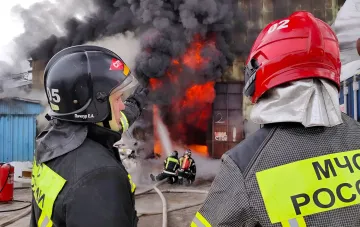
- On July 18, a fire broke out at a warehouse near Moscow, where "purchases" of Russians burned. The fire was visible from dozens of kilometers away.
- On the night of July 22, Krasnodar was hit by drones, where a large-scale fire broke out on the territory of a logistics center.
- On the same night, an attack was recorded in Nevinnomyssk (Stavropol Krai), as confirmed by local authorities.
- On July 25, the strikes continued: drones attacked a warehouse in Yekaterinburg.
Financial Blow to Putin's Inner Circle
Special attention in the report is paid to the link between the attacks and the financial interests of the Russian leader's closest circle. According to available data, co-owners or sponsors of Wildberries include the head of the Presidential Administration, Anton Vaino, and the First Deputy Head of the Presidential Administration, Alexey Gromov.
ISW recalls that in March 2026, Putin appealed to Russian elites to financially support military efforts. This decision became a violation of the unwritten agreement concluded in July 2000, when oligarchs were promised the preservation of privatized assets in exchange for political loyalty.
Since then, elites have been trying to move capital abroad, fearing nationalization. However, strikes on assets linked to key figures in power demonstrate that the war is no longer bypassing the personal interests of those at the helm of the state.