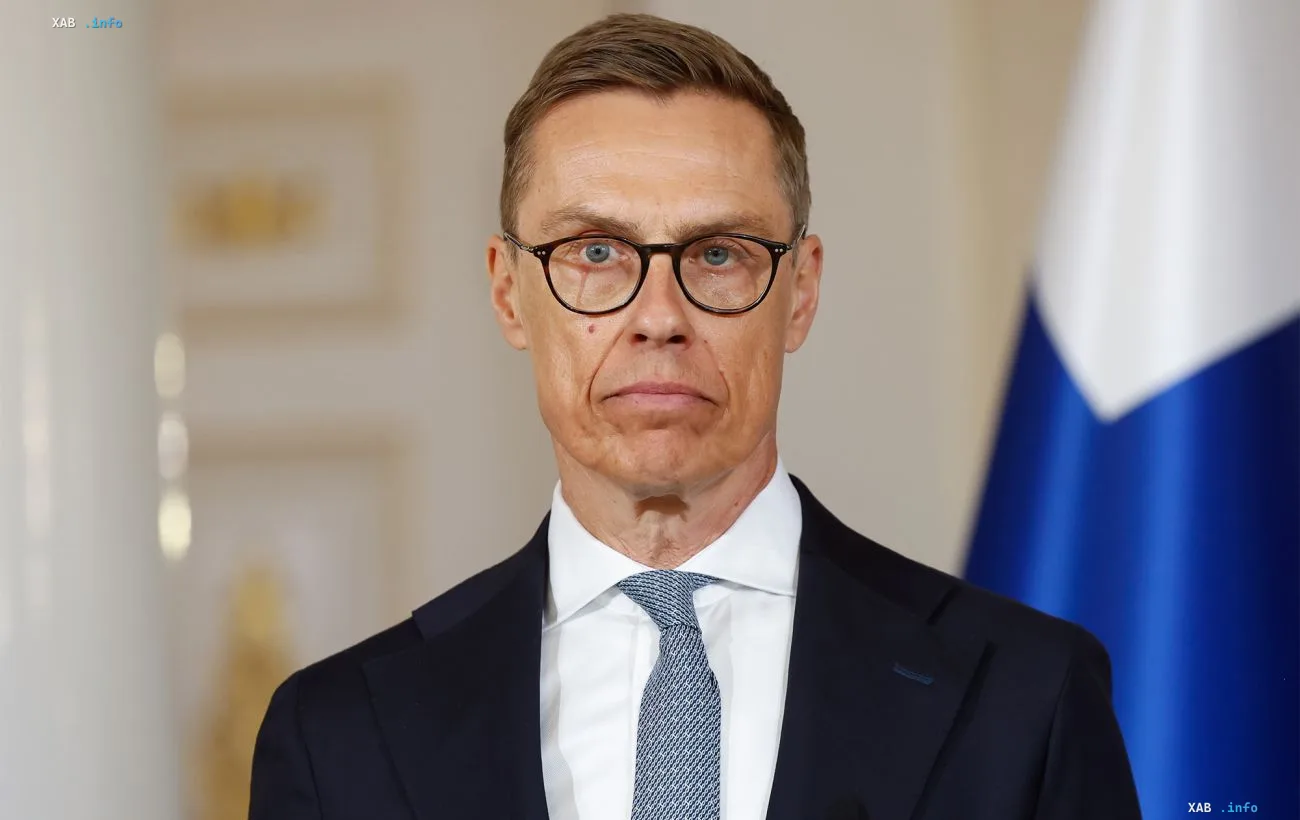
Finnish President Alexander Stubb made a sharp address to Moscow in an interview with Bloomberg Podcasts, stating that Ukraine is in a more favorable position on the battlefield than it was a year ago, and that Vladimir Putin is now due to sit at the negotiating table. According to Stubb, Kyiv is currently stronger than at any point during the entire course of the conflict — in military, political, and financial terms alike. The Finnish leader emphasized that active “shuttle diplomacy” is underway, with the parties involved “hoping for some kind of partial ceasefire,” citing visits by a US delegation to Moscow and Kyiv, as well as US President Donald Trump’s efforts to broker a settlement.
“Ukraine Is Winning”: Stubb’s Arguments
In response to a question on whether efforts to reach a deal have intensified due to high energy prices, Stubb acknowledged “partly, yes,” but linked this not only to Ukraine’s strikes on oil refineries in Russia, but also to the war in the Middle East. The Finnish president’s key thesis was this: in his assessment, Ukraine is “winning.” As supporting arguments he cited two factors — the ratio of losses and advances on the front. On this basis Stubb formulated a direct message to Moscow: “Look, guys, you are not going to win this war, so let’s try to end it. Zelensky wants peace, Trump wants peace, and now we need to get Putin to sit at the negotiating table.”
“Jackpot” and Miami: A Scenario for a Leaders’ Meeting
Beyond the general call for negotiations, Stubb, in the same cycle of comments, called a possible direct meeting between Vladimir Putin and Volodymyr Zelensky a “jackpot.” According to several media outlets, the Finnish president mentioned Miami as a potential venue for such a summit. Although no specific date or format for the meeting has been confirmed by either side, the very fact that the head of a state that is a member of the EU and NATO is publicly discussing a scenario for a personal meeting between the two leaders is in itself a significant signal for the diplomatic track.
An Energy Ceasefire: Stubb’s Formula
Separately, Stubb proposed a specific formula for a partial ceasefire tied to energy infrastructure. In his words, if Ukraine refrains from striking oil refineries in Russia, then Russia, in turn, must not strike energy and power-generation facilities in Ukraine, “especially as winter approaches.” This formula echoes the terms of an energy ceasefire that Volodymyr Zelensky outlined to journalists on 22 September after meeting Donald Trump on the sidelines of the UN General Assembly. Zelensky also expressed hope that, with Washington’s mediation, the war could be ended before the winter months set in.
Context: Washington’s Position and the Diplomatic Track
Stubb’s remarks came against the backdrop of a series of diplomatic contacts in New York. A few hours before the Finnish president’s interview, US Secretary of State Marco Rubio stated in one of his interviews that it is “logical to end” Russia’s war against Ukraine, since there “will be no winners”: neither side will achieve a sustainable military advantage, and the parties will ultimately arrive at a peace agreement. Thus, over the past day, the public rhetoric of Washington, Helsinki, and Kyiv has been aligned along a single line: the military dynamics, in the assessment of Western politicians, favor Kyiv, and this should serve as a lever to shift the conflict onto a negotiating track before weather conditions deteriorate.
Contradictory Data
There is a certain inconsistency in the assessments of the military situation being conveyed by Western politicians. Stubb states outright that “Ukraine is winning,” relying on the ratio of losses and advances on the front. However, US Secretary of State Marco Rubio stated on the same day that “there will be no winners” and that neither side has achieved a military advantage. Formally, these statements do not contradict each other — one describes tactical dynamics, the other the strategic outcome — but in public discourse they paint a different picture: for Kyiv this is the argument “we are stronger, so Moscow must concede,” while for Moscow it is the argument “the war is pointless for both sides.” Moreover, Stubb’s mention of Miami as a possible venue for a Putin–Zelensky summit has, as of publication, not been confirmed by the Kremlin, the Trump administration, or Zelensky’s office, which makes this element speculative.