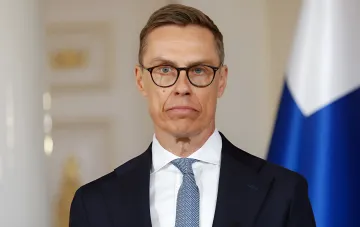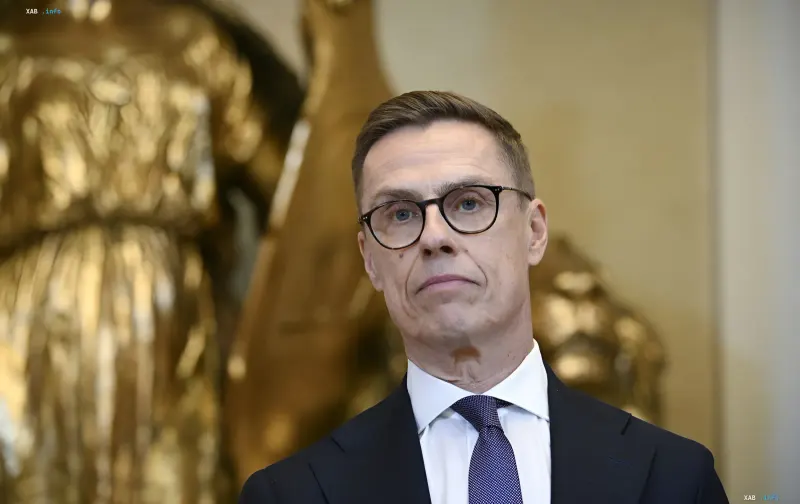
The President of Finland, Alexander Stubb, issued a forecast that, by his own admission, leaves no room for optimism in the short term. At the Slush conference, the Finnish leader directly answered a question about whether he believes the war in Ukraine will end by the end of the current year, stating that he does not consider this likely. In his assessment, this scenario means that Kyiv and its allies will have to prepare for a harsh winter, which will become yet another test of survival for the Ukrainian economy and infrastructure.
A harsh winter as a question of survival: air defense, energy, and finance
Stubb specified exactly what he means by a "harsh winter" for Ukraine. According to him, the main concerns are air defense, the protection of energy facilities, and the financial resources needed to keep the country functioning amid ongoing hostilities and seasonal pressure on the power grid. Thus, the Finnish leader effectively listed three key areas in which, in his view, Ukraine will need enhanced support in the coming months.
"Two countries capable of waging a modern war"
Stubb separately addressed the question of which states today possess the real capability to wage a modern war. In his formulation, there are "exactly two countries, plus a few others" that are currently capable of this — Russia and Ukraine. At the same time, he did not deny that other states — in particular Israel and the United States — have corresponding capabilities. The essence of his statement, by his own words, is that the lessons drawn from the war in Ukraine are beginning to spread to Europe as well, changing perceptions of security on the continent.
Baltic context and diplomatic signals
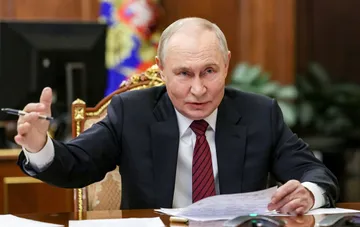
The speech against the backdrop of the discussion of the war in Ukraine comes at a time when Finland is actively shaping its diplomatic line around the Baltic Sea. As RBC-Ukraine notes, Stubb, together with Norwegian Prime Minister Jonas Gahr Støre, previously reached out to the head of the Russian state to prevent a direct confrontation in the Baltic. According to The Wall Street Journal, in a conversation on October 27, Stubb promised that Finland would not block the Baltic in peacetime. These signals, alongside the forecast of a protracted war, form the broader context of his position: Helsinki is trying to simultaneously maintain defensive readiness and reduce the risk of escalation in the immediate vicinity of its borders.
Europe seeks a role in the peace process
Stubb's forecast that the war will not end by the end of the year is consistent with the broader context in which European capitals are trying to define their role in a possible settlement. According to RFI, the process of settling the Russian-Ukrainian war under US auspices is, by estimates, stalled, and a leading role in the negotiations may shift to Europe. In this line, as possible mediators or participants in the peace process in European discussions, Angela Merkel, Alexander Stubb, and Mario Dragi are mentioned, in particular. The Finnish president's statement about the protracted nature of the conflict and the need to prepare for a harsh winter fits into this picture: Europe is, in effect, laying the groundwork for long-term support of Ukraine while simultaneously seeking diplomatic tools for a future settlement.