Scientists at South Ural State University (SUSU) have introduced a new heat-resistant alloy capable of maintaining structural integrity at 1100 °C for 100 hours of continuous testing. According to the university's press service, reported by TASS, the protective oxide layer of the developed material exhibits oxidation resistance 2.6 times higher than coatings based on common aviation alloys. The development is positioned as a potential material for parts and protective coatings in metallurgical furnaces, gas turbines, and turbojet engines.
Composition and Protection Mechanism
The new alloy consists of five components: aluminum, cobalt, chromium, nickel, and niobium. At the same time, the atomic shares of aluminum and niobium are half those of the other three elements. Niobium plays a key role in the protective mechanism: when heated to 1100 °C, it promotes the formation of double oxide compounds with aluminum and chromium, as well as specialized crystalline structures enriched with niobium. It is these microstructures that form a barrier preventing further oxygen penetration deep into the material and the destruction of its crystal lattice at extreme temperatures.
Results of 100-Hour Tests
Following 100 hours of thermal exposure, the specific mass gain of the new alloy was 1.363 mg/cm². For clear comparison, the widely used heat-resistant alloy Inconel 617 would gain about 3.6 mg/cm² over a similar period. The 2.6-fold difference confirms the multiple superiority in oxidation resistance claimed by the SUSU press service. Importantly, during the tests, the material's structure remained dense: no cracks, pores, or delamination of the oxide layer were recorded on the surface, indicating the stability of the protective coating over time.
Application Prospects
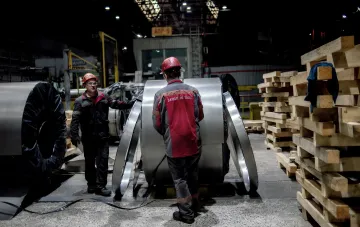
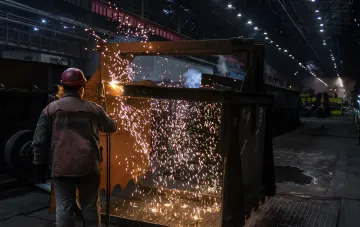
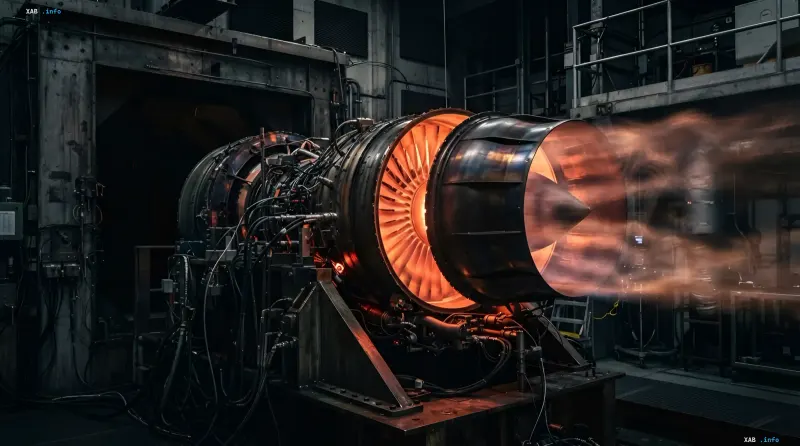
The developers point to several practical implementation areas. In metallurgy, the alloy can be used to manufacture furnace equipment elements operating in direct contact with high-temperature gases. In the aviation and energy sectors, the material is considered a candidate for gas turbine and turbojet engine parts, where component service life directly depends on the oxidation rate at operating temperatures. Increased oxidation resistance will potentially extend the overhaul period of equipment and reduce the costs of replacing assemblies operating in extreme thermal regimes.
Context and Significance of Development
Creating alloys with increased heat resistance remains one of the priority tasks of materials science, as the growth of operating temperatures in turbine units and metallurgical aggregates is directly related to increasing their efficiency. Existing nickel superalloys, such as Inconel 617, have been an industry standard for many years, but their oxidation resistance at temperatures above 1000 °C remains limited. The SUSU approach, based on the controlled introduction of niobium in limited quantities to form double oxide phases, represents an alternative path to solving this task. Subsequent stages typically include scaling up melting, verification in real operating conditions, and certification for specific industry standards.