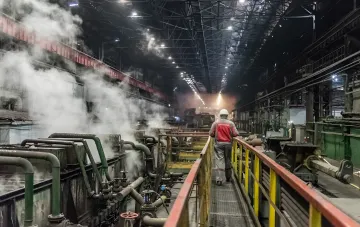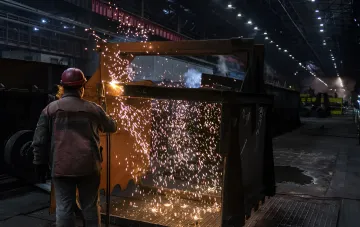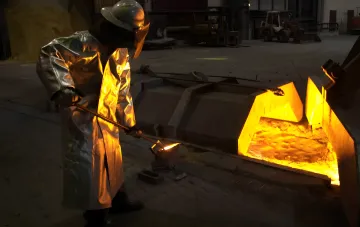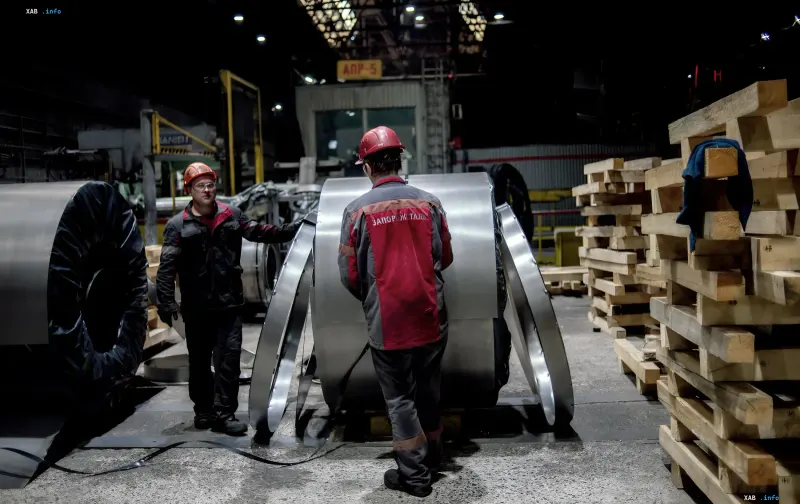
Ukraine’s metallurgical sector, operating under constant Russian strikes and a de facto blockade of maritime exports, faces a new challenge: trade restrictions from the European Union. The new rules, which entered into force in July 2026, could reduce Ukraine's steel exports to the EU by an estimated 1.3 million tonnes per year. This is reported by RBC-Ukraine with reference to a publication by Fortune.
A 60% Reduction: What Changed in July 2026
On June 8, the EU Council finally adopted a regulation establishing a new system to protect the bloc's steel market from the consequences of global overcapacity. The document introduces an updated tariff-rate quota system for imports, providing for reduced limits and higher duties on supplies exceeding established volumes, as well as a 'melt and pour' requirement determining the country of primary smelting. The previous safeguard measure, which expired on June 30, 2026, has been replaced by a new mechanism applied from July 1. According to Metinvest CEO Yuriy Ryzhenkov, comparing the quotas allocated to Ukraine this year with last year's supply volumes, the reduction is 60%.
The European Market Is the Only Available Alternative
For Ukrainian producers, the European direction has essentially remained the only available option due to maritime logistics issues, according to Ryzhenkov. 'If you compare the quotas allocated to Ukraine this year with last year's supply volumes, the reduction is 60%. And this is under conditions of blocked ports, when we literally have no alternative left,' he stated. Following the start of the full-scale invasion, the EU lifted restrictions on Ukrainian steel, understanding that port blockades made Europe the only available route. However, in the first half of 2026, the quotas were reinstated, effectively equating Ukraine with other non-bloc countries 'without taking into account the exceptional conditions' the industry faced due to logistics, energy supply, and personnel problems.
Risk of Losing Steel Production
The new restrictions are compounding an already deep crisis in the mining and metals complex: industry performance dropped significantly between 2021 and 2025. 'Without a market where products can be sold, there is virtually no future,' the expert notes. Metallurgical enterprises require high capacity utilization and long-term sales markets, which is virtually impossible to ensure under current conditions. Asked whether Ukraine could lose its steel production altogether, Ryzhenkov replied: 'If nothing is done, it is almost inevitable.' The restrictions are already affecting more than just the group's Ukrainian assets; for instance, Metinvest’s pipe plant in Romania, which was supposed to receive hot-rolled coils from Zaporizhstal, has also fallen under quota pressure. Oleksandr Vodovoz, head of the CEO's office at the group, warned that in December the EU intends to assess Ukrainian supply volumes over the preceding six months and use them as a baseline for future conditions, which, given reduced exports due to strikes on enterprises, could lock in understated quotas for a period of 5 to 10 years.
A Blow to Public Finances
The crisis in metallurgy is already having a significant impact on the budget. According to available data, in the first nine months of 2026, Ukraine's state budget undercollected about UAH 49.5 billion in taxes. By the end of the year, due to the shutdown of metallurgical capacities, losses could rise to UAH 70 billion, and under a pessimistic scenario, reach UAH 100 billion.
Negotiations with Brussels Continue
Currently, Ukraine's negotiations with the EU on revising the quotas are ongoing. According to the publication, Brussels recognizes the exceptional situation of the Ukrainian economy, but the existing restrictions remain in force for now. Thus, the industry remains at risk: without restoring access to a stable sales market and removing trade barriers, the threat of losing competitiveness—and prospectively, steel production itself—persists.