Moscow once again publicly claimed the alleged full capture of Sviatohorsk in Donetsk Oblast. However, according to a report by the Institute for the Study of War (ISW), cited by RBC-Ukraine, the city remains under the full control of the Ukrainian military, while Russian units are located at a considerable distance from it.
The Kremlin's claim and the actual front line
ISW analysts calculated that as early as the beginning of summer 2026, the nearest units of the Russian army were located approximately 13 kilometers from Sviatohorsk. Following the Ukrainian Armed Forces' counteroffensive, the Russian troops' defensive line, in their assessment, moved even farther from the city. Thus, the public claims of 'control' over the settlement do not, in the analysts' view, correspond to the actual deployment of forces on the front.
'Fresh' footage and its debunking
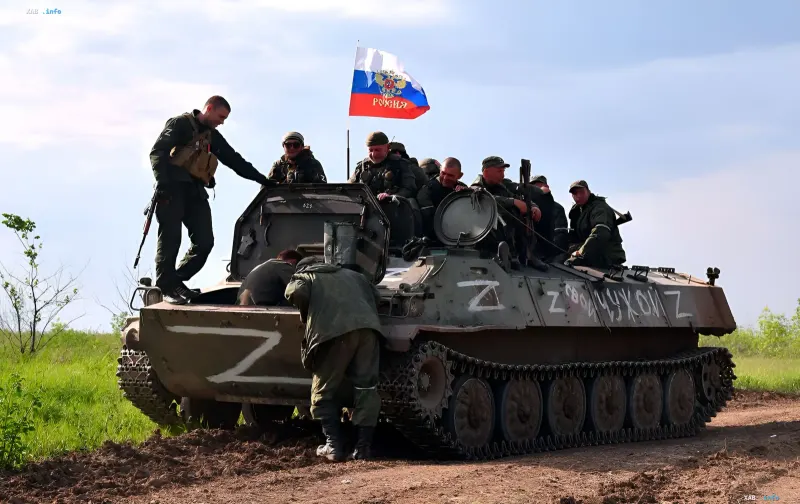
On September 5, Russian propaganda channels attempted to present 'fresh' video footage allegedly demonstrating control over Sviatohorsk. According to ISW, in fact these were old, edited clips. On the same day, one of the Russian military bloggers publicly debunked these recordings, admitting that there were no Russian troops even near the city. The circulated footage typically shows a tracked armored vehicle marked with a 'Z' and a Russian flag, with soldiers on board.
Contradictory data
Here two versions directly clash. On the one hand, the Russian side claims that Sviatohorsk has been taken under control and backs this up with video material. On the other hand, ISW and the Ukrainian side insist that the city is fully controlled by the Ukrainian Armed Forces, while Russian units are more than 13 km away from it; the Russian footage, in their assessment, is edited and outdated. The discrepancy in assessments of the front line's position amounts, in essence, to tens of kilometers, and no independent public confirmation of the Russian version has been recorded as of the time of publication.
The Donbas deadline: 2026 vs. 2027
Pavlo Palisa, Deputy Head of the Office of the President of Ukraine, spoke about a new deadline that, according to him, the Kremlin set for the military leadership. The Russian political leadership, according to his data, demands the full occupation of Donetsk Oblast by the end of 2026, while the military themselves are asking to postpone this deadline to March 31, 2027. The discrepancy between the political order and the military command's assessments points to internal tension in planning the campaign.
ISW assessment: a distorted picture of the front
ISW also explained that the systematic preparation of 'pretty reports' for the top leadership is in fact hindering the Russian troops' own conduct of combat operations. Previously, the institute's analysts noted that Vladimir Putin is not ready to go for substantial compromises to end the war against Ukraine, and that the Kremlin continues to count on achieving its goal militarily, relying, in their assessment, on a distorted picture of the situation on the front.