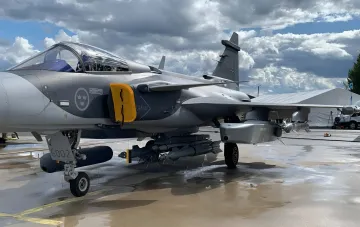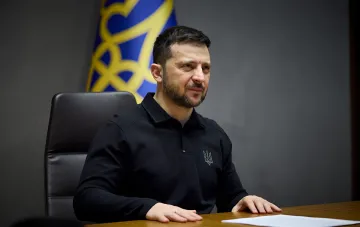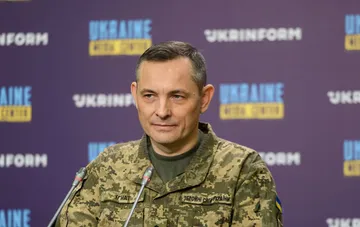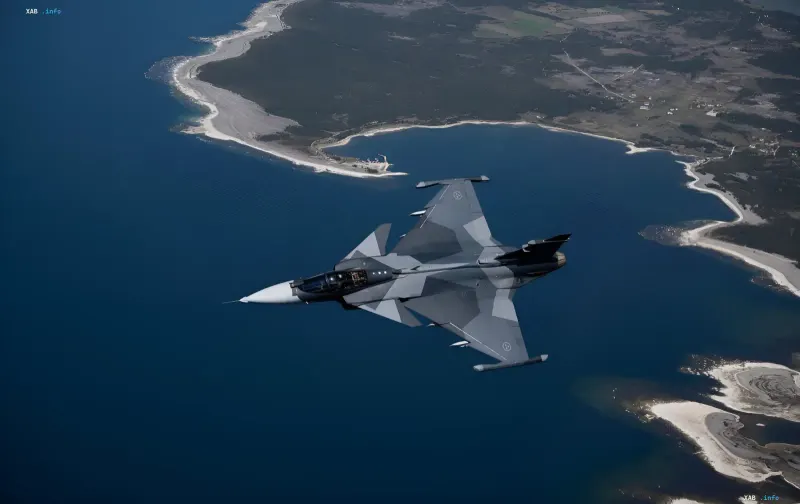
In Brussels on November 17, 2026, the defense ministers of three countries — Ukraine, Sweden, and Great Britain — signed a letter of intent formalizing further cooperation within the initiative to supply Gripen fighters for the Air Force of Ukraine. The document was signed by Ukrainian Minister of Defense Yevhen Khmara, Swedish Minister of Defense Pål Jonson, and British Minister of Defense Wes Streeting. The signing took place against the backdrop of ongoing negotiations to strengthen the aviation component of Ukrainian defense and served as a logical extension of the June agreement on the procurement of Swedish fighters.
A comprehensive package: from ammunition to spare parts
The signed document concerns not the acquisition of the aircraft themselves, but the provision of a full range of weapons for the Gripen fighters already purchased for Ukraine. This involves the delivery of ammunition, necessary equipment, and spare parts, without which the combat use of aircraft is impossible. A key condition recorded in the letter of intent is the synchronization of arms and component deliveries with the actual arrival of the aircraft into the Air Force of Ukraine. Thus, Kyiv receives a guarantee that the fighters will not sit idle on airfields waiting for necessary consumables and munitions.
Meteor missiles and countering Russian aviation
Among the priority weapons that Ukraine expects to receive as part of this package are Meteor air-to-air missiles. According to the Ministry of Defense of Ukraine, these missiles are intended to enhance the ability of Ukrainian pilots to counter Russian aviation, primarily carriers of guided aerial bombs that pose a direct threat to ground objects and personnel. Integrating the Meteor into the Gripen's arsenal significantly expands the radius and accuracy of destroying aerial targets at long range, which is a critical factor given the dominance of Russian aviation over certain sectors of the front.
Khmara: "Start combat deployment as soon as possible"
Ukrainian Defense Minister Yevhen Khmara, commenting on the signed document, emphasized the strategic importance of a comprehensive approach to aviation supplies. "Gripens will become another element that strengthens Ukraine's aviation capabilities. For us, it is important to receive, together with the aircraft, the entire complex of necessary weaponry in order to begin their combat use as soon as possible," he stated. These words underscore that for Kyiv, the priority is not the formal receipt of aerial platforms, but their operational integration into combat order with a full combat load.
Context: from the June agreement to combat deployment
The signing of the letter of intent in Brussels was the next stage after the agreement concluded in June 2026 between Ukraine and Sweden on the purchase of Gripen E fighters. It was then that Kyiv received Stockholm's commitments regarding the transfer of the aircraft themselves, related equipment, and technical support. The Gripen initiative for Ukraine, as follows from the signed document, involves trilateral cooperation: Sweden acts as the supplier of aviation hardware and key components, Great Britain as a co-financier and support partner, and Ukraine as the end-user and operator. The partnership of the three countries within a single initiative demonstrates that the delivery of Gripens is viewed not as a one-time transaction, but as a long-term program for integrating Ukrainian aviation into the European defense space.
The first Gripens in the Ukrainian Armed Forces: timelines and tasks
According to available data, the batch of Swedish Gripen fighters that Ukraine is set to receive in the near future will become the first such aviation hardware in the history of the Air Force of Ukraine. This means that in addition to immediate combat use, Ukrainian pilots and technical personnel will have to undergo a full cycle of training and adaptation to the new platform. The synchronization of arms deliveries, enshrined in the document signed in Brussels, is intended to reduce the period between receiving the aircraft and their real entry into combat duty, minimizing the so-called "vulnerability window" when equipment is already on the territory of the country but not yet ready to perform combat missions.