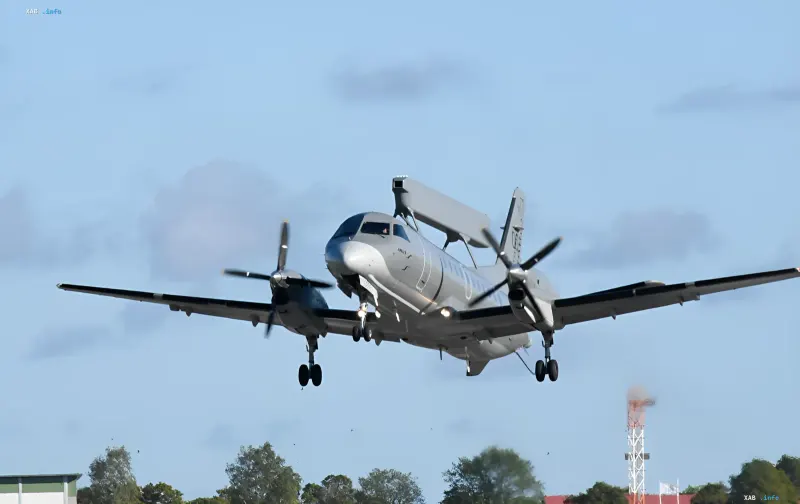
Ukraine's Ministry of Defense has officially confirmed for the first time that the Swedish ASC 890 long-range airborne early warning and control (AEW&C) aircraft is already carrying out combat sorties. As the defense ministry clarified, the aircraft has been on combat duty for the past six months — since March 2026. According to RBC-Ukraine, this statement became the first public confirmation from Kyiv that the Swedish aircraft has not simply been transferred, but has in fact been integrated into the combat loop of the Defense Forces.
What is the ASC 890 and why is this a historic step
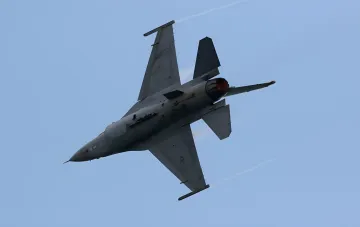
The aircraft is known by several names: ASC 890, Saab 340 AEW&C, or S-100B Argus. Sweden announced its decision to transfer it to Ukraine back in May 2024, and since then it has been regarded as a truly historic move. In the words of Swedish Defense Minister Pål Jonson, it is precisely the ASC 890 that opens up new capabilities for the Defense Forces in countering air and maritime targets, and that, in combination with F-16 fighters, significantly strengthens the combat capabilities of the Ukrainian air force.
Technical capabilities: a radar that "sees" at 250 km
The aircraft's key feature is its ability to detect air targets at a considerable distance. As aviation expert Valeriy Romanenko explained, it is no problem for the ASC 890 to detect an enemy aircraft at a range of 200–250 km or a missile at 150–200 km. This makes it possible to build a picture of the air situation in advance, something that could not be achieved from ground-based positions.
Building a full-fledged air defense system after decades without AEW&C
Romanenko emphasized that after the collapse of the USSR, Ukraine did not receive any airborne early warning aircraft, and for several decades the air situation was monitored only with the help of ground-based radars. According to him, receiving the ASC 890 finally made it possible to form a full-fledged air defense system. Thus, the Swedish AWACS aircraft became not just a new piece of equipment, but an element that closes a years-long structural gap in the country's defense.