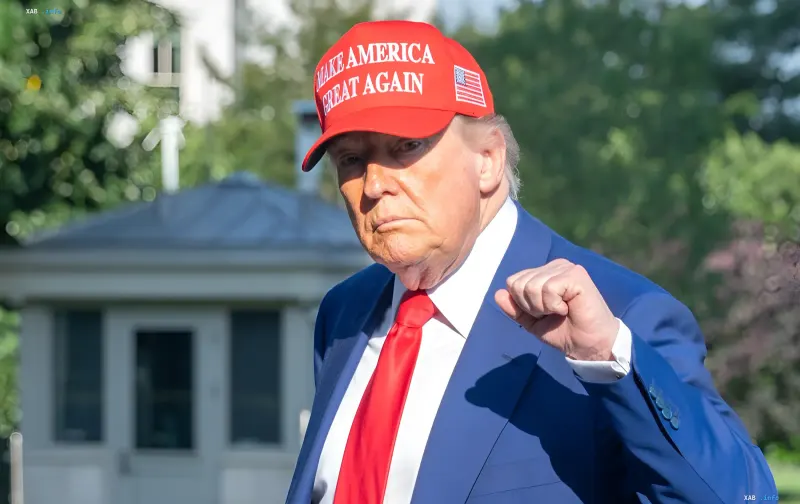
US President Donald Trump shared a Washington Post publication on his social network Truth Social, in which journalist Mark Tissen proposes a solution to the chronic shortage of interceptor missiles for Ukraine's air defense. The central idea of the piece is to grant Kyiv a license to produce its own interceptors, which, according to the author, would simultaneously help Ukraine, US allies, and the United States itself. As reported by RBC-Ukraine, Trump did not accompany the repost with any personal comments, but the very fact of its publication on his personal account is viewed by observers as veiled support for the initiative.
The essence of the Washington Post proposal
The publication emphasizes that Washington is forced to balance three conflicting needs: supplying Ukraine with Patriot missiles, replenishing its own strategic stockpiles, and meeting other military tasks around the world. Tissen points out that one of the "obvious solutions" is to license the production of interceptors on Ukrainian territory. At the same time, the author draws attention to a key limitation: Ukraine does not necessarily need to be given the technology of the most advanced version — the PAC-3 Missile Segment Enhancement (MSE). In his words, transferring cutting-edge technologies creates a real risk of their leakage to Russia, and this, according to the outlet, is the main obstacle that has prevented any practical progress since Trump's first statements.
Specific interceptor options
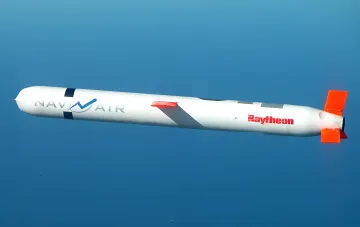
As compromise solutions, the Washington Post names two types of missiles. The first is the PAC-3 Adapted Capability Effector (PAC-3 ACE), a newer, cheaper interceptor from Lockheed Martin that, according to the author, provides about 70% of the accuracy of the current version at less than half the cost. The second is the older PAC-2 GEM-T missile made by Raytheon, for which a contract has already been signed for Ukraine to produce it at a new facility in Germany. Tissen also proposes a temporary solution: Washington should "push" South Korea so that Seoul transfers its M-SAM II air-defense missiles to Ukraine, which the author calls the "Korean Patriot." In addition, under a potential licensing agreement, Ukraine could supply some of the interceptors it produces to NATO countries to replenish their stockpiles, which would help ease the load on American production lines.
Congress's position and pressure on the Pentagon
Although the White House is not in a hurry to initiate the launch of production, Congress is insisting on urgent action. House Representative Mike Turner publicly called on the president and the Pentagon to "move as quickly as possible" so that Ukraine can defend itself. His words reflect growing frustration in the legislative body over the fact that, according to the Washington Post, even a production permit will not solve the immediate problem: deploying new lines will take time, while the need for interceptors exists right now, amid ongoing massive strikes on Ukrainian infrastructure.
Contradictory data
Trump's own statements on this issue show a notable inconsistency. On the one hand, during the NATO summit in Ankara in July 2026, and then at a meeting with Volodymyr Zelenskyy in Washington at the end of the same month, the US president stated his readiness to allow Ukraine to produce Patriot interceptor missiles under license. On the other hand, just a few days later, at a government session in Camp David, he stated that there was no final agreement and that the United States must "be very careful about transferring the secrets of this weapon." Thus, the public rhetoric of readiness to license and the administration's actual position — a cautious avoidance of specific commitments — remain in tension. The Washington Post notes that throughout the period since the first statements, no practical decision on transferring technologies or signing a licensing agreement has been made.
The significance of the repost for further developments
Since Trump shared Tissen's article on Truth Social, this can, according to Ukrainian and American observers, be seen as a signal that the idea of licensing interceptor production in Ukraine has received some support at the White House level. However, as the author of the publication himself emphasizes, the repost does not eliminate either the technological limitations or the time frames: even in the most favorable scenario, launching production will take months, while Ukraine's air defense needs interceptors today. Thus, the publication shared by Trump proposes not simply to hand Ukraine ready-made missiles, but to consider systematically involving Ukraine's defense industry in creating elements of the air-defense shield — and this is probably the reason the idea appealed to the US president.