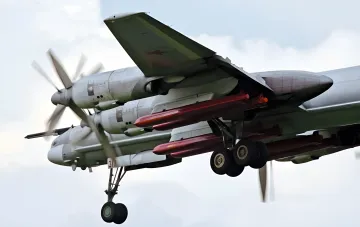
On the night of November 20, 2026, during a massive Russian strike against Ukraine, Poland's airspace came under threat: two Russian missiles and one drone crashed on the country's territory, with one of the munitions exploding just 96 kilometers from the site of military exercises by the "Coalition of the Willing". Against the backdrop of this incident, Operational Commander of the Polish Armed Forces Lieutenant General Ireneusz Nowak, in a commentary to Rzeczpospolita, revealed details about the fighter jet unit that was protecting the Polish skies that night.
Authorization to Use Weapons From NATO Center
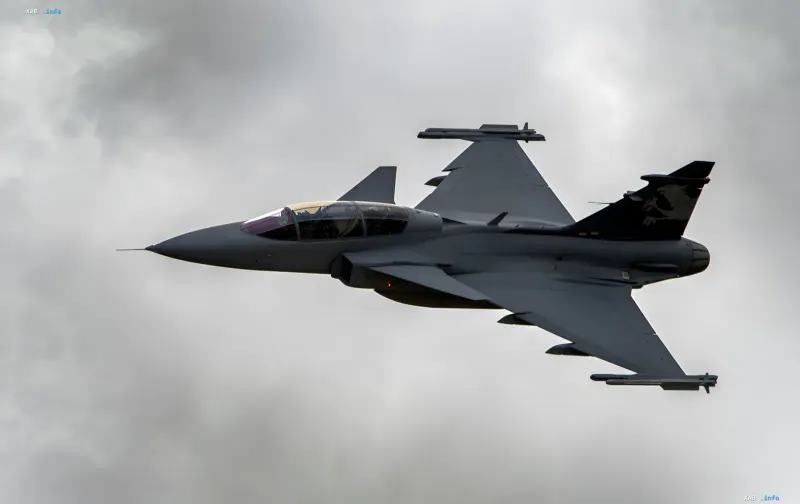
According to Nowak, a pair of Swedish Saab JAS 39 Gripen fighters operated over Poland under the command of NATO's Combined Air Operations Centre (CAOC) in Uedem, Germany, which is responsible for air operations in this region of Europe. CAOC issued the pilots a so-called condition-based order—an authorization allowing crews to independently decide to shoot down an object if established conditions are met. To protect the airspace, as specified by the Polish military, two F-16s from Łask and two Swedish Gripens were scrambled, while an early warning aircraft Saab 340, a Dutch MRTT tanker, and ground-based air defense systems also participated in the operation.
Why the Pilot Did Not Open Fire
One of the Swedish pilots attempted to intercept an object preliminarily assessed as a Russian Kh-101 cruise missile. However, as General Nowak explained, "extremely difficult atmospheric conditions" prevailed in the interception area: the pilot was unable to either visually identify the target or confirm it using onboard optoelectronic systems. As a result, despite NATO's authorization to use weapons, the missile was not shot down.
Two-Phase Attack and Intelligence Data
Nowak described the attack as consisting of two stages: first, Russia used drones, including fast jet-powered unmanned aerial vehicles, and then Kalibr and Kh-101 missiles. According to him, Poland knew the launch sites, number, and flight direction of the objects in advance and used data transmitted by Ukraine via the "Virazh" system. The military tracked 11 objects potentially posing a threat to Polish airspace; three of them crossed the border, but, the General emphasized, none resulted in human deaths or injuries. A "yellow" alert regime was declared at 1:40 AM, and at 5:49 AM it was replaced by the highest threat level.
Warsaw's Reaction
"Regarding who is behind this attack, there is currently no doubt on our part," Nowak concluded. Earlier, Polish Prime Minister Donald Tusk stated that Warsaw does not consider the munition impacts to be accidental, but views the incident as a deliberate provocation by Russia. Thus, the incident became one of the sharpest episodes on the Polish front and demonstrated both the Alliance's readiness to use weapons and the practical limitations that difficult weather conditions impose on intercepting high-speed targets.