On August 19, 2026, Switzerland introduced significant changes to its migration policy regarding Ukrainian citizens who have received temporary protection. The Federal Department of Justice and Police (FDJP) officially announced a new requirement: Status S (temporary protection) will now be granted exclusively to Ukrainians who do not violate their military obligations to their homeland. This decision takes effect immediately for all new applications submitted starting from August 20, 2026.
New criteria for granting Status S
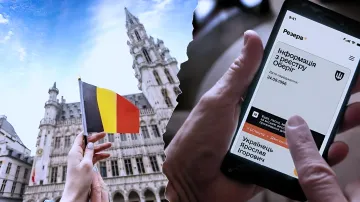
According to an FDJP press release, the key factor in considering applications for temporary protection is now proof of fulfilling military duty. This requirement applies to Ukrainian citizens of conscription age, who previously could obtain status without a detailed check of their status in the "Reserve+" system or registration with the Territorial Recruitment Center (TRC). Now, the lack of evidence of fulfilling obligations or signs of evasion of mobilization will be grounds for refusal of protection.
It is important to note that this rule is not retroactive. Individuals who were already granted Status S before August 20, 2026, are not subject to the new restrictions. Their current status remains valid until expiration or until the authorities review the decision. However, if the status is annulled in the future, any derivative documents, including a residence permit of category B, will automatically become void.
Long-term prospects and integration
Despite the tightening of entry conditions, Switzerland has confirmed its intention to extend the temporary protection mechanism for Ukrainians until March 4, 2028. This decision concerns all displaced persons who left Ukraine due to the full-scale invasion by Russia. At the same time, the country's authorities have developed a clear integration plan: starting in March 2027, the first Ukrainians who applied for protection will be able to apply for a permanent residence permit (Category B document) after five years of continuous residence in the country.
This approach demonstrates a balance between humanitarian support and the observance of national interests. Switzerland maintains its commitment to protecting refugees but requires them to fulfill their obligations to their own country. This sets a precedent for other EU countries, where the possibility of revising the rules for granting asylum to Ukrainians of conscription age is also being discussed.
Contradictory data
While Switzerland has officially announced new rules, discrepancies in the interpretation of requirements are observed in other EU countries. For example, in the Czech Republic, dozens of Ukrainian men were denied temporary protection due to the inability to prove the fulfillment of military duty. However, some sources, including reports on Denmark and Poland, indicate that the requirement to provide data from the "Reserve+" app is a manipulation or excessive. This creates uncertainty for Ukrainians trying to understand exactly which documents are necessary to obtain protection in different countries.
Furthermore, statistics show contradictory dynamics: in June 2026, the total number of Ukrainians under temporary protection in the EU increased, but three countries demonstrated the opposite trend. This may indicate the beginning of a policy review in individual states, although there have been no official statements about mass refusals yet.
Reaction against the backdrop of regional trends
Switzerland's decision fits into a broader context of changes in EU policy towards Ukrainian refugees. Similar measures aimed at preventing evasion of mobilization are already being discussed in Germany, Poland, and Denmark. The Polish Minister of Defense previously called for the return of all Ukrainian men of conscription age, while Germany advocated for a review of the rules for this category of citizens. Thus, Switzerland becomes one of the first states to implement these ideas in practice.
For Ukrainians, this means the need for careful preparation of documents and confirmation of their status before submitting an application. Authorities recommend contacting consulates and migration services for up-to-date information to avoid refusals and delays in obtaining protection.