Slovak-American startup Tachyum, which spent over eight years working on the universal Prodigy processor, has voluntarily filed for bankruptcy in Bratislava. The Slovak subsidiary, Tachyum Slovakia, applied to the court on October 22, 2026, without waiting for creditor lawsuits. The Bratislava III City Court accepted the application and initiated bankruptcy proceedings, recognizing it as compliant with statutory requirements. Under Slovak law, a company that voluntarily files for bankruptcy is automatically declared insolvent. Consequently, the ambitious project—which was intended to combine CPU, GPU, and TPU capabilities into a single microchip—is on the verge of total termination.
Eight Years of Promises and Delayed Timelines
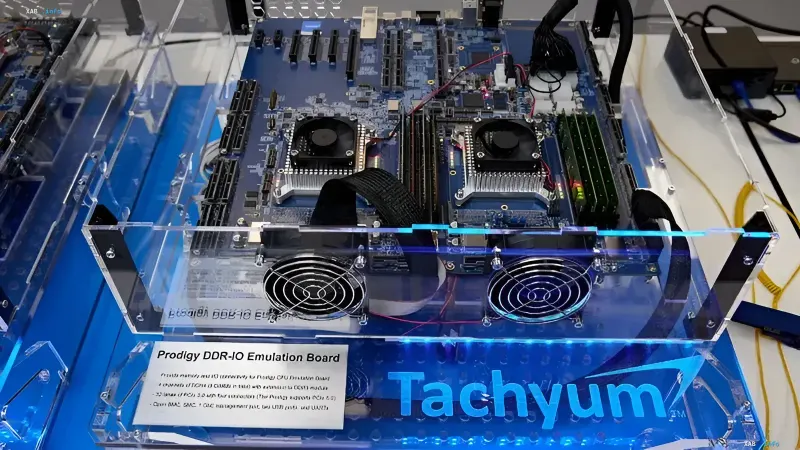
The history of the Prodigy processor began in 2018 when Tachyum announced a next-generation "superchip." Initially, the company planned to complete design work in 2019 and bring the product to market as early as 2020. However, the launch was repeatedly postponed, and by 2025 timelines had shifted by at least five years from the original schedule. Throughout this period, Tachyum never presented a working processor sample, although it demonstrated experimental emulation boards at exhibitions, including the Prodigy DDR-IO Emulation Board, which allows testing of the I/O and DDR memory subsystem before the final silicon is ready.
Architecture Evolution: From 64 Cores to 1024
Alongside delayed timelines, the technical specifications of Prodigy changed significantly. The initially announced 64-core architecture was expanded to 128 cores using a 5nm process, and later to a 192-core chip with 16 DDR5 memory channels. In late 2025, Tachyum announced another radical concept change: a shift to a chiplet architecture with 1024 cores, 24 DDR5 memory channels, and a thermal design power (TDP) of 1600W based on TSMC’s 2nm process. Such a massive redesign required an enormous amount of additional engineering work and, according to estimates, pushed market release to at least 2030.
What Will Happen to Assets and Intellectual Property
If the court officially declares Tachyum Slovakia bankrupt, a court-appointed administrator will take control of the company's assets, which could later be sold to pay off creditors. The exact composition of the assets is currently unknown, but theoretically it could include intellectual property related to the Prodigy processor, patents, other technologies, and equipment used during development. The bankruptcy procedure for the Slovak subsidiary does not necessarily mean the cessation of operations for affiliated structures in other countries: intellectual property could be preserved if transferred to a new owner, which would theoretically allow the project to continue.
The Key Question: Where Is the IP Held?
The future of the project depends entirely on which legal entity holds the rights to the Prodigy intellectual property—the American parent company Tachyum Inc. or the bankrupt subsidiary Tachyum Slovakia. If the patents belong to the US structure while the Slovak office merely accumulated debt and hired engineers, the holding company will be able to write off liabilities and retain core technologies. Conversely, the American side could theoretically buy out the rights during bankruptcy proceedings and attempt to bring the product to market. According to the Slovak publication Dennik N, the situation is compounded by the fact that Tachyum Inc. in the US is also under heavy pressure from its own creditors demanding forced liquidation. Under these conditions, the future of the Prodigy processor remains uncertain, hovering between the total liquidation of all assets and the restructuring of the group.