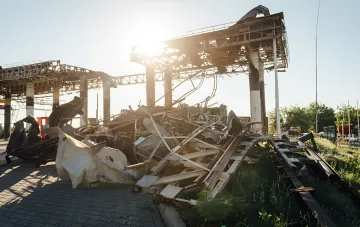
In the summer of 2024, the situation in the Ukrainian fuel market underwent significant changes. In July, Russian forces significantly intensified shelling of gas stations, making them a priority target. The attacks affected not only border zones but also rear regions, forcing networks to radically review their security protocols and operating modes.
New survival rules: from air raid sirens to concrete walls
The main change in operational activities was the tightening of the response to air raid alerts. If networks could previously operate with caution, now stopping operations during the siren has become the norm, even in Kyiv. Alexander Sirenko, an analyst at the consulting company "NeftRynok," notes that the increase in attacks has directly influenced the regulations: stations close immediately upon the declaration of an alert.
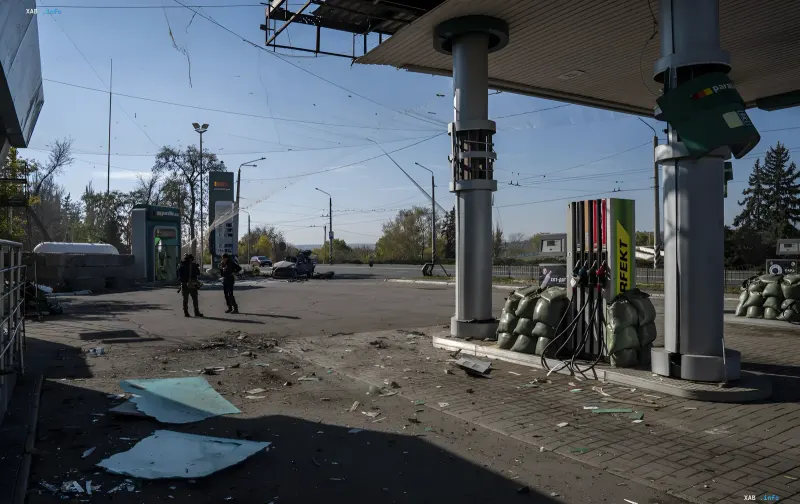
Physical protection of facilities has also been strengthened. On many stations, gas modules and cylinders, which pose a heightened risk in the event of a fire, are fenced off with concrete slabs. A significant number of networks have resorted to using sandbags. Fuel market expert Dmytro Leushkin says that companies held clean-up days during which employees prepared bags themselves and used them to surround operator cash registers.
The largest network of the state company "Ukrnafta" is implementing a large-scale reinforcement program. On high-risk sites, concrete structures are being built, protective nets, gabions, and mobile shelters for staff and customers are being installed. Employees are supplied with personal protective equipment, including helmets and body armor. If safe operation becomes impossible due to the threat to human life, the company temporarily suspends the operation of a specific gas station.
Restoration and working in conditions of shortage
Despite intense strikes, the fuel market demonstrates high resilience. According to Serhiy Kuyun, director of the consulting company "A-95," about 80% of previously attacked gas stations resume their operations. However, restoration often takes a simplified form: on stations that have already been hit, glass windows are not always restored, being replaced by temporary plywood structures.
In frontline zones, networks practice a shift work method and personnel rotation. This helps avoid fuel shortages and keep prices in check in dangerous regions. At the same time, in mid-July, a situation arose in Kharkiv when deputy Oleksandr Skoryk reported the absence of working gas stations on the highway to Poltava. Later, this information was refuted by the head of the Kharkiv Regional Military Administration, Oleh Synehubov, confirming that fuel is available and protection at gas stations has been strengthened.
Economic consequences and legislative restrictions
The increase in risks and costs of protection has inevitably affected fuel prices. On July 31, many networks raised prices on diesel fuel. The largest increase was recorded at OKKO, WOG, and "Ukrnafta" brand stations. For example, at OKKO, Pulls diesel cost 95.90 UAH/l, and at WOG, premium Mustang diesel cost 95.80 UAH/l.
The question of how to sell fuel if a station is damaged remains complex. The "Ukrnafta" network is preparing a technical solution that will allow fuel to be dispensed even from damaged facilities. As a temporary option, mobile refueling points (tanker trucks) are being considered. However, current Ukrainian legislation does not provide for the use of mobile points for retail sales outside the territory of a stationary gas station, creating legal barriers to a quick solution to the problem.
In response to the escalation of attacks, the Office of the President is considering the possibility of granting stations in frontline regions the status of critical infrastructure objects. This will allow additional resources to be directed to their protection and ensure the continuity of supplies.