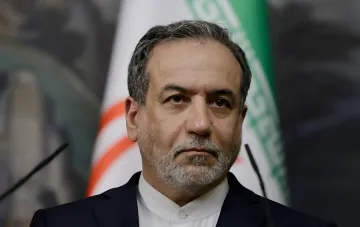
The question regarding the health and current status of Iran's Supreme Leader, Ali Khamenei, remains one of the most discussed topics in global media. However, Iranian authorities have yet to release fresh audio recordings of his speeches to the public. As it turns out, the reason for such secrecy lies not only in political considerations but also in advanced technologies capable of extracting confidential data from sound.
The Iranian news agency WANA published a material revealing digital intelligence methods that could be used by adversaries to analyze recordings. Experts point out that modern audio analytics can reconstruct a complete picture of the location and circumstances of the recording, even if the speaker is not visible.
Acoustics as Evidence
The first and one of the most informative tools for analysis is the acoustic characteristics of the room. Sound reflections and the decay time of sound energy carry unique information about the space. By analyzing these parameters, specialists can accurately estimate the size of the room, the materials it is built from, and its spatial structure. In fact, a floor plan of the room where the recording took place can be "drawn" based on the sound alone.
The Digital Footprint of the Power Grid
Another powerful geolocation method is the analysis of power grid frequency fluctuations. The electricity powering the recording equipment inevitably leaves its trace on the audio track. By comparing these fluctuations with reference data, experts can not only determine the exact date and time of the recording but also identify a specific section of the power grid. This allows the search to be narrowed down to a specific building or even a specific room.
"Fingerprints" of Equipment
Technology also allows for the identification of the equipment used for the recording. Every type of microphone and recording device possesses a unique sound spectrum—a sort of "fingerprint." Analyzing these characteristics helps determine the model of the equipment, which may indicate the level of access to it or its affiliation with certain intelligence agencies.
Furthermore, even background noise becomes a source of intelligence. Sounds from ventilation systems, generators, or refrigeration equipment can reveal technical details about the environment in which the head of state is located.
Voice Biometrics
The most sensitive area is the analysis of the voice itself. Voice biometric technology allows for the extraction of data regarding the speaker's physical condition. Experts can analyze the resonance of vocal cords, formant frequency, breathing rhythm, and pauses in speech. Based on these indicators, conclusions can be drawn about the person's health, heart rate, and even stress levels.
It is precisely this combination of factors that explains why Iranian authorities keep audio recordings of the Supreme Leader's speeches secret. According to experts, publishing Khamenei's voice could provide Iran's enemies with key data regarding his location, surroundings, and physical condition, which is unacceptable in the current geopolitical situation.