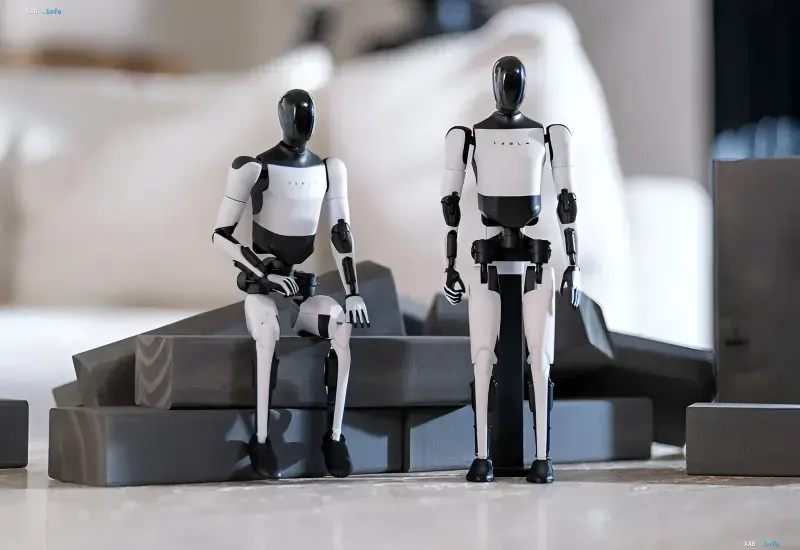
Elon Musk's Tesla is facing significant technological and manufacturing challenges that prevent the company from reaching its ambitious goal of producing 20,000 Optimus humanoid robots per week. According to recent reports by The Information, the company's current assembly rate remains at just «a few hundred robots per week», which falls far short of management's initial projections.
Manufacturing Challenges and Line Repurposing
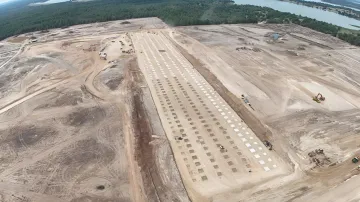
Earlier this year, Tesla took the unconventional step of repurposing manufacturing lines originally intended for Model S and Model X electric vehicles to assemble the Optimus robots. However, this strategy has introduced a complex set of engineering hurdles. The primary difficulty lies in micro-miniaturization: robot components are significantly smaller than automotive parts and require much higher precision alignment, which is hard to achieve on converted assembly lines.
Hand Assembly Complexity and Manual Labor
A particular bottleneck has emerged in the wrists and forearms of the new V3 version robots. These components incorporate over 100 screws and tiny parts that currently require manual assembly. Although the latest versions are lighter and feature an expanded array of cameras, engineers have not yet integrated a fully functioning «sensor glove». This technological solution is intended to simplify sensor replacement without swapping out the entire wrist, but development is still ongoing.
Contradictory Data
While internal reports and independent insiders highlight severe production delays, component shortages, and manual assembly bottlenecks resulting in hundreds rather than tens of thousands of devices, other industry publications offer contrasting perspectives. Some observers point to a tenfold increase in output compared to earlier periods, emphasizing overall scaling momentum, whereas skeptical analysts focus on persistent mechanical barriers and worker resistance.
Commercialization Prospects and Rental Model
Elon Musk has repeatedly claimed that the humanoid robot will eventually become Tesla's most valuable product, overshadowing its automotive business. At present, however, the robots are utilized exclusively inside Tesla facilities for specific tasks within confined spaces. The go-to-market strategy has also evolved: rather than direct retail sales, Tesla plans to initially lease the robots to gather training data and refine their performance before a broader commercial rollout.