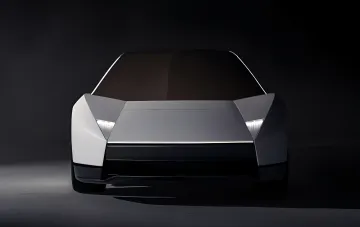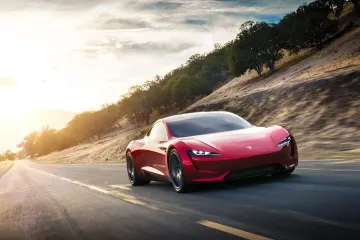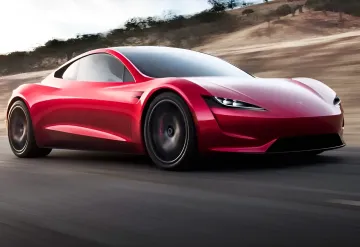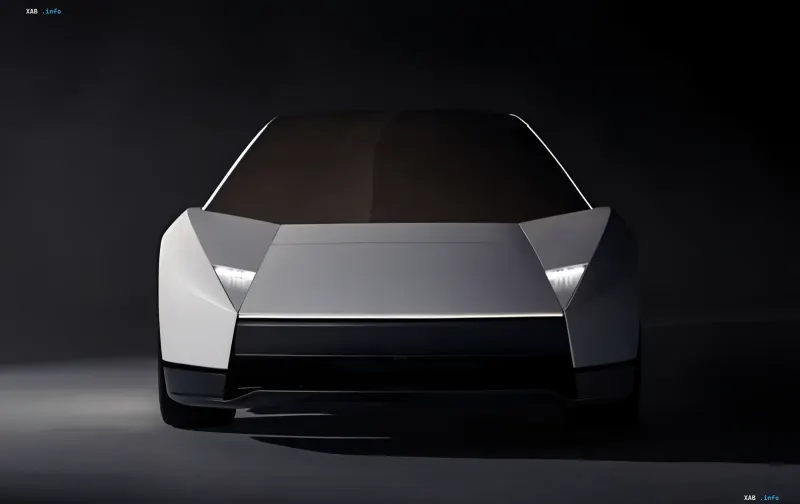
Nine years after presenting the concept, Tesla has unveiled the production version of the Roadster — an electric car that, according to the company, is capable not only of accelerating to ultra-high speeds but also performing stunt maneuvers unavailable to any production vehicle. At the presentation, the car drove onto a C-shaped ramp, stopped parallel to the ground, then jumped off the top of the structure and hovered in the air before a soft landing. The driver's seat during the stunt was occupied by an Optimus humanoid robot, yet all maneuvers were executed in a fully automated programmed mode — human intervention was not required.
Vacuum Downforce System: How the Electric Car Holds Upside Down
The key technology providing the Roadster's unique capabilities is the vacuum downforce system located beneath the car's floor. A system of fans and grounding extracts air from under the body, creating powerful downforce that holds the electric car in an inverted position even when stationary. Essentially, the car "sticks" to the surface through pressure differential, enabling maneuvers impossible for any other production vehicle. This very system was demonstrated on the C-shaped ramp during the presentation: the Roadster stopped sideways, held exclusively by vacuum downforce.
SpaceX Rocket Technologies in a Production Car
Soft landings and controlled jumps in the Roadster are handled by maneuverable electric cold-gas thrusters developed based on SpaceX technologies. These thrusters make micro-adjustments to the trajectory in fractions of a second, ensuring stability in flight and precision during landing. Tesla engineers integrated the rocket engines into the body design so that they do not disrupt the car's aerodynamic profile in standard driving mode. The cold-gas system runs on compressed gas, eliminating liquid fuel use and making it safe for urban operation within manufacturer-defined limits.
Production and Delivery Timelines
The launch of production for the updated Tesla Roadster is scheduled for 2028. The company has already opened reservations for the new model. The basic order requires a first deposit of $5,000, plus an additional $45,000 within the first ten days after reservations open. Thus, the minimum entry price to join the queue is $50,000, while the full price of the car including basic trim is not publicly disclosed and appears to be formed individually for each customer.
Optional Packages: From "Thrust" to "Rocket"
Innovative stabilization and acceleration systems are not included in the Roadster's base configuration. The "Thrust" package includes the vacuum ground downforce system and acceleration cold-gas thrusters, costing an additional $245,000 USD. The "Rocket" version is equipped with a full-fledged flight system and will be available exclusively by special invitation from the company — meaning Tesla does not plan to sell it openly. The division into three trim levels emphasizes the Roadster's positioning not just as an electric vehicle, but as a demonstration platform combining advanced developments from Tesla and SpaceX in a single product.
Context: Nine Years from Concept to Production
The Roadster concept was first shown in 2017, and since then the car has become one of Tesla's most anticipated yet heavily procrastinated projects. Numerous schedule delays, a lack of public prototypes, and unconfirmed production volumes over several years sparked skepticism among analysts. The presentation of the production version in 2026, accompanied by stunt demonstrations featuring the Optimus robot, served as the company's response to years of waiting. Nevertheless, actual customer deliveries are expected only in 2028, leaving nearly two years to refine production prototypes and certify non-standard systems, including vacuum downforce and cold-gas thrusters.