The idea of turning an active-lifestyle vehicle into a full-fledged family car was never ideal to begin with, but that is exactly what happened. Over the past few years, engineers have been steadily bringing crossovers closer to the ideal of practicality, and the result can already be considered mature. The RBC-Ukraine editorial team has selected the five most interesting and successful family-class models available on the Ukrainian market and examined their powertrains, drivetrain layouts, and distinctive features. Below is a detailed review of the four models covered in the article, with a caveat about the fifth.
Nissan X-Trail: Electrification and Emotional Character
A relatively fresh model, launched on the market last year, is offered in Ukraine with two types of electrified powertrains. The first version is a mild hybrid (MHEV), where an additional electric motor helps the gasoline engine accelerate the car and tackle demanding sections of the road. The second, top-tier e-Power version is equipped with one or two electric motors (to choose from), whose traction battery is continuously charged by the gasoline engine via a generator. It is this variant that impresses with its acceleration to 100 km/h in 7.0–7.2 seconds. The car handles well at speed and yet remains comfortable over rough surfaces — a combination that truly surprises. For large families, 5- and 7-seat configurations are available, and for those who enjoy country getaways — a 4x4 all-wheel-drive option. According to the publication, the X-Trail is a typical Japanese crossover, but more emotional than its "fellow countrymen," with less of the textbook formula and a generous selection of both flashy and pragmatic touches.
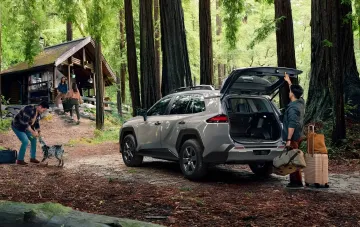
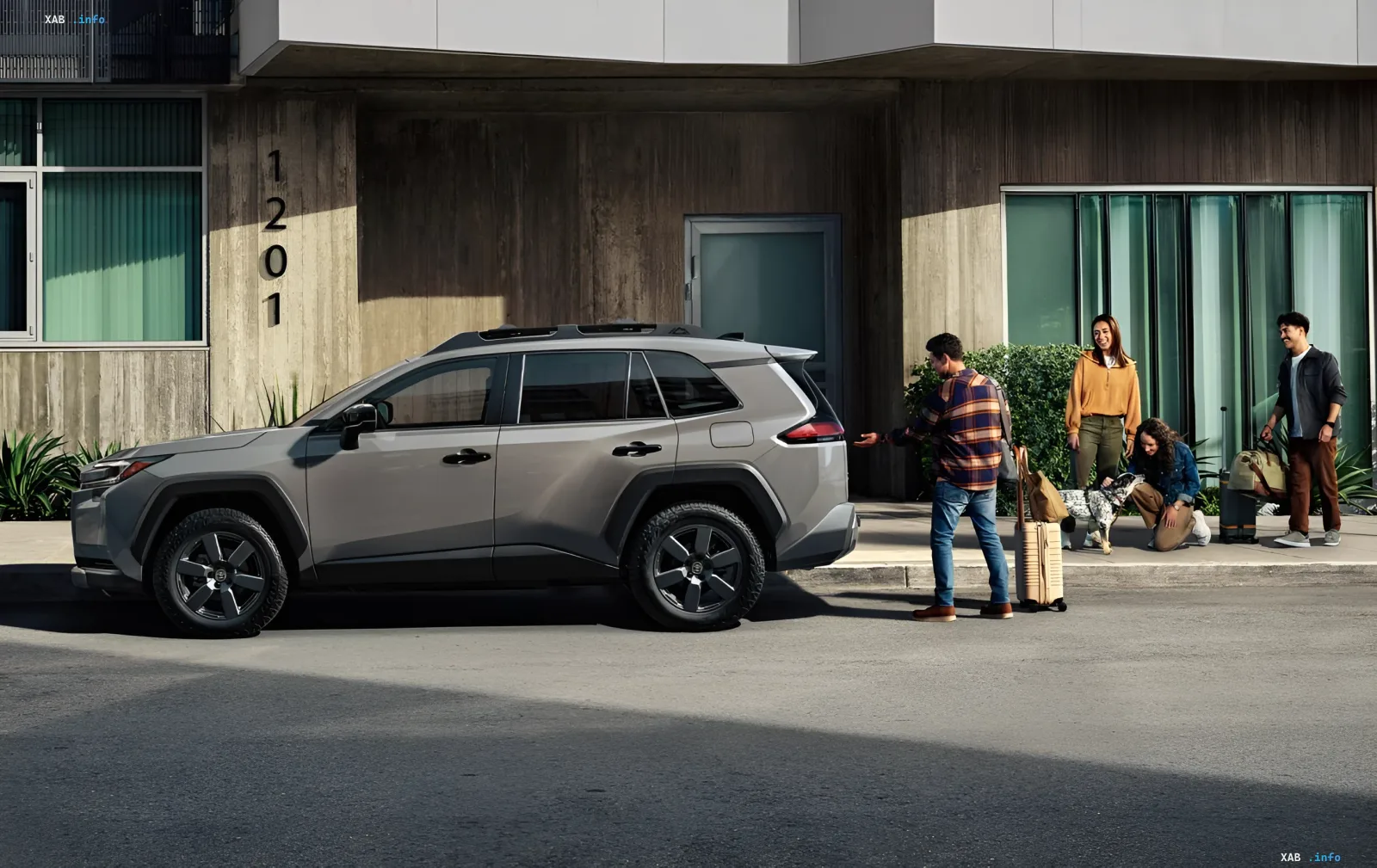
Toyota RAV4: Heir to the Leading Positions
The sixth-generation RAV4 went on sale in Ukraine this summer, and it can be predicted to succeed in the market: the new generation has inherited all the best from its predecessor, which has repeatedly topped sales rankings, including in Ukraine. The new RAV4 is available only in hybrid form — either a regular hybrid or a plug-in with the ability to recharge the battery (stated electric-only range of 126 km). Both variants feature a unified next-generation powertrain with a 2.5-litre naturally aspirated gasoline engine (combined output of 230–329 hp) and a CVT. The crossover can have front-wheel or all-wheel drive — in the latter case, the rear-axle wheels are driven by a separate electric motor. The sporty RAV4 GR Sport version stands out with a special front fascia and larger air intake, an enlarged rear spoiler, a track widened by 20 mm, and signature 20-inch wheels, as well as reinforced rear body components and recalibrated suspension and steering. The verdict: reliability combined with advanced drivetrain technology, plus stylish design both outside and inside.
Volkswagen Tiguan: German Classic Without Compromises
The popular third-generation crossover, the long-held dream of the average car owner, is well known to consumers — it has been on the market since the year before last. Unlike the competitors reviewed above, the Tiguan is sold only with a conventional powertrain, without any supplementary electric drive. The options are a 265 hp 2.0 TSI gasoline engine and a 2.0-litre diesel producing 150–193 hp. In both cases the transmission is automatic, with a 7-speed DSG preselective robot. On the one hand, the model received a revolutionary interior for Volkswagen, free of the dry "correct" classicism that fans of the brand are used to. On the other — it retains the image of a lively, restrained classic: monitors, joysticks, ambient lighting options, and music from a cloud service do not get in the way. It is pleasing that the engineers did not follow the trendy currents and did not drop the 4x4 all-wheel-drive version. In the publication's words, the Tiguan is Das Auto: a model car, somewhat boring in places and perhaps too expensive, but with a classic technical core that knowledgeable people love in German engineering.
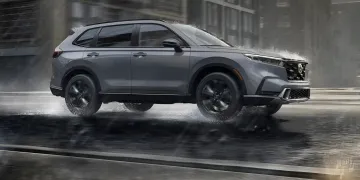
Honda CR-V: Series Hybrid and Spacious Cabin
One of the founders of the SUV class — the vehicles now called crossovers. In its sixth generation, it is a cabin-spacious, genuinely family-friendly car with a smooth, soft ride and predictable behaviour. The model is now offered only as a hybrid: there is a plug-in with a range of 77–79 km and a regular one. Moreover, even the regular variant is not entirely ordinary, as it uses so-called series hybrid layout: the 2.0-litre (148 hp) gasoline internal combustion engine works mainly as a large generator charging the battery, which in turn powers the traction electric motor. The fuel engine connects to the wheels only during steady, uniform driving at a speed of around 90–110 km/h. All-wheel drive engages fully automatically, and the driver cannot influence its operation.
Contradictory Data
The original RBC-Ukraine article claims a review of five family crossovers, yet the provided text only details four models (Nissan X-Trail, Toyota RAV4, Volkswagen Tiguan, Honda CR-V). The paragraph devoted to the Honda CR-V breaks off at the phrase "typical for...", and the fifth model is neither named nor described in the text. Thus, the full list of five items is not confirmed in the current edition, and a caveat is made: the review is of a partial nature. In addition, there are no discrepancies in figures or dates between sources in the text, as it relies on a single primary source; the contradictions concern exclusively the incompleteness of the disclosed list.